







Somewhere between a Rs 1 crore decision and a 10-second scroll, something doesn’t add up. You don’t buy a home the way you buy a sneaker. You don’t “add to cart” something that will hold your life, your savings, your future, and maybe even your parents’ expectations. And yet, the same person making that once-in-a-lifetime decision is also the one skipping ads in five seconds.
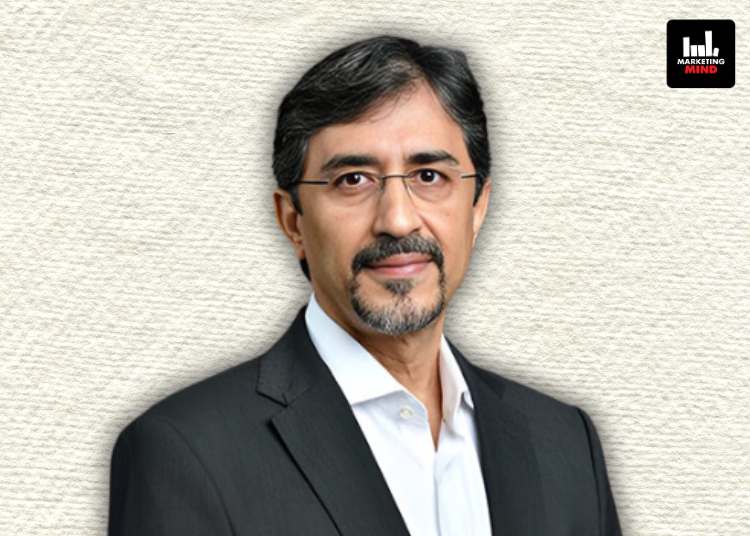
It’s this contradiction that Ankur Parmar has been quietly solving.
Not with louder ads. Not with bigger claims. But by leaning into something most real estate marketing has historically ignored: emotion. Because as he put it, almost too simply, “All our human decisions are emotional.”
And suddenly, real estate stops being about square feet, and starts becoming about something far more intangible: belief.
When logic isn’t enough: decoding the emotional weight of a home
For all its spreadsheets and site plans, real estate has never really been a rational category. Parmar has acknowledged that what looks like a calculated decision on the surface is often deeply emotional underneath.
“This is one of the most emotional purchases that a person makes in his life,” he said.
“A lot of people don’t have the privilege of doing multiple home purchases.”
He pointed out that the weight of this decision changes how consumers behave, think, and respond to communication. “It’s something they’ve dreamt of all their life, something they want to pass on to the next generation,” he said.
And yet, the industry has spent years talking in the language of specifications. “Real estate has always been treated as cement, concrete and tangibles,” he said. “But the communication can actually be very emotional and very genuine.”
At Mahindra Lifespace Developers, this hasn’t just been a philosophical shift, it has been a structural one. “We take attention emotionally, and then we rationalise it,” he said. The insight hasn’t come from instinct alone. “In one of our studies, 30 to 40% of homebuyer needs were emotional,” he said. “So moving to emotional brand language was the most obvious step.”
What’s interesting is that Parmar hasn’t framed this as disruption. If anything, he has framed it as a correction.
Making the invisible visible: turning sustainability into a story people feel
Sustainability, in most industries, has suffered from one problem, it feels distant. Too abstract. Too technical. Too easy to ignore. Parmar approached it differently, by making it impossible to ignore. “A 1200-home development emits around 9000 tons of carbon every year,” he said.
“You don’t see it, but it is happening somewhere else.” That invisibility, he has suggested, is exactly why people don’t engage with it. So the storytelling has shifted.
“That is equivalent to cutting 2 lakh fully grown trees every year,” he said. Suddenly, the data isn’t data anymore, it’s a visual, an emotion, a jolt. But for Parmar, this hasn’t been a marketing pivot. “We have been making green homes since 2014,” he said. “This is not something we have started because it is in trend.” Instead, it has been embedded into the product itself.
“All our homes are green homes, and we are moving towards net zero developments,” he said.
He has drawn a parallel that feels strikingly current. “Just like people are moving from petrol cars to EVs because of what they stand for, homebuyers are also making choices based on their beliefs,” he said.
And that’s where sustainability stops being a feature, and starts becoming identity. “We have tried to demystify sustainability for our customers,” he said. “Businesses have to take responsibility because consumers alone cannot do it.”
In a category built on trust, marketing can’t afford to exaggerate
If there’s one thing Parmar has returned to repeatedly, it’s this: trust isn’t a layer in real estate, it’s the core. “A person is investing life savings and doesn’t even get to see the final product immediately,” he said. That gap, between promise and delivery, has historically been where skepticism creeps in. Which is why his approach has been almost deliberately restrained.
“We don’t believe in exaggerated marketing,” he said. “We believe in walking the talk.”
At a time when hyperbole often drives attention, this has felt counterintuitive, but necessary. “Whatever we say has to be rooted in the product,” he said. “If it is not, your storytelling will go for a toss.”
To reinforce that credibility, the brand has leaned outward instead of inward. “We prefer third-party validations so that customers get a neutral view,” he said.
Because ultimately, in this category, persuasion doesn’t come from how loudly you speak, but how consistently you deliver. “Trust is the biggest emotional need of a customer in real estate,” he said.
Selling over months in a world that scrolls in seconds
The modern marketer’s biggest challenge isn’t creativity, it’s time. Or the lack of it. “Buying a home takes 6 to 12 months,” Parmar said. “But attention spans are 6 to 12 seconds.” It’s a mismatch that could easily break most narratives. But instead of stretching one story, Parmar has broken it down. “We create communication in capsules,” he said. “There is capsule one, capsule two, capsule three, but there is continuity.” It’s a strategy built not on fighting behaviour, but adapting to it.
“Digital allows us to retarget and tell our story in parts,” he said. And while digital has transformed discovery, he has been clear that it isn’t the whole story. “Discovery happens online, but final decisions happen through experience,” he said.
Which is why, despite the rise of virtual tours and immersive tech, physical experience hasn’t lost its relevance. “If a customer doesn’t discover us digitally, we lose him,” he said. “If the on-ground experience doesn’t match, we lose him again.”
The answer, then, hasn’t been choosing one over the other. “For me, both are 50-50,” he said.
In many ways, Parmar hasn’t been trying to reinvent real estate marketing. He has been simplifying it. Stripping it down to what has always mattered: emotion, trust, and belief. Because in a category where you’re not just selling homes but shaping life decisions, anything less simply doesn’t hold.