






You have probably done this without even realising it. You watch a funny Instagram reel from a brand. A few hours later, the same product pops up on your quick commerce app. You Google it, read a couple of reviews, see a billboard on your drive home, and eventually end up buying it. At no point do you stop to think whether one agency made the reel, another handled the media buy, a third built the website, and someone else ran the performance campaign.
To you, it has always been just one brand. Ironically, the marketing industry has spent years slicing that very experience into creative, media, digital, commerce, influencer marketing, CRM, performance, and everything in between. Consumers have never cared about those divisions. They have only cared about whether the brand made sense.
That disconnect, according to Ajay Kakkar, is finally beginning to disappear.
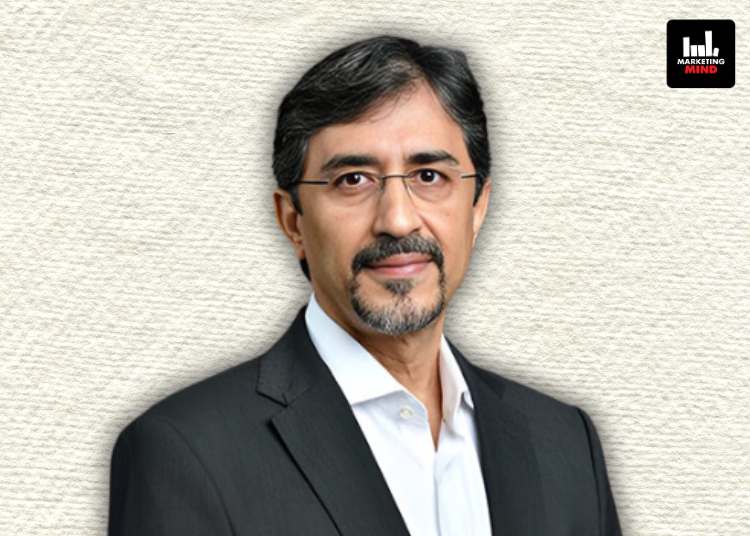
Ajay Kakkar, Chairperson of the ABBY Awards 2026, has spent decades watching Indian advertising reinvent itself through changing media habits, digital disruption and shifting consumer expectations. Today, as agencies consolidate, AI reshapes workflows and brands chase measurable growth with unprecedented urgency, he believes the industry’s next evolution will not be about adding more specialisations, it will be about bringing them back together.
Asked about the biggest shift he has noticed in the marketing industry over the past few months, Kakar did not point towards artificial intelligence, creator marketing or retail media, buzzwords that have dominated almost every industry conversation this year.
Instead, he pointed to something far more structural.
“We are seeing it happen within the industry and soon I hope we will see it coming towards the client, which is consolidation,” he said.
For Kakar, consolidation is not simply about mergers or larger agency networks. It is about creating a seamless experience for brands and consumers alike.
“From a consumer perspective or a client perspective, if you take a one-window approach towards brands, that’s the shift I’m seeing happening,” he added.
His observation comes at a time when the advertising landscape has increasingly blurred the lines between creative, media, technology, commerce and consulting. Brands no longer seek isolated services; they expect integrated solutions. Consumers, meanwhile, have never viewed these functions separately. Every interaction, whether through an ad, an influencer collaboration, a website, a store or a delivery app, forms a single impression of the brand.
It is precisely why Kakar believes fragmentation has become one of marketing’s most expensive mistakes.
When asked what brands continue to get wrong, he responded with a laugh. “You want me to repeat my first answer?”
The humour quickly gave way to a pointed observation. “The one mistake clients are possibly making, or our industry is possibly making, is to take a fragmented approach to brands,” he said.
“The minute you start dicing and slicing a brand and looking at it from different perspectives, you are missing out on the picture that the customer or the consumer of your brands does not see in silos.”
“He sees it holistically.”
It is a deceptively simple statement, yet one that challenges how modern marketing teams often operate. Internal structures may divide responsibilities across departments, agencies and platforms, but consumers rarely distinguish between them. A disappointing app experience can undo a brilliant advertising campaign, just as exceptional customer service can strengthen a brand far beyond what media budgets alone can achieve.
For Kakar, successful marketing therefore begins not with channels, but with clarity.
Offering advice to newer brands navigating an increasingly crowded marketplace, he urged marketers to step back before chasing metrics.
“For the newer brands, my advice would be that decide who your audience is,” he said. “More importantly, decide what your objective is.”
It is guidance that feels increasingly relevant in a landscape where conversations often begin with platforms, algorithms and dashboards instead of people.
Kakar also acknowledged the industry’s growing fixation with performance marketing, a discipline that has become indispensable for brands seeking immediate, measurable growth.
“Today a lot of people jump into performance marketing. We want numbers, we need numbers, so be it,” he said. But numbers alone, he argued, cannot build enduring businesses.
“But at the end of the day, you are in a competitive market. You are pitching against some other brand or the other.”
His conclusion was unequivocal.
“Brand building will always be important and will remain important.”
It is perhaps the simplest reminder in an industry that often mistakes immediacy for impact. Performance marketing may deliver conversions, optimise spends and satisfy quarterly targets. Brand building, however, creates familiarity, trust and preference, qualities that continue to influence consumer decisions long after dashboards have been refreshed.
In many ways, Kakar’s observations circle back to the same idea that opened the conversation. Consumers have never experienced brands in fragments. They have always experienced them as a whole.
As marketing becomes increasingly sophisticated, perhaps its greatest challenge is not finding newer ways to reach people, but ensuring every touchpoint speaks with the same voice. Because while agencies, platforms and technologies may continue to evolve, the consumer has always been looking at just one brand.