





There has been a quiet shift in the way India has shopped. The endless scrolling that once belonged solely to entertainment has increasingly become the first step of purchase. A kurta trend spotted between reels, a skincare recommendation casually dropped into a creator’s routine, a handbag discovered while watching someone style an outfit for brunch, commerce has no longer begun at checkout. It has begun at inspiration. For a generation that has spent more time discovering what it wants through content than through catalogues, shopping has evolved into something far more immersive, intuitive and personal. And as attention has become the new storefront, brands have had to answer a crucial question: what happens when content stops supporting commerce and starts becoming commerce itself?
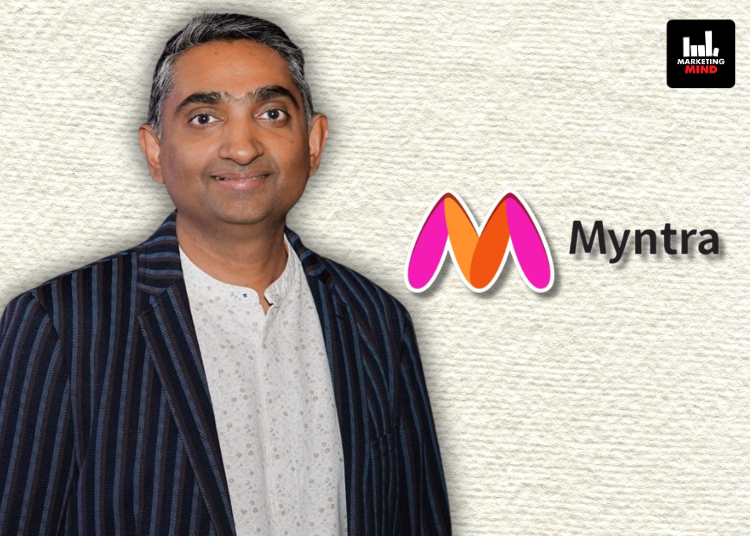
That question has taken centre stage at a recent virtual media roundtable with Sunder Balasubramanian, Chief Marketing Officer, Myntra, where he unpacked how Myntra has been reimagining social commerce through its creator ecosystem and the launch of its Ultimate GlamClan Affiliate programme. Speaking at length about the platform’s transformation, Balasubramanian outlined how the company has built one of India’s largest creator-led commerce ecosystems over the last 18 months and why he believes content-led shopping has become the defining shift of modern retail.
“The future will be content-led commerce,” Balasubramanian said.
He said catalogue-based shopping has continued to remain relevant, but consumer behaviour has fundamentally evolved.
“Five years ago, social media wasn’t anywhere close to the level of adoption it is today. Now, everyone with a mobile phone is on multiple social platforms, being exposed to creators, making content and discovering trends.”
That shift has changed the very architecture of purchase discovery. “Today, discovery happens somewhere and shopping happens somewhere else. We’re working to bring the two together.”
The data has reflected that transition. Balasubramanian noted that more than 75% of Gen Z and millennials have used social media as their primary discovery tool, while over 80% have discovered brands and trends through video-led content.
“Consumers trust people over polished advertising. That’s why user-generated content has become such a powerful unlock.”
He pointed to trust as the most critical conversion lever. “When consumers see creators they know speaking about a brand or a trend, there is implicit trust that helps drive decision-making.”
That trust has translated directly into business outcomes. “Social commerce is already contributing 10% of our platform revenue today,” he said. “And we’re looking to double it.”
Why Creator Commerce Has Become a Full-Funnel Growth Engine
For years, creator-led marketing has often been viewed as an awareness-building tool. Balasubramanian argued that the category has moved far beyond upper-funnel engagement.
“It is not just an upper-funnel tool. We see it directly impacting conversions.” He shared that users who engage with creator-led content on the platform have shown a 10% higher conversion rate than those who do not. “That’s clear proof of what it does from a conversion standpoint.”
Beyond conversions, creator-led content has also influenced post-purchase behaviour. “People who see user-generated content before making a purchase have significantly lower return rates.”
Balasubramanian framed this as evidence that content has helped consumers make more informed choices. “The beauty of content on the app is that as you’re watching, you can buy what you see. That’s where inspiration and shopping come together.”
On whether Myntra has optimised for time spent or conversion, Balasubramanian offered a more layered perspective. “Time spent and conversion are not one versus the other. One can potentially lead to the other.” He said the company has actively monitored view-through rates, number of videos consumed and freshness of content to ensure users continue seeing relevant recommendations. “We will continue optimising to understand what level of content someone should see for their conversion to improve.”
Addressing concerns around content fatigue, he acknowledged the challenge directly. “That’s a very real concern. The only answer is to ensure users consistently see fresher, more interesting and more relevant content.”
The Democratisation of Influence
At the heart of Myntra’s social commerce strategy has been Ultimate GlamClan, a programme Balasubramanian described as the democratisation of creator-led commerce. “If you’ve bought something on Myntra, you can post a review. It’s open to everyone.”
That accessibility has fuelled remarkable scale. “We’ve had over 6 million sign-ups for the programme and over 100,000 nano and micro creators actively earning through it.” Balasubramanian said this has expanded creator participation far beyond the conventional influencer economy. “Before this, there were approximately 2.5 million creators in fashion and lifestyle on social media. We already have 6 million sign-ups, which tells you how much untapped potential exists.”
The platform’s creator geography has also challenged metro-centric assumptions. “70% of our creators come from Tier 2 and Tier 3 markets.”
He described regional relevance as one of the biggest opportunities. “When you talk to consumers in these markets, they are hungry and have real aspirations for their lifestyle choices, but they don’t always have access to it.”
Creators, he said, have become translators of aspiration. “A creator breaks a trend down into something relatable and shows you how to incorporate it into your daily life.”
For Balasubramanian, this is not about urban versus regional. “It’s not a question of one versus the other. The canvas is huge.”
The Affiliate Bet That Has Extended Commerce Beyond the App
The newly launched Ultimate GlamClan Affiliate programme has taken that creator participation beyond the Myntra ecosystem. “Not only will creators continue posting on our app, but they can now share that same content to any social platform and earn from it.” The mechanics are simple but strategically significant. “You share your profile or posts, curate collections, put them out there and earn commissions between 8% and 12% depending on the tier.”
Balasubramanian described this as a performance-first commerce model. “We’re not paying anyone simply for putting up a post. We incentivise them when they drive a sale.”
That changes the economics for both creators and brands. “When that equation shifts, everyone will want to invest because they are going to get ROI out of it.” When asked whether this effectively becomes another form of performance marketing, he pushed back on reductive categorisation. “ROI exists across all forms of marketing. Creator and social commerce have their own way of showing ROI.”
For now, Myntra has remained focused on platform-led scaling rather than opening the model directly to sellers and brands. “We’re still in the ecosystem-building phase.”
But Balasubramanian made it clear that brand participation is inevitable. “We see a lot of brand participation coming in because they all understand the role creators play in the shopping journey.”
For Balasubramanian, the larger ambition has stretched beyond commerce metrics. “Our real goalpost is that the next million creators in India will come out of this programme.”
And perhaps that is the clearest signal of where retail has headed. Shopping has no longer been just about transactions. It has become participation, storytelling and community. If the first era of e-commerce was defined by convenience, this next one has increasingly been defined by connection. And in that evolution, Myntra has been betting that the future of commerce will not simply be clicked, it will be created.