





In India, cultural moments rarely arrive quietly. They erupt, in stadiums packed with roaring fans, in music festivals where thousands sing in chorus, and increasingly across social feeds that turn every event into a digital spectacle. For marketers, these moments are no longer just events to sponsor; they have become arenas where brands attempt to earn cultural relevance.
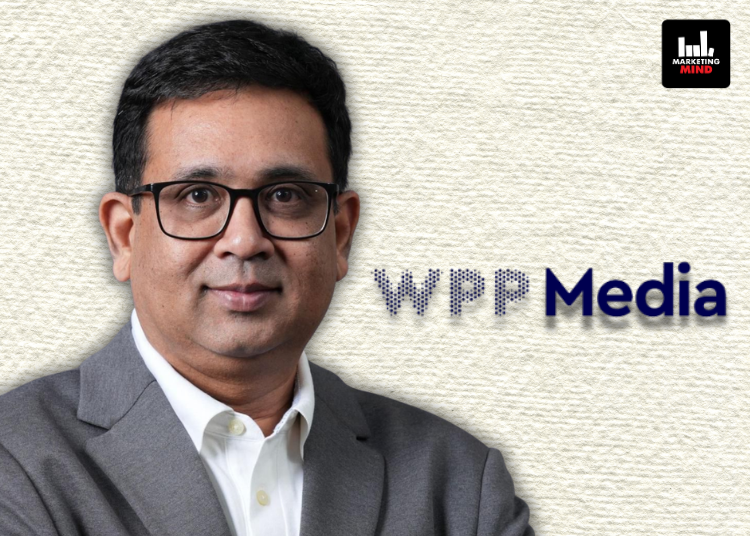
Few people have watched this transformation from as close a vantage point as Vinit Karnik, Managing Director, Content, Entertainment and Sports South Asia at WPP Media. Over the past few years, he has seen the way brands chase attention change dramatically, from chasing reach to building cultural presence.
“The marketing landscape has fundamentally shifted,” Karnik said. “We’re moving from passive reach to long-term cultural ownership, from shouting at the masses to whispering to communities through micro-trust.”
And yet, even as new entertainment properties continue to emerge, one platform still towers above all others in India’s marketing ecosystem.
IPL: From Gold Standard to Platinum Standard
The rise of concerts, festivals and digital entertainment IPs has sparked a frequent question in the advertising industry, has cricket’s biggest league lost its unmatched dominance?
Karnik gave a clear answer to that. “IPL has moved from gold standard to platinum standard,” he said. The reason, according to him, lies in a scale that no other property has been able to replicate. “The kind of audience aggregation that happens on the back of IPL in 60 days, I don’t think there is any property in this country that does that,” Karnik said.
Even as brands explore new cultural platforms, the league continues to remain a central pillar of India’s attention economy. “Brands want to experiment, and they are experimenting,” Karnik said. “That doesn’t take away anything from IPL.” The sheer concentration of viewership within a short time frame has kept the league at the very top of the marketing hierarchy. “There are many options today,” Karnik acknowledged. “But I don’t think there is any property that aggregates audiences like IPL.”
Live Events Have Become Long-Term Marketing Platforms
While cricket remains the biggest stage, the broader ecosystem of cultural intellectual properties in India has been expanding rapidly. “The number of IPs has only grown in the last three years,” Karnik said. “Trust me, every artist in his or her country wants to move to India because everybody wants the kind of audience aggregation that we have.”
India’s deep relationship with music and entertainment, he suggested, has made it a natural destination for global performers. “We are a music-loving country,” he said. “Whether it’s classical music or film music, it’s embraced across the country. So it’s a no-brainer.” But the biggest shift has happened in how brands participate in these events.
“Don’t look at live events as a one-evening wonder,” Karnik said. “The campaign starts when the event is announced. It runs for three to six months across platforms, touchpoints and geographies.” In earlier years, sponsorship structures around festivals were fairly straightforward. “Take a festival like Lollapalooza,” Karnik explained. “Earlier it was very clearly structured, a bank sponsor, a powered-by partner, maybe an alcohol sponsor. Not more than four or five categories were even sampled because it was prohibitive in terms of cost and ROI.”
Today, however, brands have begun treating live events as long-term community-building platforms. “Marketers have realised that the concept of economy is not only for the big brand, it’s an ecosystem,” Karnik said. “Tickets are sold out months before the event, which means marketing begins months before the event.”
The marketing activity now happens both before and during the event. “You create the surroundings around the event before it happens,” Karnik said. “And then the huge euphoria during the event with influencers, with consumers, with experiential zones.”
But the real marketing value lies in what happens after the event ends. “You create content that sits on your platform for time to come,” he said. “That’s the new marketing currency.”
From Influencer Reach to Micro-Trust
Another transformation Karnik has highlighted is the changing nature of influencer marketing. “What works in Western Maharashtra may not work in Eastern Maharashtra,” he said. “Data helps us decide which influencer works for which category in which market.” The shift, he explained, has been away from mass influence towards contextual credibility. “Geographical alignment and category alignment have become critical to building trust,” Karnik said.
Influencer marketing, once largely considered a top-funnel tactic, has expanded across the entire consumer journey. At the same time, the sports ecosystem itself has started broadening.
Women’s sports, in particular, have begun attracting categories that were previously absent. “This year brands like Kingfisher Beer, Bisleri and Open Air have come in to sponsor the Women’s Premier League,” Karnik said. “These categories didn’t exist earlier in women’s sports.”
That shift reflects a deeper change in how brands view the space. “A couple of years ago brands would ask if this was CSR or empowerment-led,” Karnik said. “Today we are creating campaigns that are strategic to women in sport. That’s the real shift.”
Even as artificial intelligence begins shaping the mechanics of modern marketing, Karnik believes the core of storytelling remains deeply human. Recalling a moment during an India–Pakistan cricket match, he described how human insight and machine intelligence have worked together in real time. “We were in the room listening to social chatter,” he said. “Machines were scanning, tools were processing, and our people were interpreting.”
The collaboration, he suggested, has been the perfect balance. “That ‘jugalbandi’ created magic,” Karnik said. “AI has given us speed and scale, but insight and cultural instinct still come from humans.” As automated content systems scale rapidly, marketers will increasingly act as cultural custodians rather than just media buyers.
“As agentic content systems scale our narratives, marketers must evolve from content buyers to strategic governors,” Karnik said. “We define the cultural soul while AI handles the execution.”
In an era overflowing with content and competing attention, the real challenge for brands is no longer just visibility. “Whether through high-velocity micro-dramas or immersive live experiences,” Karnik said, “our role is clear: own the narrative loop, or be lost in the noise.”
And perhaps that is why, even in a rapidly expanding universe of concerts, creators, influencers and AI-driven storytelling, India’s biggest marketing stages still look familiar, a stadium roaring under floodlights, millions watching together, and brands vying to become part of the moment.
Because in a country where culture travels fastest through shared experiences, platforms like the Indian Premier League have not just remained relevant, they have become even more powerful. As Karnik has put it simply, the benchmark hasn’t faded with time. It has only risen.