





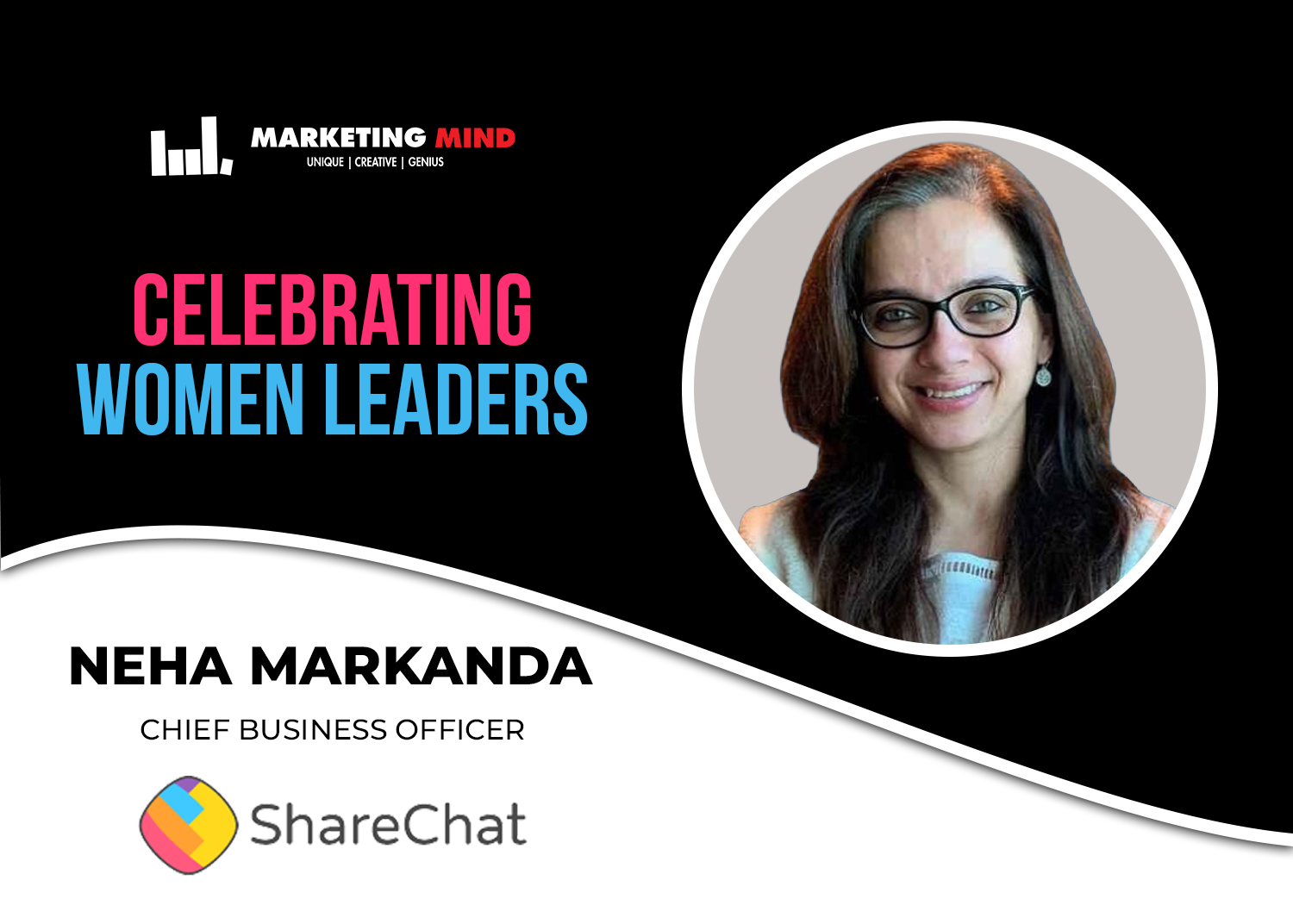
Some people talk about their careers like a timeline, job titles, milestones, promotions. Neha Markanda talks about hers more like a series of decisions. Quiet ones. Defining ones. The kind that slowly shape not just a career, but a personality.
One of those decisions came early. “I decided very early on that I was never going to do a side role. I will be the main character wherever I go,” she said. And somehow, that one line has explainedalmost everything that follows.
The fearlessness to enter rooms where very few women had entered before. The confidence to move from legacy consumer brands into the unpredictability of tech. The honesty with which she speaks about balancing work, family, pressure, and even illness. There’s no performance in the way the Chief Business Officer at ShareChat has spoken, just clarity, perspective, and the kind of self-awareness that only comes from living through enough life to stop pretending.
“I always believed in controlling the controllables, working hard, and then seeing where life takes me,” Markanda said. And over the course of the conversation, you realise that resilience, for her, was never a personality trait. It became a way of life.
“I’m a defence child. My father was in the army,” she said. “My childhood was really about discipline, putting the country first, and focusing more on what you do rather than where it takes you.” That grounding stayed with her as she built a career spanning over two decades.
“I started my career in CPG and spent around sixteen years across iconic brands like Pepsi and Horlicks,” Markanda said. “Then I moved into tech in 2019.” But some of her most defining lessons came much earlier, when she stepped into spaces where very few women existed.
“In my first job, I was probably the second woman in sales for ITC ever,” she said.
Instead of being intimidated by it, she found freedom in it.
“I looked at it positively because I was setting a precedent. I had nobody to match or be like,” Markanda said. “I had nothing to lose. So I became fearless.” And that fearlessness gave her permission to experiment. “I tried new things because there was no benchmark for me to follow, and thankfully, a lot of it worked,” she added.
Her years at PepsiCo further strengthened that confidence.
“The cola wars were huge back then, and I loved being in the mainstream of it all,” Markanda said. But perhaps the most striking part of the conversation is how intentionally she chose ambition.
“Very early on, I made a decision that I would never do a side role,” she said again, almost laughing at how certain she sounds. “I wanted to be the main character wherever I went.”
And yet, despite the confidence, she spoke about inspiration with remarkable humility.
“A lot of women have inspired me over the years,” Markanda said. “Punita Lal at PepsiCo was deeply inspiring. At Google, I had the chance to work with incredible leaders like Roma Datta Chaubey.” But leadership, according to her, is not limited to corporate titles. “Honestly, I find inspiration in anybody who does their job well,” she said. “There are janitors cleaning a restroom with a smile on their face, and to me, that’s inspiring.”
There’s something deeply revealing about that answer, the ability to admire effort before status. And perhaps that’s why she speaks about balance without pretending to have mastered it.
“Juggling two mainstream careers at home hasn’t been easy,” Markanda said. “But we’ve made it work because we’re honest with each other about schedules, responsibilities, and what we need.” Honesty, in fact, is a recurring theme in the way she approaches both life and leadership.
“I don’t try to fit along. I’m very transparent about what I need,” she said. “I have no filter, and I think that helps because people know I’m not pretending or covering things up.”
And then the conversation shifts. Not dramatically. Not emotionally. Just honestly. “I was diagnosed with cancer in 2020,” Markanda said quietly. For a moment, everything else fades into the background. “It really took a toll on me for two years,” she admitted. “But I was lucky enough to fight it off. I’m okay now.” What follows, however, is not bitterness or self-pity. It’s perspective.
“I actually see it positively now because I’m so grateful for the time I have,” she said. “There were so many shortcomings in me that I don’t waste my precious life on anymore.”
The experience, she believe, changed her in ways success never could. “I struggled a lot during those two years, but I learned so much in the process that my quality of life today is much better,” Markanda said.
And maybe that’s what makes her story feel so human. Not the achievements or the titles, but the way she talks about surviving difficult seasons without trying to romanticise them.
When asked what advice she would give her younger self, she pauses for the first time in the conversation. “I think I would tell myself to understand balance a little earlier in life,” Markanda said. Simple words. But coming from someone who has spent years building, surviving, leading, and starting over, they land with unusual weight.
Because beneath the ambition, the resilience, and the fearlessness, there’s also wisdom, the kind that only arrives after life teaches you what truly deserves your time, your energy, and your peace.