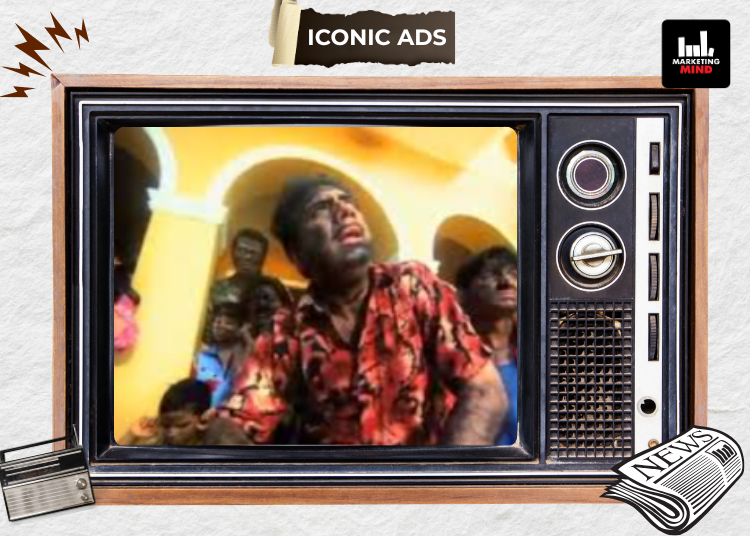







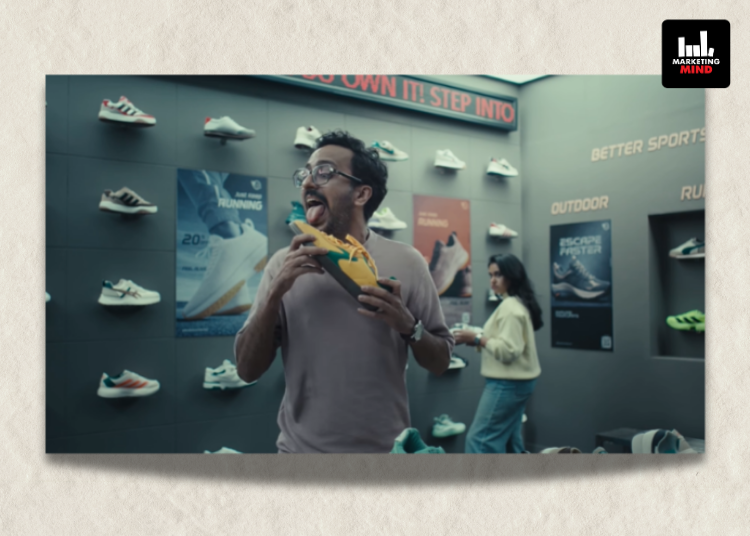
You do not usually expect an ice cream ad to begin with a man licking his son’s report card.
You expect the usual suspects, a glossy closeup, an exaggerated bite, maybe a slow-motion drip doing most of the heavy lifting while the product tries very hard to look irresistible. It is a formula the category has leaned on for years, polished enough to work and predictable enough to disappear into the blur of everything else fighting for attention.
And then this film arrives and does something wonderfully unexpected.
Before you have fully registered the absurdity of what is unfolding on screen, it has already done its job. It has made you pause, smile, and stay with it. In a summer crowded with brands trying to look delicious, Hocco and Moonshot have chosen to do something far more difficult. They have made ice cream advertising interesting again.
Behind this delightfully offbeat campaign, Roli Srivastava, VP Marketing at Hocco, and Devaiah Bopanna, Co-founder at Moonshot, have shared how a simple brand truth, a lot of creative trust, and a willingness to embrace absurdity have resulted in a film that has broken away from category convention without ever losing sight of the product it has been built to sell.

For Srivastava, the brief had never been about making another beautiful summer film. “I had been very clear that I was not going to put another year into talking only about Aamchi,” Srivastava said. “It would have looked too monotonous, and that is what Hocco has never stood for. We have believed that if we had to break clutter and become a brand people remembered, the same DNA with which we work on products had to come into communication as well.”
That thinking had come from an honest assessment of the category’s creative sameness. “If I had just made a nice ad, I would have been forgotten,” Srivastava added. “Sure, people would have seen it and said wow, it looks yummy. But who has not done that in ice cream already?”

Bopanna has seen the same category fatigue from the other side of the table. “Ice cream ads have had a certain DNA, a certain look, a certain feel,” he said. “There has been a templatised way of doing them. For us, it was about asking: what is the most interesting way of telling the world what the client wants to say?”
The answer had not arrived in a brainstorm room. It had arrived in the product itself.
“When I went down to their office and they made me try the ice creams, the first thing that struck us was that these products did not look like ice cream,” Bopanna said. “Aamchi looked like a mango. Leemo looked like a lemon. They looked like objects first and ice cream second. That disconnect, and then the surprise of what happens when you bite into it, that became the entire story.”
That tension between expectation and revelation became the campaign’s creative heartbeat.
Srivastava recalled that the partnership itself had begun with insight, not scripts. “Our first meeting was literally just about discussing what people were saying about Hocco. Viral. Different. Unusual. You cannot ignore them. We realised very quickly that we should not focus so much on what we wanted to say, but on what consumers were already feeling.”
Bopanna agreed. “The insight always has to come from the brand. They know their truth best. Our job is to build on that truth and tell it in the most compelling way possible.”
What followed was a month-long script development process that, according to Srivastava, became the campaign’s make-or-break phase. “They were very clear with us that the heart and soul of an ad is in the script. They asked for time. They said, trust us with that process.”
That trust paid off almost immediately.
“The moment they narrated the absurdity of this man trying to eat random things because he was so hooked, we chuckled,” Srivastava said. “And if a script can make you laugh without any visuals, you know it is going to land.”
For Bopanna, absurdity was never the point. Curiosity was.
“We are not trying to be random for the sake of being random,” Bopanna added. “We are solving for communication. It has to remain inclusive, interesting, and rooted in what the product is trying to say.”
That line, between delightfully disruptive and needlessly provocative, is one Moonshot has thought deeply about.
“When you are always trying to push the envelope, there is always a chance you push it too far,” Bopanna said. “Humour is one of the trickiest categories to work with. People think it is easy, but it is incredibly difficult to know where the invisible boundary is. We deeply think about where the joke stops being interesting and starts becoming uncomfortable.”
The film’s final absurdity was carefully calibrated. Strange enough to interrupt. Familiar enough to connect.
Srivastava admitted there had been “uncomfortable glances” internally when the script was first shared. “We knew we were not playing safe,” she said. “But we were also clear that while we wanted to disrupt, we did not want to disconnect.”
View this post on Instagram
That confidence was reinforced by the creative chemistry between the teams.
“They were incredibly professional and receptive,” Srivastava said. “There were iterations, there were concerns from our side, but never once did they behave like they knew better simply because they were the creative experts.”
Bopanna, in turn, credited Hocco’s decisiveness. “When clients trust you completely, the pressure is actually higher,” he said. “But that trust also allows the work to breathe.”
That breathing room extended to production.
The film had been shot across an intense 20-to-22-hour schedule beginning at 5 am, with director Rahul Bharti and producer Sulekha helping choreograph its precision. “Every shot was just three to four seconds,” Bopanna said. “It was all about preparation. When everything is tightly designed, you can pull off that kind of chaos beautifully.”
Notably, both teams had resisted the temptation to cast celebrity faces.
“We were very clear that we did not want a famous face,” Srivastava said. “There could not be a third hero. The hero had to either be the customer experience or the brand truth.”
That choice has made the content itself the star, allowing viewers to engage with the absurdity rather than with celebrity recall.
It also fits into Hocco’s broader philosophy of engineered surprise.
“We have constantly believed in surprising ourselves,” Srivastava said. “If we are not delighted by what we are creating, how can we expect consumers to feel excited?”
That philosophy has already shaped the brand’s product innovation, from Aamchi to Leemo, and now its communication.
Bopanna believes that same instinct, to create content people choose to watch rather than tolerate, is what defines modern advertising.
“Quality still wins attention,” he said. “People say attention spans are shorter, but they will watch something for four hours if it is genuinely engaging. The challenge is not duration. The challenge is whether there is enough happening every few seconds to keep pulling people back in.”
That rhythm has become central to Moonshot’s writing style.
“We intentionally write in a way where every few seconds, something interesting is happening,” Bopanna added. “You have to keep people inside your universe.”
For Srivastava, success has never been limited to views or impressions.
“The real success is when people begin making the content their own,” she said. “When they start breaking it down, creating memes, discussing it as culture rather than just consuming it as advertising.”
And perhaps that is exactly what this campaign has done. It has not merely sold ice cream. It has interrupted expectation. It has reminded a category obsessed with looking delicious that sometimes the smartest thing a brand can do is stop trying to look appetising and start being unforgettable.
As Bopanna put it, with characteristic understatement: “For us, it is still just about solving the brief with the best possible content idea.”
Only this time, the brief has tasted faintly of report cards, lemons, mangoes, and the delicious possibility that absurdity, when handled well, might just be advertising’s freshest flavour.