







There have always been houses that have not just been made of bricks and cement, but also of silence. The kind where walls have not just separated rooms, but relationships too. And somewhere in that quiet geography of distance, there has always been one very familiar Indian story, of families that have lived side by side, yet not together. A wall has stood in between, not just physically, but emotionally, like a long pause that no one has known how to end.
And then, there has been this one film that has taken that silence and turned it into something unexpectedly warm, chaotic, and unforgettable.
Notably, this iconic film has been conceptualised by Publicis India, a moment of storytelling that has taken a simple product category like cement and turned it into pure human emotion wrapped in humour and drama.
The story has opened with a house bearing two names, T.R. Thakur and S.R. Thakur. One structure, split perfectly into two halves by a stubborn wall. It has not just been architecture; it has been history. The kind of wall that has clearly witnessed arguments that no one has won, and silences that no one has broken. The audience has immediately understood: this has not just been a house, this has been a divided memory.
But then something unexpected happened.
Both brothers have been seen sitting separately, yet strangely in sync, flipping through old childhood photographs. The air has softened. The anger that once defined the space has quietly dissolved into nostalgia. For a moment, the wall has not looked like a barrier anymore, it has looked like a mistake that time has made.
And then comes the line that has shifted everything: “aao hum apne beech ki ye deewar tod dein” (Let us come together and break this wall between us.)
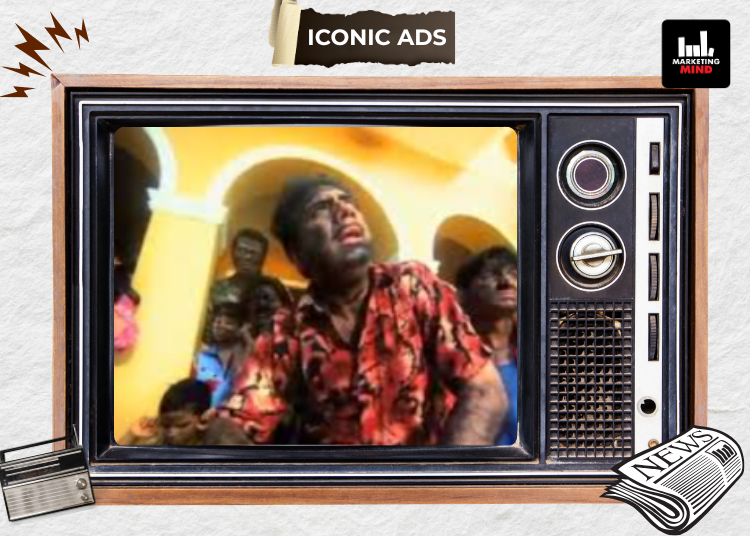
What follows has not been anger, it has been celebration. Both families have erupted into excitement, as if a long-awaited festival has suddenly arrived inside a home that had forgotten joy. Calls have been made across rooms, laughter has spilled over walls, and someone has even shouted, “arre dekho dekho bhaiya kya bol rahe hain” (Look, look, what brother is saying!) as if witnessing history being rewritten in real time.
Then the energy has escalated further, “tod do ye deewar” (Break this wall) has echoed like a collective chant.
What has followed has been pure, glorious chaos.
One by one, objects have been brought in, as if logic itself has been put on trial. Wooden logs have been swung, buckets have been dragged, kettles and tables have been pushed into action. Everything has been tried, everything has been thrown at the wall, and yet, nothing has happened. The wall has stood there, almost amused, as if quietly confident in its own identity.
The determination has only grown stronger. Someone from the family has stepped forward with a tree trunk, treating emotion like force. It has collided with hope. Still nothing. Then, in a moment of peak cinematic exaggeration, even TNT explosives have been tried. A blast of effort, a burst of anticipation, and yet, the wall has remained untouched. Clean. Unbothered. Unshaken.
And then comes the moment that has become immortal:
“bhaiya ye deeward toot ti kyun nahin hai”
(Brother, why is this wall not breaking?)
At that exact moment, everything has paused. The humour, the chaos, the emotion, all of it has hung in mid-air like dust after impact.
And then, as if descending from above, a calm, authoritative voice has arrived. It has not just spoken, it has declared reality itself:
“Tutegi kaise, Ambuja Cement se jo bani hai” (How will it break, it is made of Ambuja Cement.)
In that single line, the wall has transformed from obstacle to hero. It has not been stubborn, it has been strong. It has not been a problem, it has been proof. The product has not been advertised; it has been dramatized into identity.
The film has ended not with victory over the wall, but with acceptance of it. Both sides have realized that some things are not meant to fall apart. The wall has continued to stand, not as a divider anymore, but as a symbol of reliability so absolute that even explosives have not been able to question it.
What has made this film unforgettable is not the humour alone, nor the exaggeration of destruction, but the emotional inversion it has achieved. It has begun as a story of separation and attempted reunion, but it has ended as a celebration of strength so absolute that even human intention has not been able to override it. The wall has stopped being an object and has become a character, silent, immovable, almost reassuring.
And long after the laughter has faded, what has remained is that quiet irony: sometimes, what refuses to break is not what divides us, but what holds everything together.