






The 19th edition of Goafest – South Asia’s premier advertising and marketing festival – scheduled to take place from May 20 to May 22, comes at a time when industry gatherings are navigating changing participation patterns shaped by digital consumption and evolving client priorities.
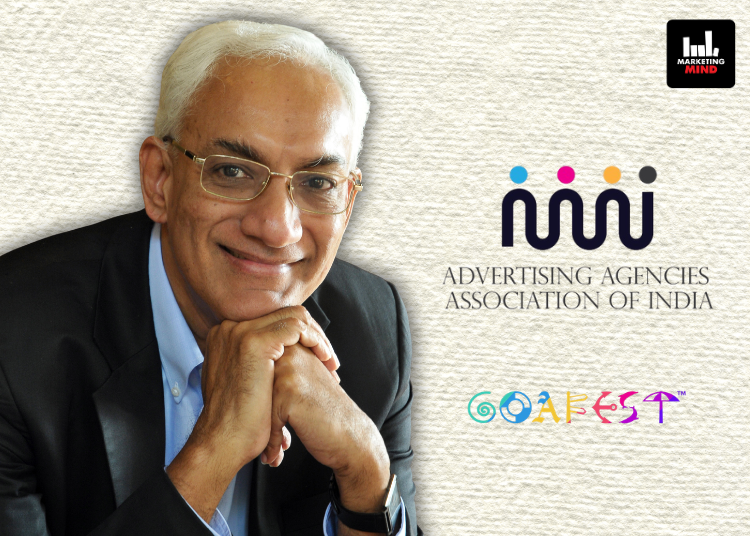
Within this broader context, Srinivasan K Swamy, Executive Group Chairman of R. K. Swamy and President of Advertising Agencies Association of India (AAAI), pointed to how engagement at Goafest has continued to remain strong over the years, even when compared with global benchmarks, with this year also reflecting a visible uptick in client participation.
In a conversation with Marketing Mind, Swamy drew attention to the last few years, highlighting a clear shift in participation patterns, with a growing presence of small and medium agencies participating in large numbers, alongside increased participation from owner-driven agencies. This widening base of participation, he indicated, reflects a broader transformation within the ecosystem, where engagement is no longer concentrated within only large network agencies. Another important aspect shaping this year’s edition is the scale of client attendance.
Swamy asserted, “It is expected that nearly 150 attendees this year will be from the client side at Goafest, a number that stands out even when compared to global benchmark events such as Spikes Asia and Cannes Lions.”
Industry events today are no longer competing only with one another, but with the constant stream of digital access to conversations and content. In that context, reflecting on what continues to make physical gatherings like Goafest culturally and professionally significant, Swamy said, if you look at global benchmarks like Cannes Lions, the ratio of people attending online has increased significantly compared to physical attendance. Post-COVID, the overall scenario has also changed quite a bit, with travel behaviour undergoing a major shift.
Today, people are generally more reluctant to spend on travel, and most clients and companies are cutting back on travel and hotel-related expenses. This has become a key challenge in bringing the same kind of volumes that earlier events used to see, whether at Cannes Lions, Spikes Asia, or AdFest.
He went on to say, “While there has still been some growth and the numbers have been improving, it is not easy to reach the same scale that existed prior to COVID. Earlier benchmarks, even pre-2020 levels, are difficult to replicate. However, despite these challenges, Goafest continues to see strong participation, with around 1,500 to 2,000 attendees still coming in. That in itself is a credible position and reflects the consistent effort behind the festival.”
A lot of this is driven by the work put in by the organising team to keep the momentum going, maintain interest, and actively market the different elements of Goafest so that people continue to want to be part of the experience.
“After all, Goafest is not just an awards night. It spans three awards nights, three days of talks, three days of masterclasses, along with after-parties and beach games. There are multiple layers to the experience, and that overall ecosystem is what people actually come for and engage with,” Swamy said.
He also highlighted, “That is also why engagement at Goafest continues to remain strong, often more experience-driven compared to other festivals like Cannes Lions, Spikes Asia, or AdFest, even if scale dynamics differ.”