




There has always been that moment. You are mid-scroll, half-watching a match, half-living on your phone, when something nudges you, not loudly, not aggressively, but just enough to feel like it belongs there. A notification, an ad, a suggestion that feels oddly well-timed. You have not gone looking for it, but it has found you anyway. And before you realise it, you have clicked, browsed, maybe even bought. This is not impulse anymore. This is design. This is how modern marketing has quietly embedded itself into the rhythm of everyday life, where discovery has felt like coincidence and convenience has started to feel like expectation.
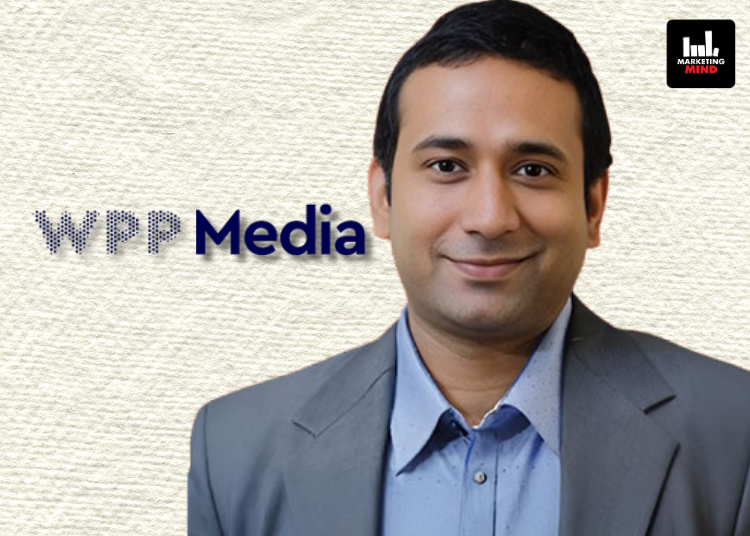
Sairam Ranganathan, Head of Commerce at WPP Media, has spent years observing and building within this very shift, where the lines between media, commerce and influence have not just blurred, but have almost disappeared.
He said the difference between a push notification and an in-feed ad has not just been technical, it has been contextual. Push notifications, he explained, have worked best within closed ecosystems like quick commerce platforms, where intent has already existed. But ads within social feeds have operated differently, they have intercepted attention in moments, not demands. The distinction has mattered because behaviour has changed. “If it is a push notification from a quick commerce site, that works. Because the context is that there is a moment, if you are leveraging that moment,” he said.
That moment, increasingly, has defined the entire commerce journey. Ranganathan said the future has not been about speed alone, but about the spectrum of need. “There will be things which you will want in 10 minutes. There will be things which you are okay to wait for half an hour or to wait for that day. And there will be things which you are okay to wait for two days, three days.”
What has emerged is not one model of commerce, but multiple co-existing timelines, shaped by urgency, emotion and intent. A forgotten Valentine’s Day gift has demanded instant delivery, while a planned wedding hamper has comfortably waited days. The same category, he pointed out, has lived across different expectations.
In this evolving landscape, quick commerce has not diminished brand value, it has redefined access. Ranganathan said premiumisation has never been about availability alone. “There will be consumers who are experience-seeking. Imagine, you know that you will get it if you order it in e-commerce, but you still go stand in the line. Because that is the love that you have for the brand.” The ritual of buying has remained intact for some categories, especially those tied to aspiration and identity. But for everyday essentials, behaviour has shifted decisively. “Soap is a monthly thing, it is not an experience,” he said, underlining how convenience has overtaken effort in functional purchases.
What has truly changed, however, is not just how consumers buy, but how influence works within that journey. “The influencer economy, in this framing, has stopped being about mass visibility and started becoming about micro-credibility. Trust, not traffic, has emerged as the new metric of influence.” Ranganathan said the shift has forced brands to rethink scale, moving away from vanity metrics toward meaningful engagement. Influence has become less about reach and more about resonance.
This has fed directly into what he called connected commerce, a system where every touchpoint has linked back to transaction. “Anything today can get connected to commerce, content, influencers, everything. But it has to be scientific. We have built proprietary tools to analyse influencer effectiveness across markets, genres and audiences. And we have created a robust measurement framework, input, output and outcome, so it is transparent and linked to marketing effectiveness.” The emphasis has clearly moved toward accountability, where creativity has not just inspired but has also converted.
He illustrated this shift with a simple but telling anecdote. “The time from decision to purchase is less than 60–70 seconds. Within that window, you have a brand, SKU, city, time of day, day of week. If you are not visible and optimised across these variables, you lose.” What this has meant is that marketing has no longer operated in phases. Discovery, consideration and purchase have collapsed into a single moment, one that has demanded precision over presence.
Yet, even as formats and platforms have evolved, Ranganathan has remained clear about what has stayed constant. “The brand’s role, the agency’s role is always constant, right? The ability to think of a solution that will drive business.” He said technology, AI and data have only acted as enhancements, not replacements. The core function of agencies has remained unchanged. “Agencies are in the business of helping clients grow. Any agency which does not do that has a problem.”
Having seen the industry evolve over decades, he reflected on how drastically the tools have changed. “I have grown up in an era where if you just know how to create a TVC and put a TV spot, you are done. Today, that is no longer the case.” What has replaced it is a far more complex ecosystem of touchpoints, each demanding relevance and timing. But the objective has not shifted. “The means to the end have changed, and agencies have always evolved by keeping in touch with what are the touch points that will help win consumer love and drive business.”
Even when asked to identify a single defining trend, Ranganathan resisted simplification. “All of them are interconnected in some form. There is an element of technology, there is an element of AI, there is an element of connections happening.” He described a world where media, commerce, influencers and technology have overlapped like intersecting circles, creating new opportunities at their convergence. “We live in a very interesting time where all these circles are coming together and there is that intersection point.”
And perhaps that is where modern marketing has quietly arrived. Not as a single discipline, but as a network of constantly interacting forces. Not as interruptions, but as integrations. Not as messages, but as moments.