




As digital cements its position at the centre of media planning, the way brands allocate budgets, measure impact, and engage consumers is undergoing a sharp and steady transformation. From the rise of creator-led ecosystems to the growing dominance of quick commerce and new-age content formats, marketers today are navigating a landscape that is far more performance-driven, fragmented, and opportunity-rich than ever before.
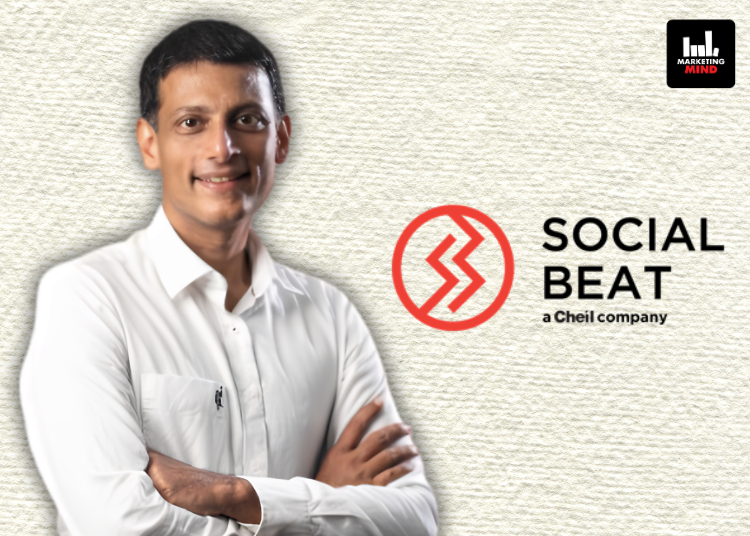
In a conversation with Marketing Mind on the sidelines of Digital Leadership Summit 2026, Suneil Chawla, Co-founder, Social Beat, unpacked how these shifts are not just altering where money is being spent, but also redefining how brands approach storytelling, partnerships, and outcomes in a digital-first world. With digital now commanding a significant share of total media spends and newer formats gaining traction at scale, the playbook is clearly evolving.
Chawla further delved into the changing role of influencers, the emergence of microdramas as a serious ad format, and the growing importance of metrics that go beyond reach. He also highlighted key inefficiencies brands continue to overlook, offering a perspective on where marketers may be overinvesting – and where untapped opportunities still lie.
Responding to the question on shifts in digital budget allocation across categories, Chawla noted that digital continues to see steady growth, now accounting for roughly 55% of total media spend across the industry, while markets like the US are already at 70-75%.
“This rise is largely being driven by a consistent shift of budgets from traditional channels such as television and print toward digital. Even large advertisers with budgets in the range of Rs 200-300 crore, who were earlier heavily invested in television, are now increasingly moving spends to CTV, marking a significant transition in media planning,” he highlighted,
Another key shift, he pointed out, is the move from celebrities to content creators. Where brands once prioritised big-budget ad films featuring celebrities, there is now a clear pivot toward creator-led content – something increasingly visible across categories.
“Lastly, in the e-commerce space, there’s been a growing dominance of quick commerce. While D2C websites have slowed down, investments are now flowing more strongly into quick commerce, followed by e-commerce, reflecting a broader evolution in how brands are allocating their digital spends,” he added.Chawla also emphasised that while influencer marketing has scaled rapidly, the real question is whether brands are optimising it for tangible business outcomes or merely chasing visibility.
Responding to this, he explained that brands began witnessing strong business outcomes as early as 2020, particularly during the lockdown period, which significantly contributed to the industry’s growth. However, he noted that the primary challenge lies in proving the immediate impact of influencer-led efforts. Drawing an analogy, he said it is similar to adopting a healthy lifestyle – while the benefits may not be instantly visible, they deliver stronger results over time, unlike short-term indulgences that eventually lead to negative outcomes.
He added, “Brands executing influencer marketing effectively are already seeing results, which is why they continue to double down and even triple their budgets year-on-year. On the other hand, brands that approach it incorrectly, by over-scripting content, selecting the wrong creators, or building weak storylines, fail to see the desired impact and, consequently, do not scale at the same pace.”
Chawla also pointed out the rise of creator-led brands, citing examples like Kusha Kapila. According to him, many content creators are now launching their own ventures, driven by the trust their audiences place in them to recommend and deliver the right products.
“This is a clear indicator that content creators and content consumption are set to play a significant role in shaping the future of commerce,” he mentioned.
Addressing the shift brought in by micro and regional creators, Chawla noted that today, for most brands, the primary metric has become engagement rate, as it clearly reflects how deeply audiences are interacting with content.
He explained, “This marks a move away from simply evaluating reach toward understanding whether the content is actually influencing consumer decisions. Brands are now focused on impacting both decision-making and consumption behaviour through content, making metrics like engagement rate and click-through rate far more significant than reach. At the same time, brands have also become less cost-sensitive in this space, having witnessed the tangible impact that creator-led content can deliver.”
“While brands traditionally look to optimise and tighten budgets, the creator ecosystem presents a contrasting trend. Brands are increasingly viewing creators as long-term partners in their journey and are therefore willing to invest more than what might typically be expected. This shift is also encouraging more individuals to enter the content space, as it is emerging as a viable side hustle as well as a full-time career,” Chawla added.
Looking ahead, Chawla sees strong growth potential over the next four to five years, with ample scope for creators to scale and for brands to become more generous in their investments, driven by the measurable impact this ecosystem continues to generate.
Responding to whether emerging formats like microdramas are evolving into a serious ad inventory layer or still remain experimental, Chawla noted that the format has already moved beyond the experimental stage, a shift that, in his view, happened around a year ago.
“While brands have only begun actively adopting it over the last six months, content consumption in this space has surged significantly, driven by a growing number of startups as well as distribution across platforms like YouTube and others,” he added.
Chawla described the consumption levels as “through the roof” and even “crazy,” adding that the scale at which audiences are continuously engaging with such content is somewhat “shocking” for a country like India and, at times, even “a little worrisome.”
Furthermore, he went on to say, “From a brand marketer’s perspective, however, the format is delivering strong traction. Both cost per view and cost per engaged user are much better compared to other formats, including OTT. While younger brands are yet to fully navigate this space, larger brands are moving faster in adopting it.”
He attributed this to the format being relatively more brand safe while also driving better engagement, making it appear like “an easy win” for advertisers.
In conclusion, Chawla highlighted one overhyped trend in digital marketing and one underutilised opportunity.
He noted, “Meme content and an excessive focus on followers have been overhyped for quite some time. On the other hand, programmatic DV360 is an underutilised opportunity, given its potential as a Google platform that allows campaigns to run across multiple publishers.”
Chawla explained that leveraging DV360 can help brands save at least 15-20% of their media budget. However, many brands still choose to go directly to individual publishers, which leads to a 15-20% leakage due to the absence of proper frequency capping for their audience.
“From a solutioning perspective, this is an area we are actively discussing with clients, as saving even 15% of the budget creates room to reinvest elsewhere-ultimately driving a stronger impact for the brand,” he added.