






In an era where consumer attention spans are shrinking by the scroll and premiumisation has become the default language of modern marketing, legacy confectionery brands are facing a unique challenge – staying culturally relevant without losing the mass familiarity and emotional memory they were built on. For impulse-driven categories, where purchase decisions are often made in seconds at a checkout counter or kirana store, the battle today is no longer just about visibility, but about remaining mentally available in a consumer’s constantly distracted world.
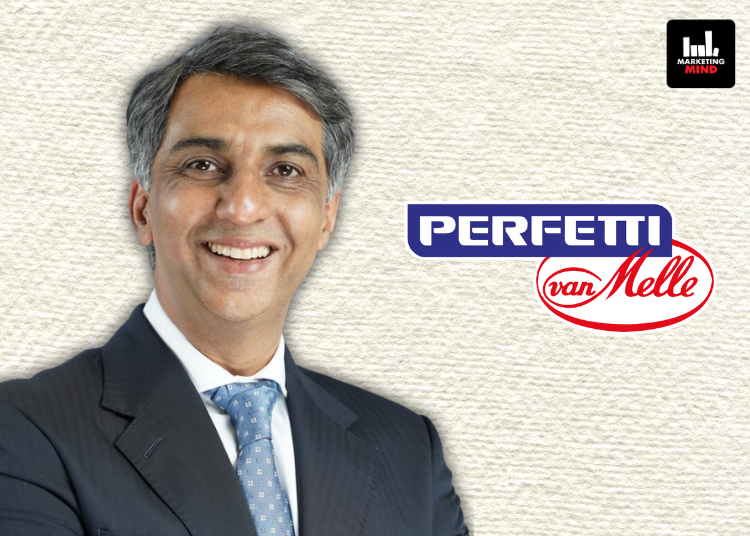
At a time when brands are obsessing over data models, premium storytelling and hyper-targeted consumer insights, Nikhil Sharma, MD at Perfetti Van Melle India, believes marketers often overestimate how much consumers actually think about brands in their everyday lives.
Speaking to Marketing Mind, Sharma unpacked the realities of impulse buying behaviour, why India’s one-rupee confectionery economy still survives amid premiumisation trends, and how legacy brands can modernise nostalgia without appearing stuck in the past.
When asked how impulse-driven categories, which are largely built on habit and memory, can keep legacy confectionery brands culturally relevant for a generation with constantly shifting attention spans, he pointed out that impulse categories are built primarily on availability. That is fundamental to impulse.
“This is why we place greater emphasis on distribution. Availability, in turn, is of two kinds: physical availability and mental availability. Physical availability is ensured by our sales team, while mental availability is created through data-breaking advertising. The idea is that when the consumer goes to the shop and she’s thinking about what to pick, our brand should come to mind instantly,” he added.
Addressing the growing market obsession with premiumisation and the balance between keeping products democratically accessible versus giving them premium storytelling, Sharma said, “We’ve built our business on democratic accessibility – which I can paraphrase as the one-rupee price point. Our products transcend all pop strata. There is no dissonance in seeing yourself, or anybody else, consuming those products.”
Going back to the question of what moves price, Sharma mentioned, the most important factor in that discussion is the proposition of the product itself.
“It would be foolish for me to say that a candy which has been selling for one rupee can suddenly add bells and whistles and move to five rupees. There has to be something meaningful for the consumer to believe that she is paying for something worth more than a rupee,” he said.
Furthermore, he went on to say that that is why categories like lollipops, which have more believable propositions, can make that price jump more easily. Unless, of course, you position that candy as something solving a major challenge for the consumer and sell it at Rs 10 – but then it moves into completely different categories and areas, such as gummy bears and fortified gummies.
“For instance, when you buy a Rs 400 bottle of fortified gummies, there are about 40 pieces inside, which effectively makes it Rs 10 each. But consumers don’t process that information in the same way because they are buying into a health benefit, not looking at it as candy. Those are the nuances you have to take care of,” he added.
Sharma also reflected on the complexities of consumer behaviour in the FMCG space, noting that data can measure certain aspects of consumer behaviour.
“But if data alone could truly do justice to that, every product in the world would be successful. The reality is that consumer behavior is never completely predictable. There are price elasticity models in the market that work with varying degrees of success. As marketers, and as people in this business, we would love to know exactly what impact a price change would have. But the truth is, it never predicts outcomes perfectly,” Sharma added.
Furthermore, he went on to add, “The biggest mistake marketers make is assuming that consumers wake up thinking about brands. They don’t. Consumers are busy living their lives. She’s not getting up in the morning saying, ‘I’m going to brush with a specific brand today.’ We feel that way because we are deeply engrossed and immersed in our brands. Then we come out of a consumer research session where five people are discussing our brand, and suddenly we believe that’s how the world thinks.”
He also emphasised that there is nothing that can be predicted with complete certainty.
“What we do know, however, from an Indian consumer perspective, and this is my belief, is that she will always look for value. Always. Whether it’s someone buying a Louis Vuitton bag, a salesgirl in a shop, or a bus conductor, all three will look for value,” he added.
Speaking about confectionery’s deep association with joy and nostalgia, Sharma explained how they market emotion without making the brand feel dated or stuck in the past. He candidly shared that there’s a whole retro theme that has become popular today, but the premise of retro is not about being stuck in the past. It’s about giving a modern take to what the brand stands for now.
“I don’t think marketers ignore a brand’s history at all. In fact, they are very aware of it. What they really do is make communication relevant to the times,” he said.