


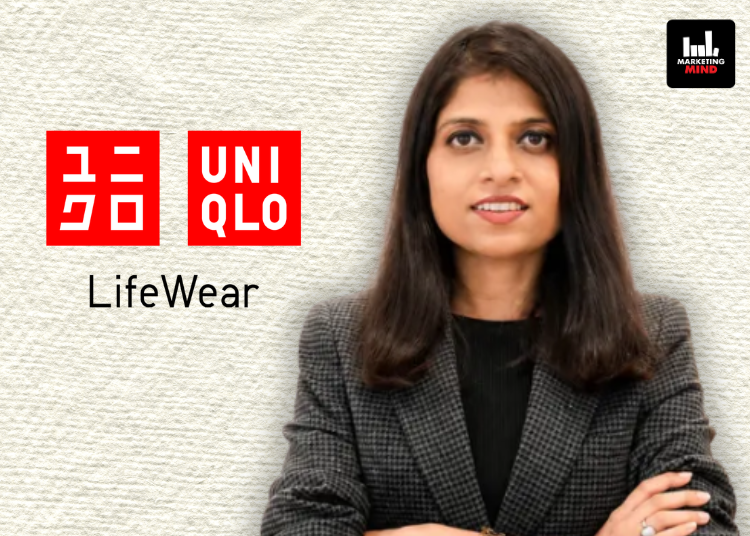
UNIQLO arrived in India without fanfare. No celebrity-fronted campaigns, no splashy launches. What it brought instead was a philosophy: LifeWear, the conviction that well-made, functional clothing can quietly improve everyday life.
Seven years on, with stores across Delhi, Mumbai, Bangalore, and Pune, that conviction has translated into one of retail’s more considered India stories.
In conversation with Marketing Mind, Nidhi Rastogi, Marketing Director, UNIQLO India, spoke from the sidelines of the brand’s UT pop-up, a celebration of pop culture spanning anime, manga, Disney, Star Wars, Maggi, Blue Tokai, and much more. The occasion captured something essential about how UNIQLO operates: global in its partnerships, local in its storytelling, and unwilling to mistake trend-chasing for innovation.
Taking the Global and Making It Local
When UNIQLO first arrived, the task was foundational. “UNIQLO was a much newer player and a lot of people didn’t know about it. We had to create awareness for the brand, and also for the whole philosophy of LifeWear, and what that means for India and its customers,” Rastogi recalled.
The central challenge was one every global brand faces: localise without diluting. How to take the global DNA and make it local, without losing the essence of a Japanese brand about simplicity, consistency, timelessness, efficiency, functionality?
The answer was product storytelling rooted in context. “In Delhi, we started talking about HeatTech in winters, a skinny and warm thermal. When we opened in Mumbai, we talked about AIRism, which is great for humid weather,” she explained. The product became the message, city by city.
“We have been able to understand our customers, take feedback and insights, and provide them with products, services, and experiences, and a combination of all three to make sure they come back again and again,” she noted.
Solving for Friction: Why UNIQLO Doesn’t Chase Trends
In a market where fashion cycles move by the week, UNIQLO’s positioning is almost countercultural. “We are a LifeWear brand. We believe clothing can make people’s lives better. We make essentials. Simple, made better,” she added.
The framework Rastogi uses is friction. “Any friction that a customer has about their clothes, we will solve for it. Any friction you have, we are saying we will solve for it through our clothes. And with that, we are making your life better,” Rastogi explained.
This is where UNIQLO’s innovation lives, not in aesthetics, but engineering. “We innovate on functionality, we don’t innovate on trends. Because that’s where customer delight happens. When you give customers a product they truly feel comfortable with, and which also makes them feel fashionable and functional. What we are chasing is comfort, functionality, and consistency, and offering that to our customers,” she claimed.
From Pop-Up to Feed: Translating Physical Experience Into Digital Currency
The UT pop-up is, by design, something that cannot be fully replicated on a screen. So how does UNIQLO translate that energy into a digital campaign?
Rastogi explained, “A physical pop-up is a complete experience. It’s a touch-and-feel thing. This pop-up is basically extending the story of a particular category, which is not possible in-store.” Translation happens on two tracks. First, content: “We create a lot of content, we have Key Opinion Leaders (KOL) come and share the experience. That’s how a lot of digital currency gets created.”
Second comes participation. Rastogi explained how they incentivise offline visits, wherein she revealed, “If you come to the pop-up and take a selfie, you get a chance to win something. So it’s creating an offline experience but having it amplify on digital.”
The strategic aim is both reach and FOMO. “You can’t bring the pop-up to so many people, but you can reach the content, tell people about the experience, create the buzz. When people see this online, they may be urged, or have that FOMO, to visit in person.” This results in a genuine 360-degree loop, not two campaigns running separately.
Co-Creation, Not Compromise: The Artist Collaboration Model
UNIQLO’s regional artist collaborations, as seen with Neha Doodles, Vidzilla in Bangalore, two artists at the recent Pune opening, raise a real question: when a brand with strong DNA partners with artists who have equally strong signatures, who gives ground?
Rastogi rejects the premise. “There’s no conflict because it’s all collaborative, done with the intention of co-creating something together,” she said. The shortlisting, in her words, is “very detailed and in depth.”
Artists are chosen because they already resonate with the brand’s audience. “We share our vision, we understand their vision, and then it’s a very collaborative work of bringing something together,” Rastogi added.
At the global level, the same logic applies with higher stakes. Partnerships with Disney, the Louvre, and manga committees are all direct institutional arrangements. “The quality of the partnership, as well as the designs, is of the best standard possible, because it’s representing not just us, but also the partners we are on board with,” she affirmed.
The Qualitative Conviction Behind the Metrics
When talking about balancing brand sentiment with business outcomes, Rastogi pushes back on the framing entirely. “You can’t have quantitative success if you don’t appeal qualitatively,” she noted.
Her reasoning is grounded in how purchase decisions actually work. “People are skeptical enough. Brands are a reflection of what we are, and they will buy into a brand only if they are convinced of the story it tells, and also are convinced of the narrative. Sometimes it’s hard to even explain what the motivation is, or what you feel towards a brand,” she said.
And sequence here matters. “Once that is established, the quantitative follows. If you are very sure of what your brand stands for and what role it plays in the life of the customer, and keep bringing that story alive, then whether it’s business, repeat, or traffic, that will follow. I don’t think it’s one or the other. They go hand in hand,” Rastogi observed.