





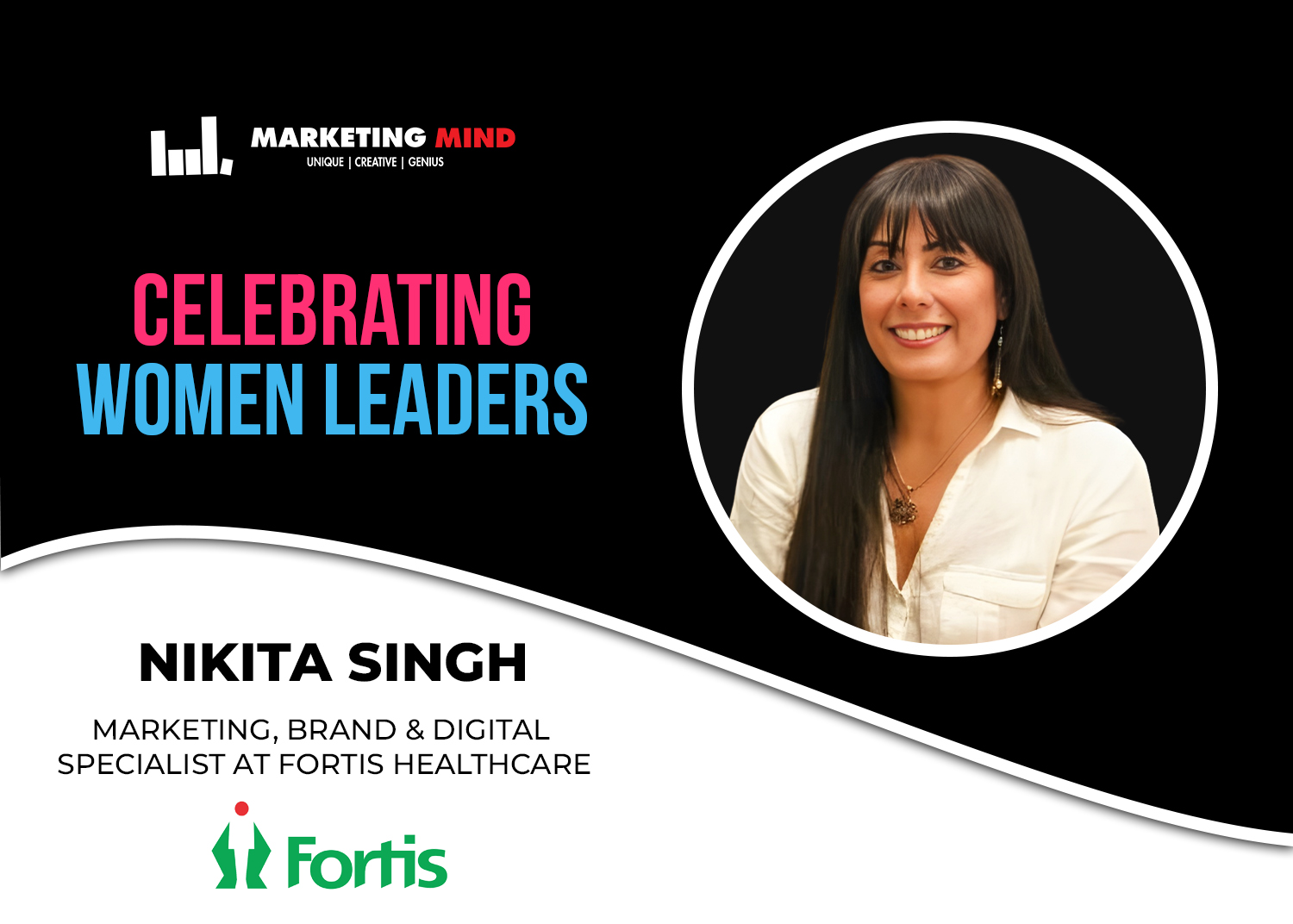
Some conversations don’t feel like interviews, they feel like a mirror. They nudge, they challenge, and somewhere between the questions and answers, they leave you thinking a little deeper about yourself. Speaking with Nikita Singh, Marketing, Brand & Digital Specialist at Fortis Healthcare, is exactly that kind of experience, one where clarity meets candour, and confidence is not performed, but practiced.
“Sometimes I get conscious when it’s about me, but what’s the point if I don’t speak to the younger generation?” she said, almost thoughtfully. And then, with quiet conviction, she grounded herself. “I’m good at my job. I’m not going to take that away from myself,” Singh said.
That ability, to acknowledge self-worth without hesitation, is something she believes more women need to embrace. “As women, we need to build ourselves up because we already have enough people to prove things to,” she added. “Nobody questions a man, they assume he’s good. A woman has to say it.”
For Singh, finding her voice hasn’t been accidental, it’s been intentional, shaped by both awareness and responsibility. “If I don’t speak up, then what’s the point? Especially when younger women are watching,” Singh said. She is equally clear about what feminism means to her, and what it doesn’t. “I’m a feminist, and I’m not afraid to say that. But feminism is not aggression, it’s equality,” she said. “It exists because inequality still exists.”
And that inequality, she explains, often shows up in subtle, everyday ways. “You will still find situations where women are not considered equally, whether it’s hiring, pay, or growth,” Singh said. “That’s why it’s important to keep raising your voice.”
But instead of letting that reality discourage her, she chooses to channel it into action. “If I focus only on what’s unfair, I’ll be demotivated in a second. I don’t want that. I’m self-driven,” she added. That self-drive is visible in how she leads her teams, with a clear emphasis on equality, not exception.
“In my workspace, I don’t assign gender. Everyone is equal,” Singh said. “Opportunities are equal. The only thing I ensure is that people feel safe while doing their job.”
She is particularly passionate about pushing women beyond limiting roles. “When people think of women in digital, they think social media and reels. No. Get into performance marketing. Understand numbers. Drive revenue,” she said. “That’s how you grow.”
And growth, according to her, begins with something simple but often overlooked: speaking up. “You have to make your voice heard. People will interrupt you, people will override you, but you have to hold your ground,” Singh said. “If I’m speaking, I say it clearly, let me finish.”
Respect, she believes, is not something you wait for. “How people treat you is based on how you treat yourself,” she added. “If I don’t respect myself, why will anyone else?”
Her clarity extends into addressing deeper, systemic issues as well. “Patriarchy doesn’t just affect men, it conditions women too,” Singh said. “If a woman succeeds and our first thought is to question how she got there, that’s internalised misogyny.”
And unlearning that, she believes, is just as important as breaking external barriers. “We need to recognise these patterns and consciously change them,” she added.
At the heart of her personal evolution, however, is a powerful source of inspiration, her younger sister. “She owns her truth and is not afraid to be disliked. That’s my ultimate goal,” Singh said. “If I am who I am today, I completely owe it to her.”
It’s a relationship that has shaped not just her perspective, but her courage. “She has the courage to stand up for her truth every single day. Watching that has changed me,” she added.
That same philosophy now reflects in how Singh shows up, both professionally and personally. “I don’t want to be someone who stays quiet to be liked. I want to be someone who speaks up and is respected,” she said.
Her journey, like many high-performing professionals, has also come with moments of burnout, something she speaks about with striking honesty. “Burnout looks like anxiety. It looks like constantly checking your phone, not being able to switch off,” Singh said. “It looks like losing touch with people because all you’re doing is working.”
Recognising it, she said, was the first step toward change. “I’ve started drawing boundaries now, small things like listening to music, gardening, cooking, taking time out,” she added. “I’m doing better, and that’s what matters.”
Even in moments of reflection, her advice remains rooted in reassurance rather than pressure. “You are enough. You’re doing the best you can. Everything will turn out fine,” Singh said. And perhaps the most powerful shift, she admits, has been internal. “I’ve realised that I’ve got my own back. I don’t need to wait for someone else to come and fix things for me,” she added.
Because at the end of it all, beyond roles, beyond achievements, beyond labels, her identity comes down to something simple and deeply human. “I am a human first. That’s what makes me who I am,” Singh said. And in a world that often demands more, faster, louder, that reminder feels quietly, powerfully enough.