




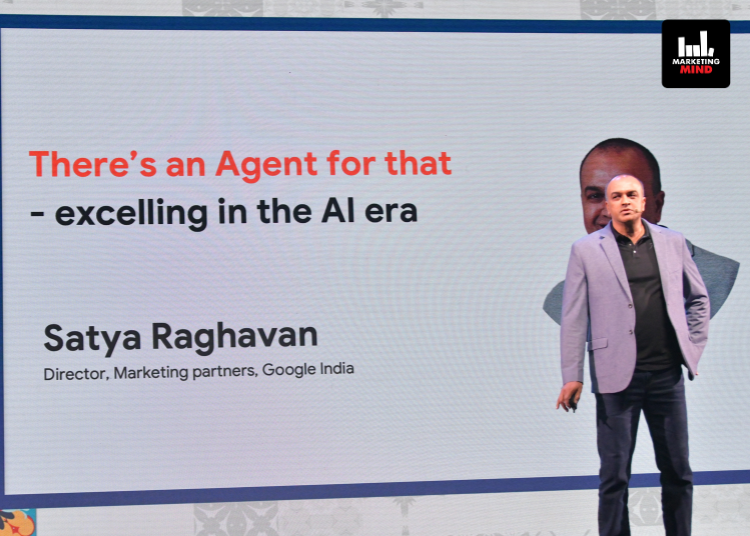
For years, the digital economy has conditioned consumers to believe there is an app for everything. At Goafest 2026, Satya Raghavan, Director, Marketing Partners at Google India, argued that the next evolution of that idea may be far more intelligent – there is now “an agent for that.”
Speaking during a Day 2 keynote session titled ‘There’s an Agent for That – Excelling in the AI Era’, Raghavan unpacked how artificial intelligence is moving beyond the generative phase into what he described as the agentic era, where specialised AI systems can perform tasks, make decisions, optimise workflows, and act on behalf of users, brands, and businesses.
Raghavan said consumer needs are changing rapidly, while consumer behaviour itself has evolved far beyond the traditional marketing funnel. Today, people are often searching, streaming, scrolling, and shopping simultaneously, creating more fragmented yet highly contextual moments for brands to engage with.
In response, he said “AI-powered search and advertising ecosystems are helping brands deliver more contextual and personalised experiences, making interactions more seamless in a consumer environment that is increasingly complex.”
A key idea that anchored the keynote was the concept of AI agents. Raghavan described an agent as a system or entity that performs a task on behalf of someone else, noting that in many ways, agencies themselves have always functioned like agents by solving business problems for brands and consumers. “The difference now is that AI is enabling that model to scale in new ways,” he suggested.
However, Raghavan cautioned that AI agents are only valuable when attached to the right use case. Their purpose, he said, is not to replace humans, but to automate repetitive tasks and free people to focus on higher-value creative and strategic work.
According to him, “AI has now moved from the generative era into the agentic era, where brands, platforms, and consumers can increasingly interact through interconnected AI agents and sub-agents. These agents can take on highly specific roles – from shopping agents that search for deals, compare products, and complete transactions on behalf of users, to AI campaign advisor agents that help brands optimise advertising campaigns seamlessly.”
Raghavan also pointed to the growing accessibility of AI tools, saying the barrier to entry is no longer technical expertise in the traditional sense. “You don’t need to know coding anymore — you need to know how to chat and give instructions,” he said, underlining how prompt-led interactions are changing how people work with technology.
He also highlighted how today’s consumer landscape itself has become far more complex, with six generations coexisting in a single household – from Boomers to Gen Beta – making personalisation and contextual understanding even more critical for marketers.
Raghavan said this shift creates opportunities not just for technology platforms, but for marketers, agencies, and creators as well. According to him, every marketer, agency and creator now has opportunities to build specialised AI agents for their workflows, while Google and its partners are already deploying ready-to-use agents across media, creative, and advertising functions.
These systems, he said, can also help solve practical marketing challenges by automatically repurposing assets across formats and platforms, reducing manual effort while improving speed and efficiency.
As AI continues to evolve, Raghavan said the future of marketing will not simply be about adopting technology for the sake of it, but about identifying the right use cases and building intelligent agents around them.
The larger message from the keynote was clear: the goal of AI is not to replace humans, but to help people work faster, smarter, and more effectively — with the next era of marketing likely shaped not just by generative AI, but by agents that can act, optimise, and execute on behalf of brands and consumers alike.