




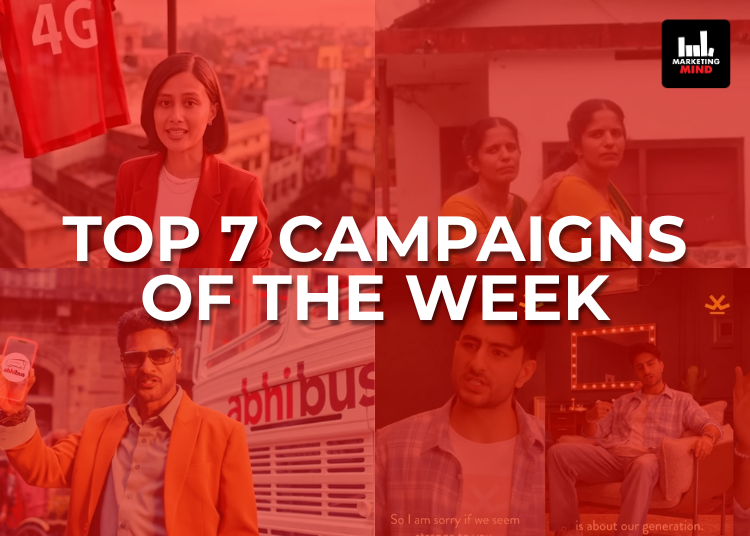
This week, brands collectively decided that subtlety was overrated. One campaign turned a Kerala village famous for twins into a sales metaphor, another floated a pickleball court in the middle of a lake, and somewhere in between, Prabhu Deva boarded a transparent bus to talk about booking transparency.
The result? Advertising that felt less like interruption and more like internet entertainment. The best campaigns this week leaned hard into culture, absurdity, fandom, and visual spectacle, but underneath all the chaos was sharp strategic thinking. Here are the campaigns that made the industry stop scrolling.
1. Flipkart Doubles Down On Chaos In Kodinhi
Flipkart’s latest SASA LELE campaign takes its love for loud, slightly absurd storytelling to Kodinhi, the Kerala village famously known as India’s “Twin Town.” Conceptualised by Kinnect and brought alive in collaboration with 22feet, the campaign uses the village’s real-life twin phenomenon as the perfect metaphor for “double deals,” with the film directed by Godwin D’mello and produced by SUPRVLLN.
The result is gloriously excessive: mirrored visuals, repetitive catchphrases, twin-led confusion, and sale-on-sale energy that feels intentionally chaotic. It’s bizarre, self-aware, and exactly the kind of advertising madness Flipkart has built its identity on.
2. AbhiBus Makes Transparency Literally Transparent
AbhiBus took the word “transparency” and ran with it, straight onto a fully transparent bus. Featuring Prabhu Deva, the campaign uses visual absurdity to simplify a very functional promise: travellers should know exactly what they’re booking.
From AI-powered bus insights to 360-degree previews and roadside assistance, the films turn utility into entertainment without overcomplicating the message. It’s a clever example of how even a feature-heavy campaign can feel playful when the visual idea is strong enough.
3. Cadbury Dairy Milk Turns A First IPL Match Into An Emotional Event
Cadbury Dairy Milk’s #TheKhaasSeat campaign may be one of the softest, sweetest IPL campaigns this season, and that’s exactly why it works. Created by Ogilvy with media support from Wavemaker, the campaign shifts focus from cricket spectacle to something deeply personal: watching your first-ever IPL match live.
Through reserved purple seats at Wankhede for first-time attendees, the brand transforms fandom into memory-making. The films beautifully capture the tiny emotional details, the nervousness, the awe, the joy of appearing on the stadium screen, and wrap it all in Cadbury’s signature warmth. Less “sports marketing,” more “core memory unlocked.”
4. District By Zomato Put Pickleball In The Middle Of A Lake
At this point, pickleball is less a sport and more a personality trait. District by Zomato understood the assignment and responded with a floating pickleball court on a serene lake. Conceptualised in-house, the campaign turns aspiration into visual spectacle while positioning District Play as frictionless leisure for urban India.
The floating court feels surreal enough to stop your scroll, but strategic enough to reinforce the platform’s promise: no chaos, no waiting, no planning fatigue, just show up and play. Somewhere between luxury wellness content and startup-culture aesthetics, this campaign found its sweet spot.
5. ConfirmTkt Gives AI A Massy IPL Entry
ConfirmTkt’s new AI Seat Finder campaign starring Virat Kohli, Rajat Patidar, and Venkatesh Iyer takes a deeply Indian pain point, waitlisted train tickets, and gives it the IPL treatment. Powered by conversational AI assistant TARA, the feature simplifies ticket discovery through natural-language prompts and real-time suggestions.
What makes the campaign click is how accessible it feels. Instead of positioning AI as futuristic and intimidating, the films package it as practical, intuitive, and genuinely useful. Cricket-led amplification only makes the message more mass-friendly.
6. OYO Revives India’s Most Iconic ‘Test It Yourself’ Memory
OYO’s latest campaign for Company-Serviced OYO pulls off something few brands manage successfully: weaponising advertising nostalgia without feeling dated. By bringing back Sasha Chettri, the instantly recognisable “Airtel 4G girl”, the brand taps directly into one of Indian advertising’s most memorable trust-building devices: “Don’t believe us? Test it yourself.”
The campaign cleverly borrows the behavioural memory attached to Airtel’s iconic 4G push and repurposes it for hospitality. Instead of network speed, the focus now shifts to hotel consistency, verified photos, smoother check-ins, trained staff, reliable Wi-Fi, and fewer “this room looked different online” surprises. The smartest part? OYO doesn’t over-explain the callback. It trusts the audience to connect the dots.
Even Airtel joined the conversation online, turning the campaign into a moment of inter-brand banter, a rare bonus in nostalgia marketing. More importantly, the ad signals something bigger: Indian advertising is increasingly mining cultural memory as strategy, not just sentiment. And in OYO’s case, the familiar “Test us” shorthand may just be the fastest route to rebuilding trust.
7. Wrogn Turns The Gen Z Debate Into A Monologue
Wrogn’s latest campaign featuring Ibrahim Ali Khan trades spectacle for conversation. Instead of selling fashion outright, the film taps into the ongoing debate around Gen Z being labelled “lazy” or “unserious,” framing the generation’s slower, more mindful approach to life as a conscious shift rather than a flaw.
The monologue-led storytelling gives the campaign a reflective tone that feels refreshingly restrained compared to louder youth advertising. More than a brand statement, it feels like a cultural response, and that’s what makes it memorable.
This week’s best campaigns had one thing in common: they understood that attention today comes from experience, not just exposure. Whether it was twins in Kerala, emotional IPL firsts, or a floating pickleball court that looked straight out of a fever dream, brands leaned into worlds people wanted to enter, not ads they wanted to escape.
And maybe that’s where advertising is headed next: less interruption, more immersion. Less “buy this,” more “come hang out in this idea for a while.”