





Kinder Joy has spent years building one of confectionery’s most recognisable names. Super Mario has spent decades building one of entertainment’s most enduring universes. When the two came together, timed to the theatrical release of The Super Mario Bros. Movie, it wasn’t a co-branded product so much as a collision of two pop culture giants.
The result is a launch that speaks across generations. Super Mario is nostalgia for the millennial rediscovering the character through cinema today. Kinder Joy, similarly, has never been just a children’s product. It has always carried the thrill of the unexpected. Together, they make for a pairing that is harder to ignore than either would be alone.
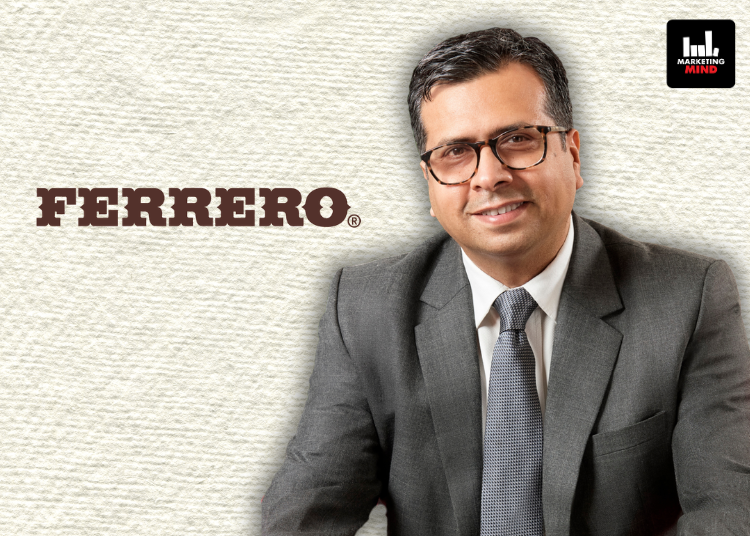
In conversation with Marketing Mind, Zoher Kapuswala, Chief Marketing Officer (CMO) at Ferrero India, outlined how the brand is sharpening its IP-led strategy from Harry Potter to Funko Pop DC line, and now Super Mario. The shift positions Kinder Joy beyond a kids’ treat, tapping into fandom and expanding its appeal across age groups and touchpoints.
Super Mario As A Movement
The first question is the most obvious one: why Super Mario, and why now? The answer starts not with the IP but with a broader philosophy about what brands are supposed to do.
“Earlier, brands were just products – great quality, smooth to consume. Then they evolved to brands with some emotional connection. And then they evolved to brands with experience. Kinder Joy is an entire embellishment of this particular thought process. It gives you a product with good quality. It has an emotional value, and it gives you the brand experience,” he explained.
Within that framework, the choice of Super Mario is less arbitrary than it might appear. The franchise is one of the most recognised entertainment properties on the planet. The theatrical release of the film gives the IP a natural cultural moment.
“Timing new launches is not simply about riding a wave. It is about being strategic in a calendar that never stands still. The year is always occupied,” Kapuswala pointed out.
“You had the World Cup in session one. Now you have the IPL. These elements are going to be there. You need to find a way to connect with the audience to cut through the clutter. Whatever you do, it has to be at a minimum threshold level to reach the consumer,” he further explained.
When The Surprise Outlasts The Chocolate
Kinder Joy has long been synonymous with a toy – the little plastic surprise that made the unwrapping as exciting as the eating. But with this Super Mario edition, the brand is pushing into territory it hasn’t fully occupied before: utility items and things you wear, carry, and display.
“This has been a thought process for a very long time. We used to have figurines, we used to have accessories, and now we have utility items. The entire plan is an assortment of surprises. We try to balance it so that people can remember what they associate with it,” Kapuswala said.
The insight behind this shift is quietly profound. A toy that sits on a shelf is a passive object. A bag tag that a child wears to school, or a pencil topper that sits on their desk in class, is a walking, talking brand impression.
“For whatever fandom they have for that particular character, they can also wear and carry it as an accessory. The surprise stays on with the consumer. The brand association does not end with just the product ending. If I’m just done eating the chocolate, I’ll forget about it and move on,” he added.
This trick establishes utility items as the antidote. They make the brand a permanent fixture in a child’s daily life, rather than a pleasant yet fleeting experience.
The Kidult In The Room
Kinder Joy has always been viewed as a children’s product. But the previous IP launches surfaced interest from Gen Z consumers and millennials.
Analysing this input, Kapuswala explained, “There is the kidult economy which is going on. Gen Z’s are much more expressive in their nature. They have no inhibitions about showing that they like toys. They participate in products they like. They are active. And when they participate, they also create.”
From The Screen To The Shelf
For Funko Pop DC, the activation centred on Comic Con. “It was a physical, high-energy event that created a ripple effect. Influencers were seeded into that environment and sent outward a spiral wave. They went to a limited number of stores, but influencers scaled it up, creating a good amount of chatter on social media,” he recalled.
For Super Mario, the canvas is bigger. And for the first time, cinema is in the mix.
“We are advertising on cinema screens. At the same time, we are activating cinema – with cutouts, with engagement activities around Super Mario – so the consumer is further able to connect with the brand’s expectations,” Kapuswala explained.
But the activation doesn’t begin or end at the cinema. “We create that interest and concentration before the consumer goes to buy the product. Even before they experience the product, they are experiencing the ideology behind it. Then we do the same experience at the point of purchase – customised units of Kinder Joy with Super Mario branding in store. It’s the entire activation. A 360-degree approach that touches all aspects of the journey,” Kapuswala noted.
Every Channel, Every Consumer
The question of channels is one of the most consequential strategic decisions a consumer brand makes in India right now. The conventional wisdom has shifted dramatically in the last few years; quick commerce in particular has rewritten the rules of impulse buying.
“Quick commerce and e-commerce are growing on two major factors,” he explained. “One is migration: consumers are moving from modern trade and traditional trade to quick commerce. But at the same time, those channels are also gaining new shoppers. The access of commerce is increasing to more and more dark stores. So it’s both organic and inorganic growth.”
But then comes the insight that distinguishes Ferrero’s approach from a brand that has simply followed the digital hype. “The middle class is evolving. As a result, people will consume. I am not sure that the new consumer will start from e-commerce, or might go to the neighbourhood traditional trade store, or the modern trade store. I am not aware of it. And hence, we take all channels,” he said. “The idea is to delight the consumer with surprise. When there is novelty, the consumer comes back,” Kapuswala claimed.