


Marketing Mind
Newsletter
  • Home
  • Advertising
  • Marketing
  • Media
  • Business
  • What’s Buzzing
  • AdAura Awards
  • More
    • All
    • Case Studies
    • Celebrating Women Leaders
    • Guest Posts
    • Podcast and Video
    AI Didn't Change What Agencies Make, It Changed What They're For

    AI Didn’t Change What Agencies Make, It Changed What They’re For

    The Hunger To Keep Improving Is What Drives Me: Jitika Gupta

    The Hunger To Keep Improving Is What Drives Me: Jitika Gupta

    Campaigns Don't Build Brands, Customers Do

    Campaigns Don’t Build Brands, Customers Do

    How AI Agents Are Helping Brands Run Hyper-Local Campaigns At Scale

    How AI Agents Are Helping Brands Run Hyper-Local Campaigns At Scale

    Confidence Is Something You Build By Doing Things That Scare You: Priyanka Arora On Embracing Uncertainty

    Confidence Is Something You Build By Doing Things That Scare You: Priyanka Arora On Embracing Uncertainty

    Why Global Pop Culture Is The New Local Marketing

    Why Global Pop Culture Is The New Local Marketing

No Result
View All Result
  • Home
  • Advertising
  • Marketing
  • Media
  • Business
  • What’s Buzzing
  • AdAura Awards
  • More
    • All
    • Case Studies
    • Celebrating Women Leaders
    • Guest Posts
    • Podcast and Video
    AI Didn't Change What Agencies Make, It Changed What They're For

    AI Didn’t Change What Agencies Make, It Changed What They’re For

    The Hunger To Keep Improving Is What Drives Me: Jitika Gupta

    The Hunger To Keep Improving Is What Drives Me: Jitika Gupta

    Campaigns Don't Build Brands, Customers Do

    Campaigns Don’t Build Brands, Customers Do

    How AI Agents Are Helping Brands Run Hyper-Local Campaigns At Scale

    How AI Agents Are Helping Brands Run Hyper-Local Campaigns At Scale

    Confidence Is Something You Build By Doing Things That Scare You: Priyanka Arora On Embracing Uncertainty

    Confidence Is Something You Build By Doing Things That Scare You: Priyanka Arora On Embracing Uncertainty

    Why Global Pop Culture Is The New Local Marketing

    Why Global Pop Culture Is The New Local Marketing

No Result
View All Result
Marketing Mind
No Result
View All Result
Home Marketing

WPP Expands Google Cloud Alliance To Advance AI-Powered Marketing Solutions

The expanded partnership will integrate frontier AI research into WPP's creative and media workflows, spanning generative media, audience intelligence, geospatial insights and agentic AI, with early solutions already deployed for clients including Duracell.

MM Desk by MM Desk
June 26, 2026
in Marketing
A A
WPP Expands Google Cloud Alliance To Advance AI-Powered Marketing Solutions

WPP and Google Cloud have expanded their strategic AI partnership with the launch of a frontier research initiative aimed at developing next-generation marketing, media and creative solutions. The move builds on the companies’ Cloud and AI collaboration announced in late 2025 and will embed advanced AI research into WPP’s creative and media workflows through its WPP Open platform.

The initiative will focus on applications spanning audience intelligence, content creation, campaign measurement, media optimisation, geospatial intelligence and agentic AI, combining expertise from Google Cloud, Google DeepMind and other Google teams with WPP’s marketing capabilities.

Among the first deployments is a generative media solution developed with Google DeepMind for Duracell’s global football campaign, enabling the iconic Duracell Bunny’s lip movements to be adapted across multiple languages while maintaining visual consistency. The collaboration has also produced AI-powered marketing intelligence tools and cultural intelligence capabilities designed to help brands better understand consumer behaviour and optimise campaign performance.

The companies said the expanded alliance reflects a broader shift towards AI-driven marketing, where research and experimentation are increasingly shaping creative production, audience planning and brand engagement. WPP added that the partnership is intended to combine frontier AI research with practical client applications to accelerate innovation across the marketing ecosystem.

Marco Montanaro, Marketing Director, Duracell, said: “At Duracell, we’re always looking for partners who share our appetite for pushing the boundaries of creativity. This collaboration with WPP and Google DeepMind delivered exactly that. It was a pioneering approach that allowed our Bunny to engage authentically across languages and markets during a major sporting moment. Innovation wasn’t just part of this project, it was the common thread from start to finish.”

Giuliana Coli, VP, Strategic Partnerships, WPP, said: “We believe the next phase of AI-driven creativity will be defined by by placing the human creative at the centre of the process. By collaborating with Google on frontier research to embed directly into our creative and media processes, we’re giving our people and our clients capabilities a distinct competitive advantage in the industry.”

Eleni Shaw, Principal Lead, Google DeepMind, said: “Working with WPP gives us something rare – The ability to see frontier research meet real creative challenges for our partners. That feedback loop between research and application is what accelerates both sides.”
Related Posts

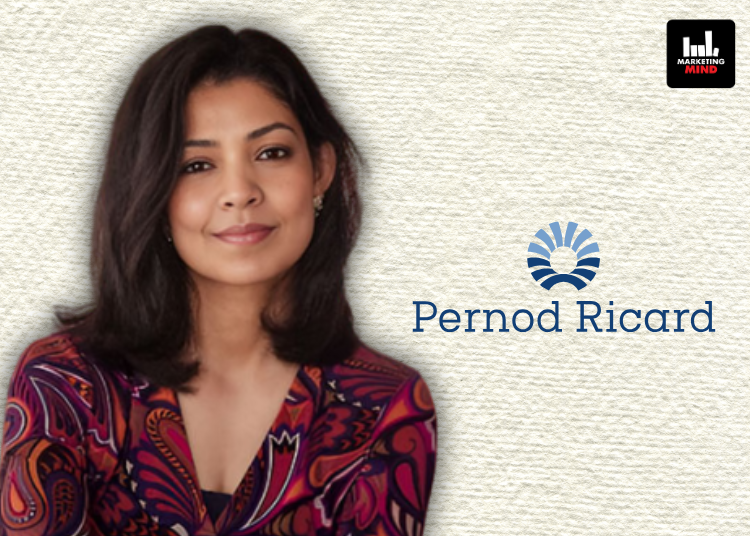
Every marketer talks about building awareness, few have to build it without talking about the product. India's alcobev industry has spent decades navigating that paradox. Direct product advertising isn't permitted, making surrogate advertising only one part of the marketing equation. The bigger challenge has always been earning something no media budget can buy: consumers who become advocates for the brand. For Debasree Dasgupta, Chief Marketing Officer, Pernod Ricard India, that's the category's biggest truth. “Consumers will always be your biggest advertisers,” she said. It's a philosophy born out of necessity. But it has also shaped how alcobev brands think about marketing itself. “The principles of marketing are the same whether it's personal care, beauty or alcobev. What changes is the complexity.” That complexity, according to Dasgupta, isn't just about navigating regulations. It's about understanding consumers, managing a diverse portfolio, and ensuring brands continue to grow despite having fewer traditional marketing levers than almost any other consumer category. India remains one of the world's most tightly regulated alcohol markets, where brands have to navigate different state regulations, on-trade and off-trade ecosystems, and restrictions on advertising products directly. For marketers, that has meant learning an entirely different language of brand building. Marketing hasn't changed, The rulebook has Dasgupta's own career has prepared her for exactly that. Rather than following a straight path, she has moved across FMCG, health and hygiene, beverages and now alcobev, picking up different lessons along the way. “I think the beauty is that I didn't have a linear career path, and I think it was very deliberate and intentional.” Each company, she said, has added a different layer to her understanding of marketing. “Unilever taught me to be extremely consumer-centric and always keep the consumer at the heart. Reckitt taught me commercial discipline, that marketing needs to lead to commercial and business growth. PepsiCo was about how brands stay relevant in culture.” Bringing those experiences together at Pernod Ricard has reinforced one belief. “The principles of marketing remain the same.” The environment, however, certainly doesn't. While referring to India as one of the markets where alcohol advertising is prohibited, she said, “The regulatory landscape is quite complex. That's the piece that one needs to wrap their minds around as you navigate and ensure that you're able to drive business growth.” That complexity extends well beyond regulation. “At a portfolio level, it's important for us to understand what is delivering the present and what will deliver tomorrow,” she said. “Where is growth coming from today, and where will growth come from in the future?” When consumers become the media channel Perhaps the biggest difference between alcobev and traditional consumer goods lies in how brands create awareness. Unlike an FMCG company, Pernod Ricard cannot advertise its alcohol products directly. “So the disadvantage that we have versus CPG is we cannot advertise products,” Dasgupta said. “We are in compliance with the guidelines that exist today.” Instead, the company builds visibility through compliant brand extensions such as packaged drinking water, while investing in passion points like cricket, music and digital platforms. “For us, the brand extension is a compliant business in itself and we can advertise that. We continue to double down on social, digital and influencer marketing for those businesses.” Furthermore, Dasgupta went on to say, “What we rely on is on-premise advocacy. We rely on sampling. We ensure that our liquids are extremely high quality so that when the moment of truth happens, consumers really love the product.” That has also meant new launches take longer to build. “Awareness build-up is much slower because consumers discover the product at the point of sale. That's very different from an FMCG brand.” Which naturally raises another question: if brands can't advertise products, who does the selling? “The consumers will always be your biggest advertisers,” Dasgupta said. “If you walk into an outlet and see someone drinking, it gives you confidence in the brand.” Word of mouth, she believes, becomes one of the category's most powerful marketing channels. “In a category where you can't advertise the product, consumers become your champions.” That consumer-first philosophy also shapes how global brands are adapted for India. For marketers outside the alcobev industry, the constraints may seem daunting. For Dasgupta, they've simply reinforced a timeless lesson. When the product can't do the talking, the brand, and ultimately the consumer, has to.
Feature

Consumers Are Our Biggest Advertisers: Pernod Ricard India’s Debasree Dasgupta On Surrogate Advertising

by Masaba Naqvi
July 22, 2026

Every marketer talks about building awareness, few have to build it without talking about the product. India's alcobev industry has...

iCubesWire Launches iQ Conversational AI Platform For Creator Marketing Intelligence
Marketing

iCubesWire Launches iQ Conversational AI Platform For Creator Marketing Intelligence

by MM Desk
July 22, 2026

iCubesWire has launched iQ, which it has described as India's first conversational AI platform for creator marketing intelligence. The platform...

Latest

Every marketer talks about building awareness, few have to build it without talking about the product. India's alcobev industry has spent decades navigating that paradox. Direct product advertising isn't permitted, making surrogate advertising only one part of the marketing equation. The bigger challenge has always been earning something no media budget can buy: consumers who become advocates for the brand. For Debasree Dasgupta, Chief Marketing Officer, Pernod Ricard India, that's the category's biggest truth. “Consumers will always be your biggest advertisers,” she said. It's a philosophy born out of necessity. But it has also shaped how alcobev brands think about marketing itself. “The principles of marketing are the same whether it's personal care, beauty or alcobev. What changes is the complexity.” That complexity, according to Dasgupta, isn't just about navigating regulations. It's about understanding consumers, managing a diverse portfolio, and ensuring brands continue to grow despite having fewer traditional marketing levers than almost any other consumer category. India remains one of the world's most tightly regulated alcohol markets, where brands have to navigate different state regulations, on-trade and off-trade ecosystems, and restrictions on advertising products directly. For marketers, that has meant learning an entirely different language of brand building. Marketing hasn't changed, The rulebook has Dasgupta's own career has prepared her for exactly that. Rather than following a straight path, she has moved across FMCG, health and hygiene, beverages and now alcobev, picking up different lessons along the way. “I think the beauty is that I didn't have a linear career path, and I think it was very deliberate and intentional.” Each company, she said, has added a different layer to her understanding of marketing. “Unilever taught me to be extremely consumer-centric and always keep the consumer at the heart. Reckitt taught me commercial discipline, that marketing needs to lead to commercial and business growth. PepsiCo was about how brands stay relevant in culture.” Bringing those experiences together at Pernod Ricard has reinforced one belief. “The principles of marketing remain the same.” The environment, however, certainly doesn't. While referring to India as one of the markets where alcohol advertising is prohibited, she said, “The regulatory landscape is quite complex. That's the piece that one needs to wrap their minds around as you navigate and ensure that you're able to drive business growth.” That complexity extends well beyond regulation. “At a portfolio level, it's important for us to understand what is delivering the present and what will deliver tomorrow,” she said. “Where is growth coming from today, and where will growth come from in the future?” When consumers become the media channel Perhaps the biggest difference between alcobev and traditional consumer goods lies in how brands create awareness. Unlike an FMCG company, Pernod Ricard cannot advertise its alcohol products directly. “So the disadvantage that we have versus CPG is we cannot advertise products,” Dasgupta said. “We are in compliance with the guidelines that exist today.” Instead, the company builds visibility through compliant brand extensions such as packaged drinking water, while investing in passion points like cricket, music and digital platforms. “For us, the brand extension is a compliant business in itself and we can advertise that. We continue to double down on social, digital and influencer marketing for those businesses.” Furthermore, Dasgupta went on to say, “What we rely on is on-premise advocacy. We rely on sampling. We ensure that our liquids are extremely high quality so that when the moment of truth happens, consumers really love the product.” That has also meant new launches take longer to build. “Awareness build-up is much slower because consumers discover the product at the point of sale. That's very different from an FMCG brand.” Which naturally raises another question: if brands can't advertise products, who does the selling? “The consumers will always be your biggest advertisers,” Dasgupta said. “If you walk into an outlet and see someone drinking, it gives you confidence in the brand.” Word of mouth, she believes, becomes one of the category's most powerful marketing channels. “In a category where you can't advertise the product, consumers become your champions.” That consumer-first philosophy also shapes how global brands are adapted for India. For marketers outside the alcobev industry, the constraints may seem daunting. For Dasgupta, they've simply reinforced a timeless lesson. When the product can't do the talking, the brand, and ultimately the consumer, has to.

Consumers Are Our Biggest Advertisers: Pernod Ricard India’s Debasree Dasgupta On Surrogate Advertising

July 22, 2026
ANHAD Group Appoints Adil Altaf As CEO To Lead Real Estate Vertical

ANHAD Group Appoints Adil Altaf As CEO To Lead Real Estate Vertical

July 22, 2026
I&B Ministry Launches 'Gems Of India' Challenge To Spotlight Grassroots Digital Creators

I&B Ministry Launches ‘Gems Of India’ Challenge To Spotlight Grassroots Digital Creators

July 22, 2026
RVCJ Media Ranks Among India’s Top Social Brands In Comscore Weekly Scorecard

RVCJ Media Ranks Among India’s Top Social Brands In Comscore Weekly Scorecard

July 22, 2026
iCubesWire Launches iQ Conversational AI Platform For Creator Marketing Intelligence

iCubesWire Launches iQ Conversational AI Platform For Creator Marketing Intelligence

July 22, 2026
Aisle Elevates Chandni Gaglani As Executive Vice President & Head To Drive AI-Led Growth

Aisle Elevates Chandni Gaglani As Executive Vice President & Head To Drive AI-Led Growth

July 22, 2026
Facebook X-twitter Instagram Youtube Linkedin
Discover the latest trends in Marketing, Advertising, Startups & Media.​
  • About Us
  • Millennial Achievers
  • Contact Us
  • Privacy Policy
  • Become a Guest Contributor
  • About Us
  • Millennial Achievers
  • Contact Us
  • Privacy Policy
  • Become a Guest Contributor

To Advertise & Collaborate With Marketing Mind, Contact Us Here.

Subscribe to our newsletter for exclusive content.

By continuing you agree to our Privacy Policy & Terms & Conditions


©2026 All rights reserved. Digi Giant LLP

To Advertise & Collaborate With Marketing Mind, Contact Us Here.

Subscribe to our newsletter for exclusive content.

  • About Us
  • Contact Us
  • Become a Guest Contributor
  • Terms & Conditions
  • Privacy Policy
Facebook X-twitter Instagram Youtube Linkedin

©2024 Copyright. RVCJ Digital Media Pvt Ltd

Welcome Back!

Login to your account below

Forgotten Password? Sign Up

Create New Account!

Fill the forms bellow to register

All fields are required. Log In

Retrieve your password

Please enter your username or email address to reset your password.

Log In
No Result
View All Result
  • Home
  • Advertising
  • Marketing
  • Media
  • Business
  • What’s Buzzing
  • AdAura Awards
  • More

© 2026 All rights reserved. Digi Giant LLP

This website uses cookies. By continuing to use this website you are giving consent to cookies being used. Visit our Privacy and Cookie Policy.