





Every marketer talks about building awareness, few have to build it without talking about the product. India’s alcobev industry has spent decades navigating that paradox. Direct product advertising isn’t permitted, making surrogate advertising only one part of the marketing equation. The bigger challenge has always been earning something no media budget can buy: consumers who become advocates for the brand.
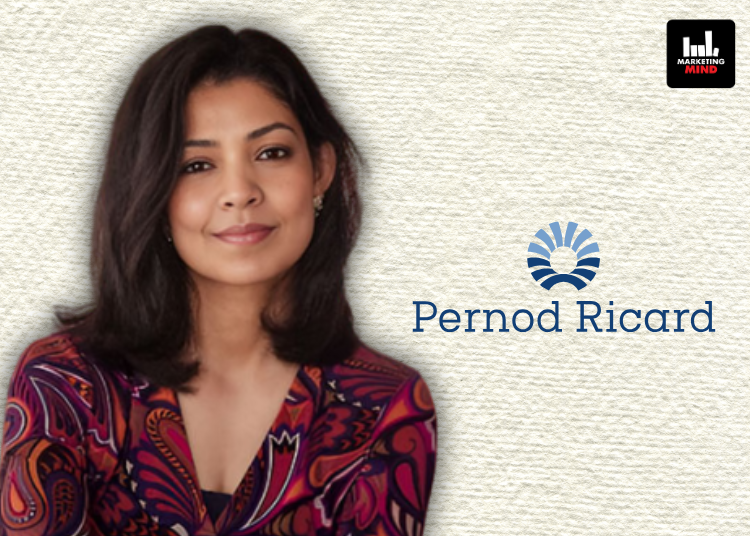
For Debasree Dasgupta, Chief Marketing Officer, Pernod Ricard India, that’s the category’s biggest truth. “Consumers will always be your biggest advertisers,” she said. It’s a philosophy born out of necessity. But it has also shaped how alcobev brands think about marketing itself.
“The principles of marketing are the same whether it’s personal care, beauty or alcobev. What changes is the complexity.”
That complexity, according to Dasgupta, isn’t just about navigating regulations. It’s about understanding consumers, managing a diverse portfolio, and ensuring brands continue to grow despite having fewer traditional marketing levers than almost any other consumer category.
India remains one of the world’s most tightly regulated alcohol markets, where brands have to navigate different state regulations, on-trade and off-trade ecosystems, and restrictions on advertising products directly. For marketers, that has meant learning an entirely different language of brand building.
Marketing hasn’t changed, The rulebook has
Dasgupta’s own career has prepared her for exactly that. Rather than following a straight path, she has moved across FMCG, health and hygiene, beverages and now alcobev, picking up different lessons along the way.
“I think the beauty is that I didn’t have a linear career path, and I think it was very deliberate and intentional.” Each company, she said, has added a different layer to her understanding of marketing.
“Unilever taught me to be extremely consumer-centric and always keep the consumer at the heart. Reckitt taught me commercial discipline, that marketing needs to lead to commercial and business growth. PepsiCo was about how brands stay relevant in culture.”
Bringing those experiences together at Pernod Ricard has reinforced one belief. “The principles of marketing remain the same.” The environment, however, certainly doesn’t.
While referring to India as one of the markets where alcohol advertising is prohibited, she said, “The regulatory landscape is quite complex. That’s the piece that one needs to wrap their minds around as you navigate and ensure that you’re able to drive business growth.” That complexity extends well beyond regulation.
“At a portfolio level, it’s important for us to understand what is delivering the present and what will deliver tomorrow,” she said. “Where is growth coming from today, and where will growth come from in the future?”
When consumers become the media channel
Perhaps the biggest difference between alcobev and traditional consumer goods lies in how brands create awareness. Unlike an FMCG company, Pernod Ricard cannot advertise its alcohol products directly.
“So the disadvantage that we have versus CPG is we cannot advertise products,” Dasgupta said. “We are in compliance with the guidelines that exist today.” Instead, the company builds visibility through compliant brand extensions such as packaged drinking water, while investing in passion points like cricket, music and digital platforms.
“For us, the brand extension is a compliant business in itself and we can advertise that. We continue to double down on social, digital and influencer marketing for those businesses.”
Furthermore, Dasgupta went on to say, “What we rely on is on-premise advocacy. We rely on sampling. We ensure that our liquids are extremely high quality so that when the moment of truth happens, consumers really love the product.”
That has also meant new launches take longer to build. “Awareness build-up is much slower because consumers discover the product at the point of sale. That’s very different from an FMCG brand.”
Which naturally raises another question: if brands can’t advertise products, who does the selling?
“The consumers will always be your biggest advertisers,” Dasgupta said. “If you walk into an outlet and see someone drinking, it gives you confidence in the brand.”
Word of mouth, she believes, becomes one of the category’s most powerful marketing channels. “In a category where you can’t advertise the product, consumers become your champions.” That consumer-first philosophy also shapes how global brands are adapted for India.
For marketers outside the alcobev industry, the constraints may seem daunting. For Dasgupta, they’ve simply reinforced a timeless lesson. When the product can’t do the talking, the brand, and ultimately the consumer, has to.