






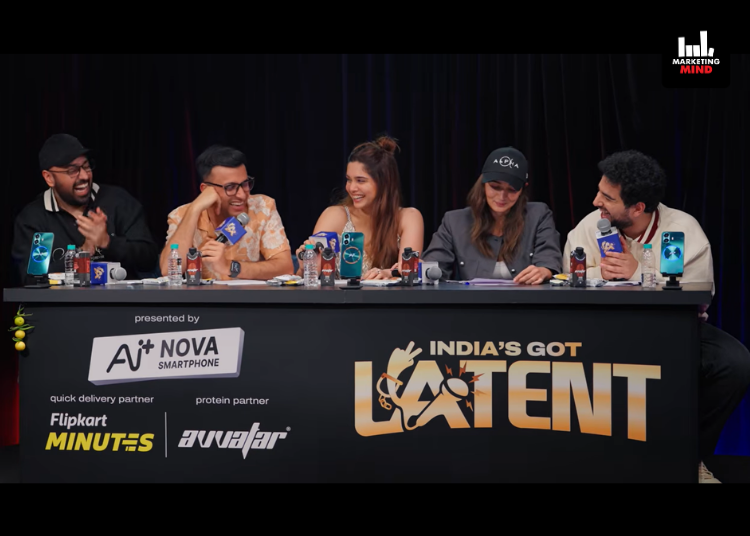
Let’s settle one thing first. Nobody clicked on India’s Got Latent to watch advertisements. Yet somehow, an hour later, viewers remembered Avvatar, AI+ Nova Smartphones, SNITCH and Flipkart Minutes almost as much as they remembered the jokes
That’s not luck. That’s marketing that has stopped behaving like marketing.
For years, brand integrations have followed the same tired script, show the logo, squeeze in the product, hope nobody skips. India’s Got Latent has flipped that equation. The brands haven’t looked like sponsors. They have looked like they belonged.
Which naturally raises the question every marketer has been asking since Episode One dropped: How did these brands get in, what risks did they take, and most importantly, did it actually work?
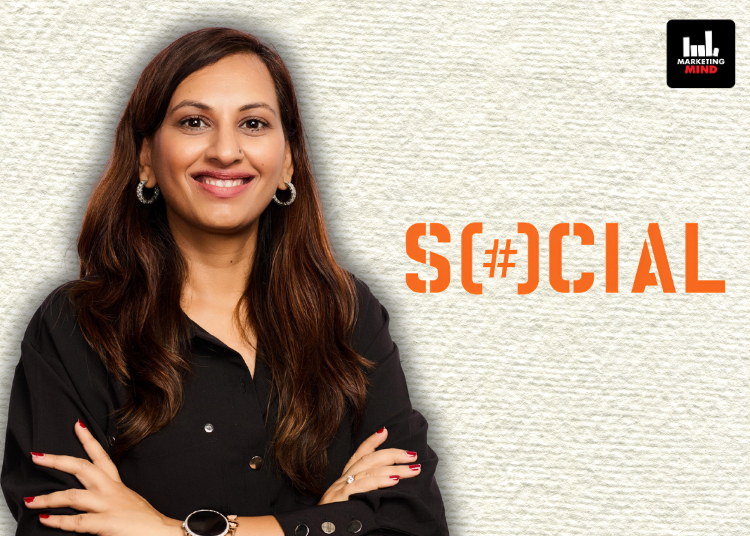
Marketing Mind spoke to Akshali Shah, Executive Director, Parag Milk Foods (Avvatar); Chetan Siyal, Chief Marketing Officer (CMO), SNITCH; and Archi Gogoi, Head – Brand, Marketing & Growth, AI+ Nova Smartphones, to unpack the strategy behind one of the year’s most talked-about sponsorships, from onboarding and humour to brand safety, search spikes and why culturally relevant IPs are fast becoming every marketer’s favourite media buy.
From onboarding conversations and humour to brand safety and business outcomes, one thing has become evident: today’s marketers are no longer chasing eyeballs alone. They’re chasing cultural relevance.
A Spot On Latent Isn’t Just Bought, Or Is It?
Ever since the episode dropped, one question has dominated marketing circles: How did these brands land up on Latent? For Shah, the answer has begun with relevance rather than reach. “Every marketing association begins with one simple question: Will this help us build a stronger relationship with our consumers? Reach is important, but relevance is even more critical.”

Shah explained that Avvatar had been tracking the show since its first season, with discussions beginning months before the latest collaboration. “People don’t just watch the show; they discuss it, share it and become part of its culture. That’s where real brand recall is created.”
She added that there hadn’t been an exhaustive approval framework. “There wasn’t a lengthy checklist exchanged between both sides. There was mutual trust. We shared our brand guidelines, gave the creative team the freedom to integrate the brand naturally and avoided over-planning every detail.”
SNITCH has echoed a similar thought process. Siyal said the brand had viewed the opportunity less as a sponsorship and more as cultural participation. “It was less about a checklist and more about cultural fit. At SNITCH, we don’t look at sponsorships as media buys. We look at them as opportunities to become part of conversations people are already having.”

According to Siyal, the show’s digitally native audience mirrored the brand’s own community.
“When those two worlds come together naturally, the partnership feels less like advertising and more like participation.”
AI+ Nova Smartphones has approached the partnership through the lens of timing. For Gogoi, relevance has outweighed everything else. “It takes months of conversations to arrive at a conclusion. Every marketer plans budgets in advance, but partnerships like these happen organically when the timing is right.”

She added that while annual marketing allocations are planned, flexibility has become essential for moments that suddenly capture public attention.
Not everyone has agreed with the idea that brand fit was the primary deciding factor. A senior industry executive, who requested anonymity said the onboarding process “was mainly a money game” and that there “was as such no criteria to partner with India’s Got Latent.”
Marketing Mind could not independently verify that claim. The participating brands, however, consistently maintained that audience fit, mutual trust and cultural relevance, not merely commercial investment, had shaped their decision to come onboard.
Humour Hasn’t Changed These Brands, It Has Amplified Them
Humour is perhaps the hardest currency in advertising. Push it too far and it becomes controversial. Play it too safe and it disappears into the endless sea of branded content. Yet, India’s Got Latent has built its identity on being unapologetically raw, making it an interesting playground for marketers looking to stay culturally relevant.
Interestingly, none of the three brands said the show had pushed them to become funnier. Instead, they believed the partnership simply gave them a platform where their existing personality could naturally thrive.
For Shah, the collaboration made perfect sense because it helped simplify an otherwise serious category. “Protein is often communicated in an overly serious manner, almost making it feel like a niche product reserved only for athletes. Our belief is quite different. Protein should become as much a part of everyday nutrition as carbohydrates or fibre.”
Rather than changing Avvatar’s communication style, Shah said the show provided the right cultural setting. “This association didn’t change our brand voice. It simply gave us a cultural context where humour was already an accepted language. Authenticity will always take precedence over simply trying to be topical.”
Siyal shared a similar perspective, explaining that humour has long been part of SNITCH’s personality. “Fashion can sometimes take itself too seriously, but our audience doesn’t. They appreciate brands that are self-aware, culturally relevant and willing to have a personality.”
However, he clarified that humour should never become an objective in itself.
“We don’t chase humour for the sake of being funny. India’s Got Latent didn’t change our approach; it validated it. It reinforced our belief that when a brand genuinely understands internet culture instead of trying to imitate it, people respond.”
For AI+, Gogoi believed the conversation extended beyond comedy altogether. “It isn’t about humour. It’s about moment marketing. It’s about cultural relevance.”
She explained that the brand has consistently invested in moments people genuinely care about instead of relying solely on conventional product-led communication. “Nowadays, a lot of young people prefer unscripted content they can relate to. Nobody understands technical language anymore. We need to speak a language people connect with.”
That philosophy has also influenced AI+’s unconventional product launches, including open review programmes and live audience interactions before commercial rollouts.
Beyond Impressions: The Real Win Has Been Becoming Part Of Culture
Despite the episode clocking millions of views, none of the marketers claimed impressions alone determined success. Instead, they repeatedly pointed towards conversations.
Shah said Avvatar has tracked engagement quality, branded search trends, community participation and consumer conversations over vanity metrics. “This has easily become one of the most talked-about brand associations for Avvatar. Consumers, influencers, creators, retailers, distributors and even our internal teams have been actively discussing the collaboration. Genuine conversations cannot be bought through conventional advertising.”
While immediate business outcomes for some of Avvatar’s newer categories remain difficult to quantify, Shah believes the collaboration has already achieved something more valuable.
“Avvatar is increasingly becoming part of conversations beyond the core fitness community. Sometimes, the best marketing doesn’t feel like marketing at all.”
SNITCH has arrived at a similar conclusion. According to Siyal, audiences have actively searched for products featured in the episode, tagged the brand across platforms and organically created content around the partnership. “Reach is the easiest metric to measure, but it’s rarely the most meaningful.”
He added, “People weren’t just watching the show; they were asking where the outfits were from, tagging SNITCH, creating content around the association and actively searching for products featured on the show. That’s when you know the brand has become part of the culture rather than simply appearing alongside it.”
“Those are the moments we value most because they’re earned, not bought.”
For AI+, Gogoi said every culturally relevant partnership has translated into stronger discovery for the relatively new smartphone brand. “We do see a surge in search numbers every time we do a partnership.”
She added that while branding remains a long-term exercise, each collaboration has contributed to stronger engagement and higher consumer interest.
Brand Safety Hasn’t Been Ignored But Redefined
While many believe that a show like India’s Got Latent inevitably raises questions around brand safety. Its unpredictability is also what has made it popular. For Shah, responsibility and cultural relevance can coexist. “Brand safety is never an afterthought. It’s a fundamental part of every partnership we evaluate.”
She added, “Audiences today appreciate authenticity over perfection. We believe brands don’t have to choose between being culturally relevant and being responsible.”
Siyal agreed that unpredictability is often part of authenticity. “Every partnership goes through internal discussions, and brand safety is naturally part of that conversation. But authenticity often comes with a degree of unpredictability.”
Rather than expecting creators to alter their identity, he said brands should choose platforms that naturally align with their own values. “Our job is to choose platforms that align with our values and audience, not expect creators to become something they’re not.”
Gogoi summed up AI+’s philosophy in one sentence. “If something is relevant for us at that moment, of course we’ll partner with it.”
The sentiment has also extended to the future. None of the three marketers viewed India’s Got Latent as a one-off experiment. Shah said Avvatar will continue exploring creator-led content, sports and entertainment properties that genuinely resonate with consumers.
Siyal echoed that approach. “Consumers today don’t separate entertainment, creators and brands the way they used to. The brands that win are the ones that participate in culture instead of interrupting it.”
He was quick to add that cultural relevance doesn’t mean chasing every viral trend. “We’ll continue to be selective. If the association feels natural and adds value to the audience experience, it’s something we’ll continue investing in.”
Perhaps that’s the biggest lesson India’s Got Latent has offered marketers. The show hasn’t simply demonstrated how brands can sponsor content. It has demonstrated how brands can quietly become part of culture itself. In an attention economy where audiences skip, block and scroll past traditional advertising, that may be the only metric that has truly mattered.