





For restaurants today, good food is no longer enough. Consumers, especially Gen Z, can order almost anything to their doorstep, stream entertainment from their couch and spend entire weekends socialising online. The real challenge for hospitality brands isn’t attracting diners; it’s convincing them to leave home in the first place.
For SOCIAL, that challenge has become the foundation of its marketing strategy.
Rather than treating campaigns as seasonal promotions or menu launches, the brand has steadily evolved them into immersive cultural experiences. Its latest initiative, Mela Mexicana, is designed as a month-long cultural property that transforms everything into an experience rooted in Mexico while retaining SOCIAL’s unmistakably Indian identity.
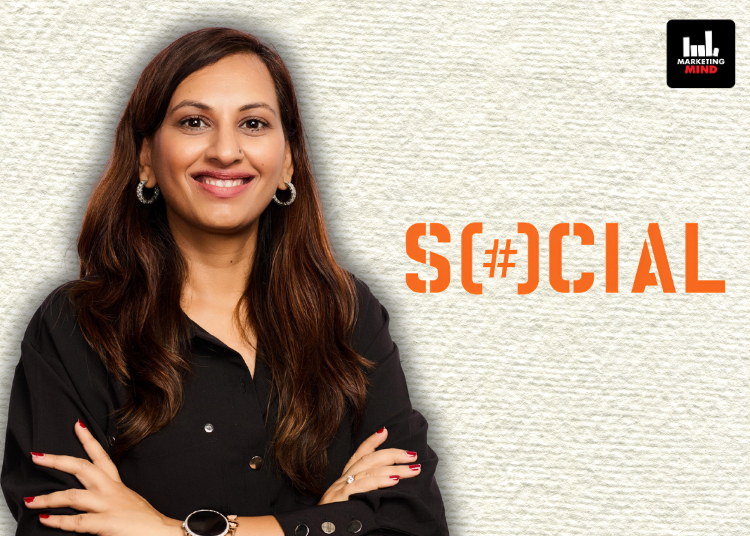
Speaking to Marketing Mind, Divya Aggarwal, Chief Growth Officer at Impresario Handmade Restaurants, explained why experiential marketing has become the brand’s strongest growth lever, why authenticity matters more than scale, and why the future of hospitality belongs to communities rather than customers.
Selling Experiences, Not Just Meals
Long before experiential marketing became an industry buzzword, SOCIAL was quietly building spaces designed around community and connection.
According to Aggarwal, those two ideas remain the brand’s strongest pillars.
“The DNA of SOCIAL has always been around community and connections,” she said. “Everyone talks about community today, but this has always been core to the brand.”
That philosophy has only become more relevant as consumer behaviour evolves. Drawing from an in-house research initiative titled Voices From The Hood, where SOCIAL spoke to nearly 10,000 young consumers about their aspirations, habits and cultural preferences, Aggarwal said one insight stood out consistently: Gen Z wants experiences worth stepping out for.
“They’re perfectly happy staying home with Netflix, gaming or social media,” she explained. “If they have to step out, they need a strong enough reason. Experiences are everything for them.”
That understanding shapes almost every marketing decision SOCIAL makes today.
Whether it’s karaoke nights, dating events, fan communities, music launches or cultural festivals, every initiative is built around giving people a memorable reason to visit rather than simply offering another dining option.
Building Mela Mexicana As A Cultural Property
Following the success of its Korean cultural celebration, ‘Kore-yeah’, SOCIAL turned to Mexico for its next cultural property, not because it was trending, but because the brand saw striking similarities between Indian and Mexican culture.
“The thought process was the same. We like working with emerging cultures that resonate with young consumers,” said Aggarwal, adding that both cultures share a common spirit of colour, chaos, energy and bold flavours.
Instead of launching a conventional Mexican menu, SOCIAL built Mela Mexicana as a full-fledged cultural IP, with the name itself reflecting its celebratory intent. The month-long activation transformed all 55 SOCIAL outlets with paper picados, bespoke menus, Mexican-inspired décor, authentic serving rituals, Latin music performances, Lotería Nights and Telenovela-themed events, ensuring every touchpoint extended beyond food.
“From a marketing lens, it gives people more reasons to come. You’re not doing a tick-box activity. You’re immersing people into the essence of the culture,” she said. Authenticity became the campaign’s biggest differentiator.
“There is SOCIAL-ness, there is Indianness, while still remaining Mexican,” Aggarwal noted. The collaboration extended to authentic Latin bands, specially sourced cutlery, welcome experiences, traditional drinks and serving rituals, while members of the Mexican community in India also participated in the celebrations.
“The Embassy helped us ensure we were doing things that genuinely meant something to their culture,” she said, adding that authenticity wasn’t just about credibility but also became a powerful marketing differentiator. “A kickoff party with the Mexican Embassy is pretty cool. Who does that?”
Experiential Marketing Is The New Loyalty Program
Aggarwal believes hospitality brands can no longer rely on familiarity alone.
“SOCIAL is already a known brand,” she said. “Awareness isn’t our challenge anymore.”
The bigger challenge is giving consumers fresh reasons to return.
“As a business person, I have to keep giving people newer reasons to come back.”
That explains why experiential IPs have become permanent fixtures in SOCIAL’s calendar.
Matchbox, the brand’s dating initiative, emerged from a simple consumer insight: countless first dates were already happening at SOCIAL outlets.
“I’ve met so many people who are married today and tell me their first date happened at SOCIAL.”
Instead of forcing a marketing narrative, the brand simply amplified behaviour that already existed.
The same thinking drives Jumpstart, which brings communities together through morning experiences, Fan’verse fan communities, Pan SOCIAL with Universal Music for emerging artists, Atlys travel collaborations and several music-led partnerships with Sony Music, Universal Music and T-Series.
Each initiative is designed around participation rather than promotion. “They become part of people’s stories, that’s the power of place,” Aggarwal said.
Word of Mouth Vs Advertising
For a brand built on word-of-mouth, creators aren’t simply media channels- they’re experience amplifiers. Aggarwal believes the creator economy has fundamentally changed how hospitality brands should approach communication.
“People trust word of mouth much more than advertising.”
That doesn’t necessarily mean recommendations from friends anymore. It increasingly comes from creators consumers already trust.
“The creator ecosystem today is much bigger than influencers simply reading a script.”
Rather than optimising campaigns around follower counts, SOCIAL focuses on selecting creators who genuinely enjoy the experience. “I don’t want to push people to say, ‘Come to SOCIAL.’ People already know us.”
Instead, creators become storytellers.
“Our purpose is to show the experience.”
That philosophy also explains why the brand avoids scripted collaborations. “It’s important that the content is raw and authentic. We never tell creators exactly what to say.”
Aggarwal pointed to broader industry shifts as validation of this approach, referencing companies increasingly reallocating budgets from traditional television advertising towards creator-led marketing.
Consumers, she argued, can instantly recognise manufactured endorsements.
“People know when something isn’t authentic,” Aggarwal laid out sharply.
How SOCIAL Measures Marketing Success
While experiential marketing often generates social buzz, SOCIAL evaluates campaigns through multiple business lenses.
Revenue and footfall remain essential. So do repeat visits.
“We’re a neighbourhood café,” Aggarwal said. “Repeat customers are extremely important.”
Beyond those metrics, the team closely tracks engagement across digital platforms, earned media coverage, PR outcomes, user-generated content and overall brand conversations.
“What are people saying? Are they creating content? What are the key messages being picked up?”
Internally, channel-wise ROI across CRM, digital and other marketing investments is also monitored. Ultimately, Aggarwal sees all these signals contributing towards one larger objective.
“Brand equity isn’t one number. It’s all these things combined together,” she affirmed.
Design Is Marketing Too
One of SOCIAL’s biggest strengths has always been its distinctive design language. None of its 55 outlets look identical. Every neighbourhood shapes the outlet’s personality. That thinking further extended naturally into Mela Mexicana.
Whether it was custom menus, themed tissue holders, specially sourced serving ware or festival-specific décor, every detail was designed to reinforce the campaign.
“Design is at the core of the SOCIAL brand,” Aggarwal said. “It cannot exist in only one medium. It has to flow throughout the customer journey.”
For her, hospitality branding isn’t confined to advertising. Rather, it begins the moment a guest walks through the door.
The Human Element Will Always Matter
Despite pursuing technology, digital marketing and AI-led efficiencies, Aggarwal doesn’t believe hospitality can ever become entirely automated.
Reflecting on her own career, from consumer insights and brand management at Nestlé to leading growth at Impresario, she observed how marketing has transformed from a television-first world into a digital ecosystem. Yet the fundamentals remain unchanged.
“The principles of brand building and understanding consumers stay with you.”
Similarly, while AI can improve operational efficiency, hospitality remains rooted in people.
“It’s about the best of both worlds,” she said. “Hospitality is warmth. It’s about people. There are departments where AI can create efficiencies, and we should absolutely embrace that. But the human experience cannot be replaced.”
That philosophy perhaps best captures SOCIAL’s marketing evolution.
In an era where restaurants compete with streaming platforms, gaming consoles and endless digital distractions, the brand isn’t trying to sell another meal. It’s creating reasons for people to experience something they simply can’t get at home.