







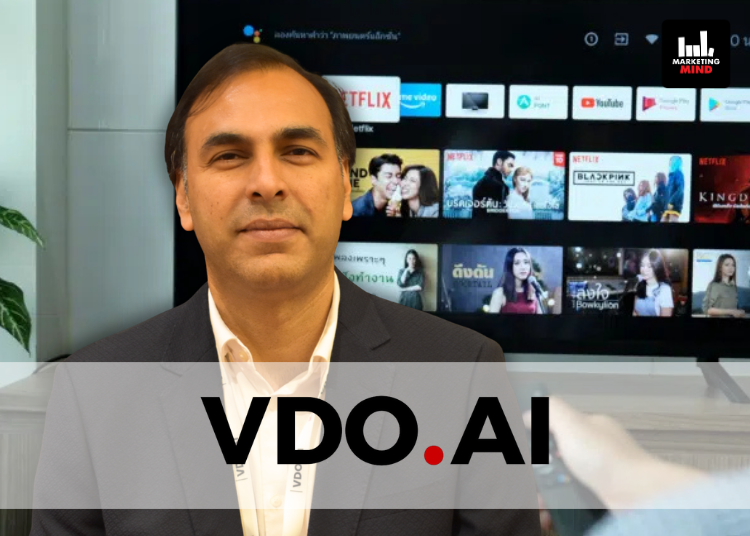
CTV in India has moved from an experiment to an advertising-critical channel faster than most marketers expected. Over the last year, India’s active CTV audience base nearly doubled, growing around ~87%, equivalent to 60-70MCTV homes across the country. This shift is happening in a market long considered mobile-first and it directly challenges traditional media planning assumptions. .
CTV sits at the intersection of branding and performance. It inherits the emotional weight of television and the accountability expectations of digital. Without a deliberate operating model, frequency governance, creative adaptation, measurement design and supply transparency, brands risk mispricing the channel and misjudging its contribution. CTV has arrived at a moment when brands are still borrowing their linear TV habits and applying them to a medium that demands something fundamentally different. The result, for many campaigns, is mispriced media, misread results and missed opportunity
For marketers, the question for 2026 is no longer whether CTV should be part of the media plan. It is how to operationalise it correctly and architect your brand presence with strategic discipline.
Start With Funnel Clarity
One of the most common strategic gaps in CTV planning is ambiguity around its funnel role. Before allocating budgets to CTV, brands must define its precise role in the funnel. Is it intended to build awareness, deepen consideration, or drive measurable action? If the objective is upper funnel, then planning must prioritise broad household reach, strong branding cues in the creative and consistent frequency build over time. If the objective is mid-funnel, product education and feature differentiation should be the focus. CTV can deploy sequential storytelling, interactive overlays, product showcase carousels, QR-enabled explainer units or remote-enabled expandable formats that deepen engagement and educate viewers.
For lower funnel objectives, shoppable ads, lead-gen integrations, app-install prompts and time-bound offer creatives become more relevant. When format choice aligns with funnel intent, performance improves materially. Strategic clarity ensures CTV functions as a growth lever, not just a premium screen presence. Clarity at this stage prevents creative and media misalignment. When objective, format and exposure design are synchronised, CTV delivers structural efficiency rather than isolated visibility
Ad Creative Is The Performance Driver
Traditionally, media teams finalise placements first and creatives are adapted later. On CTV, such an approach can dilute your campaign. Creative must account for screen size, viewing distance, sound-on environments, QR behaviour patterns and sequential storytelling opportunities.CTV supports a range of creative executions including interactive overlays, remote-enabled expandable units, QR-enabled formats and product showcase carousels.When deployed with intent, these formats convert passive exposure into measurable engagement.
Category-level studies, including VDO.AI campaign analyses across fashion, consumer electronics and automotive, report Video Completion Rates in the 94-98 percent range on CTV environments. In high-consideration categories such as automotive and consumer electronics, QR-enabled and interactive formats have further amplified engagement depth and downstream site visits, while fashion campaigns have benefited from carousel-led product discovery formats that extend storytelling beyond a single frame. On CTV, ad format sophistication combined with disciplined creative design translates directly into completion strength, engagement depth and measurable downstream outcomes.
Design Sequential Brand Journeys, Not Repeated Slots
One of CTV’s most underused structural advantages is the ability to tell a brand story across exposures rather than compressing everything into one 30-second film. Average CTV session durations in India frequently exceed 60-90 minutes, which creates multiple high-attention exposure windows within a single viewing session, let alone across a campaign flight.
Sequential storytelling distributes the cognitive and emotional work of brand building across those windows. The first creative establishes memory structures and brand codes. The second deepens rational messaging, features, differentiation, proof points. The third reinforces emotional or contextual relevance. Each exposure builds on the last rather than simply repeating the same message.
Research from Kantar and WARC on sequential advertising has consistently shown meaningful lifts in ad recall and brand favourability compared to single-asset repetition, in the range of 15-30 per cent depending on category and execution quality. The mechanism is straightforward: layered exposure reduces cognitive load per impression and builds cumulative familiarity over time. For brands with complex products or considered purchase journeys, financial services, automotive, consumer electronics, D2C, this approach is not just more engaging. It is more persuasive.
Prioritise Precision Reach Over Broad Reach
CTV should not be treated as merely an extension of linear TV or other advertising mediums. Its advantage is precision: the ability to reach defined audience cohorts in premium environments. India’s OTT landscape has expanded well beyond English-speaking metro audiences. Strong regional language growth across Hindi, Tamil, Telugu, Bengali and Marathi content ecosystems means CTV reach now extends into emerging premium markets, without sacrificing the premium viewing context. This creates a genuine opportunity for cohort-led campaign design: targeting by language cluster, geographic zone, content affinity and household characteristics rather than defaulting to uniform national exposure.
In practice, this means a brand in consumer durables might run one campaign against urban Tamil Nadu households watching premium content, another against Hindi-belt audiences in Tier 2 cities who have recently upgraded their streaming subscriptions. The creative, the offer and the measurement framework differ for each. Smaller, more intentional buys consistently outperform sprawling mass-reach plans on CTV, because the medium rewards specificity in a way that linear never could.
Architecting Advantage on the Connected Screen
The strategies that will define 2026 are structural shifts, beginning with funnel clarity, engineered frequency, screen-native creative, sequential storytelling and cohort-led reach design. Each of these elements moves CTV from a media line item to a brand architecture decision. When brands treat the medium as a premium storytelling environment rather than a distribution extension, it delivers both presence and persuasion. In a medium built on attention and immersion, disciplined strategy is what transforms visibility into lasting brand advantage.