





The report highlights how AI is helping creators improve efficiency, reduce production overhead, and compete more effectively in India’s rapidly expanding creator economy
A few years ago, being a creator in India often meant juggling everything alone, scripting content, editing videos late into the night, tracking trends manually, replying to brands, planning uploads, and constantly trying to stay visible in an increasingly crowded algorithm-driven internet. Today, that workflow is changing rapidly, and artificial intelligence is becoming the invisible operating system behind India’s creator economy.
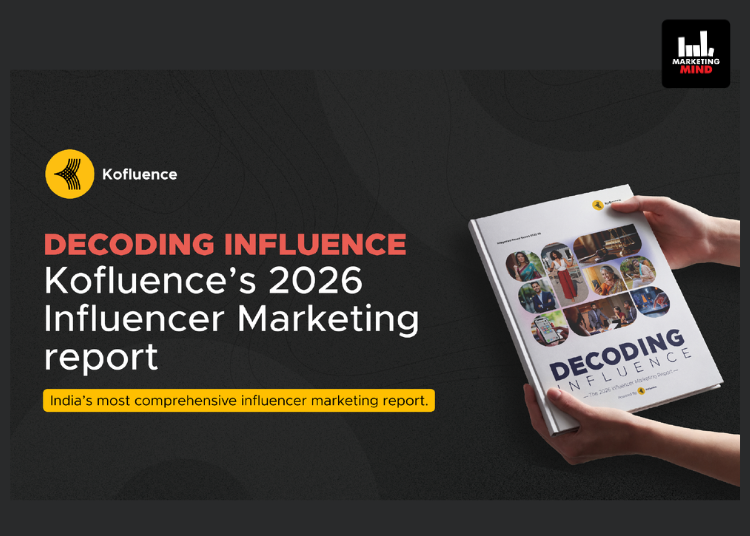
According to Kofluence’s Decoding Influence 2026 report, AI is no longer an experimental add-on for creators or brands. It is now becoming operational infrastructure, quietly powering everything from content ideation and campaign planning to creator discovery, performance forecasting, and automated reporting.
The report reveals that 59% of Indian creators now regularly or occasionally use AI tools in their daily workflow, marking a major behavioural shift in how content is produced and scaled. Content ideation has emerged as the biggest AI use case, with 64.4% of creators using AI for brainstorming ideas, scripting assistance, and trend mapping. Creative design follows at 31.9%, while 28.1% use AI-driven tools for trend analysis and audience insights.
What is perhaps more striking is how quickly AI adoption is becoming mainstream. Only 17.3% of creators surveyed said they never use AI tools, a number the report suggests is steadily shrinking as creators increasingly treat AI not as optional technology, but as a competitive necessity.
The shift reflects a deeper transformation within India’s creator economy. What once depended heavily on large production teams, editing resources, and agency support can now be executed faster and more efficiently with AI-assisted workflows. A creator in a Tier 3 city with a smartphone and AI editing tools can now operate at a level that previously required far larger setups.
For creators, AI is increasingly solving the scale problem. Instead of spending hours brainstorming content calendars or manually analysing engagement patterns, creators are using AI to speed up ideation, optimise captions, identify trends, automate repetitive tasks, and maintain higher publishing frequency. In an ecosystem where visibility often depends on consistency and speed, that efficiency matters.
But the transformation is not limited to creators alone. Brands are also rebuilding influencer marketing operations around AI-led systems. According to the report, 61% of brands are actively exploring AI-powered platforms to streamline influencer campaigns. AI is now being deployed for creator discovery, audience matching, fraud detection, performance forecasting, and automated reporting, areas that traditionally required extensive manual effort and agency intervention.
The report suggests this operational shift is helping influencer marketing evolve from a largely instinct-driven branding exercise into a more measurable and performance-oriented business function. As brands demand clearer ROI and faster campaign execution, AI is becoming central to how influence is managed at scale.
The rise of AI also comes at a time when India’s creator economy itself is becoming more structured and commercially mature. Kofluence estimates the influencer marketing sector is currently valued between ₹3,000 crore and ₹3,500 crore in 2025 and could grow to ₹4,500 crore to ₹5,000 crore by 2027.
At the same time, the creator ecosystem is rapidly expanding beyond metro cities. With India crossing 900 million internet users, creators from Tier 2, 3, and 4 markets are entering the ecosystem at scale, many of them using AI tools to bridge production gaps and compete more effectively with larger urban creators.
Kofluence Co-Founder Ritesh Ujjwal said the technology is fundamentally reshaping creator operations. “AI has done what most technology promises and rarely delivers: it has compressed the production overhead that was preventing India’s creator class from operating at business scale,” he noted.
But the report also frames AI adoption within a larger conversation around accountability and regulation. As ASCI disclosure mandates, SEBI scrutiny around finfluencers, and DPDP compliance become more prominent, the creator economy is entering a phase where technology and governance are evolving together.
In many ways, the report positions AI not as a future trend, but as the backbone of the next phase of India’s creator economy, one where creators are no longer just individuals making content, but increasingly functioning like media businesses powered by automation, analytics, and scalable digital infrastructure.