






India’s beauty and personal care industry has evolved significantly over the past decade, as consumers have become increasingly aware of ingredients, formulations and skincare philosophies. Much of this shift has been driven by social media, global beauty trends and creator-led education, turning what was once a niche conversation among dermatologists and skincare enthusiasts into a mainstream topic across digital platforms.
Alongside this growing awareness, the rise of direct-to-consumer (D2C) beauty brands has intensified competition within the natural and Ayurvedic segment. Many brands now position themselves around similar claims of clean ingredients and traditional formulations, making it harder for companies to establish a clear point of differentiation in a crowded market. Nat Habit, however, has built its identity around what it calls “fresh Ayurveda,” keeping freshness at the heart of its products, from sourcing to formulation.
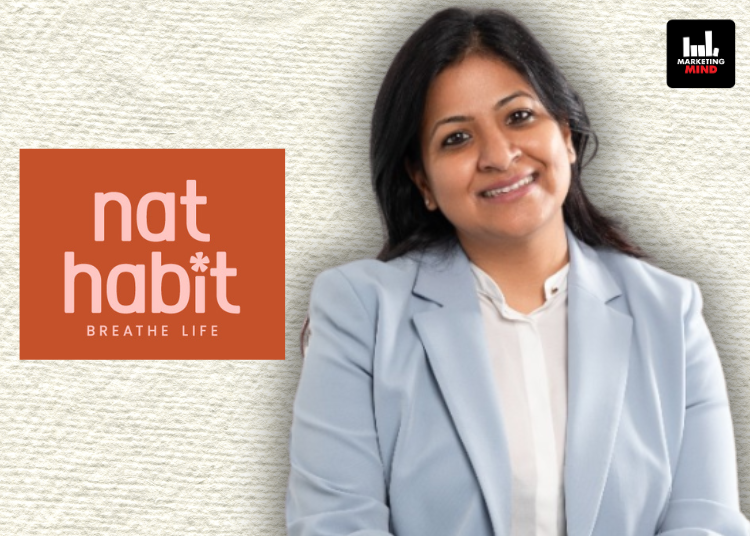
The brand’s focus on freshness, Swagatika Das, CEO and Co-Founder of Nat Habit, says, helps it stand apart in the category.
In a conversation with Marketing Mind, she spoke about how her brand approaches differentiation in the natural beauty category, the role of research and technology in product development, and how changing consumer behaviour continues to shape the brand’s strategy.
Freshness as the Core Brand Differentiator
Explaining the philosophy that has shaped the brand since its early days, Das said Nat Habit intentionally built its positioning around the idea of freshness within the natural beauty category.
“There are lots of natural brands, clean brands and actually Ayurvedic brands as well, though the number of Ayurvedic brands are declining. How we have differentiated ourselves right from the beginning has been twofold. One is freshness. So, for us, fresh overpowers everything natural, everything pure. And in Indian consumers’ mind, fresh is purer than pure. So fresh is our biggest differentiation,” she said.
Alongside freshness, Das explained that the brand also emphasises scientific research and technological backing to ensure its products deliver measurable results.
“The second piece that we have is the backing of technology and science that allows these fresh natural products to be committing to efficacy, committing to potency, committing to things that previous natural brands have not been doing. They just call out that they have certain natural ingredients in them, but they don’t necessarily promise the purity of freshness or the potency and efficacy of science and tech that we have behind it,” she added.
Describing how the company structures its research and development capabilities, Das said Nat Habit has assembled a multidisciplinary team spanning several scientific fields.
“We have a full-fledged R&D team of 25–30 experts from different domains of science, from biotech, from biochemistry, natural chemistry, Ayurvedic science, pharmacology, cosmetology, nanotechnology and microbiology. These experts come together to understand not just formulations, but ingredients and their potency,” she said.
She further emphasised that the company’s research efforts also focus on measuring and stabilising active ingredients within formulations.
“Understanding or quantifying the amount of actives present inside every ingredient, taking that into formulation and stabilising them means we are working across different domains of science and technology to come out with a formula that is pure and effective,” she added.
The brand has also taken steps toward building intellectual property around its formulations, Das noted. “The formulation is ours and we even go to the extent of clinical claims and patents as well. Some are under filed status and some have already been received. This is very close to pharma-like research that you don’t really see in most personal care companies,” she added.
Brand Building Beyond Performance Marketing
Reflecting on the company’s communication strategy, Das said Nat Habit has focused on building the brand narrative rather than only pushing product-level advertising.
“If you see us as a brand, we have always been brand first in conveying what the brand means versus just selling a product. The brand name Nat Habit itself and the Fresh Veda piece that we communicate has been encouraged across our mediums of communication instead of just relying on performance marketing and bidding on keywords,” she said.
She further added, “A lot of storytelling has actually gone into what Nat Habit stands for in most of our ad communications. Nat Habit from day one has been about building the brand alongside selling products.”
Communicating Freshness Through Transparency
Das explained that Nat Habit relies heavily on transparency around its manufacturing processes to reinforce the idea of freshness. “Fresh is actually quite easy if you are honest. Because we manufacture in our own facility on a daily basis, everything is taken fresh and manufactured fresh in something we call an Ayurvedic kitchen,” she said.
By showcasing the production process, the brand aims to strengthen consumer trust around its claims. “We actually just show behind-the-scenes videos of our products getting manufactured and that instills the trust that these products are truly fresh made,” she added.
She said that highlighting the making of the brand’s offerings helps communicate its core philosophy of freshness and Ayurveda. “A good part of our communication is always about how we make the product. When that comes into picture we are able to show the fresh manufacturing of our product. The textures and the making of the product always ensure that we are communicating about the brand’s core offering, which is Fresh Ayurveda,” she explained.
Understanding the Modern Ayurveda Consumer
Reflecting on how consumer behaviour has evolved, Das said social media exposure has significantly increased awareness about skincare ingredients. “Consumers today have become much more knowledgeable about modern active ingredients and even non-active ingredients because of the exposure of social media. It’s not just exposure to Indian brands or information but global content as well,” she said.
However, she pointed out that this awareness does not always translate into deeper understanding. “Consumers are aware that these ingredients exist, but they are not fully aware of the goodness and the side effects of these ingredients. They still see them as trends and want to jump on these trends,” she added.
Das also observed a shift in how consumers build trust in brands today. “The belief in testimonials and multiple people talking about a product has gone up versus the belief in one celebrity-led film or a TVC. Being able to give frequency across different kinds of storytelling for the same product is essential,” she explained.
At the same time, she noted that increasing disposable income has made impulse purchases more common in the category. “Even though consumers today need more convincing information, their impulse ability is also very high. If you create the right triggers through communication, consumers will try out products quite easily,” she added.
Community and Consumer Engagement
Discussing how the company gathers feedback, Das said Nat Habit engages actively with its loyal customer community during product development. “There is a community of loyal customers who we engage with for product development, for testing and continuous feedback. Apart from that there is also our social media community,” she said.
One initiative aimed at strengthening transparency and engagement is Nat Habit Live, an experiential brand series conceptualised to showcase the brand’s freshness-first philosophy through real, immersive exposure to its R&D and live kitchen processes. “When we started out, the idea was to bring more people into what we do and see us actually doing it in real time. So they can visit our facility, see how we manufacture and see how we do our R&D,” she explained.
Nat Habit Live has progressed through multiple seasons. Season one hosted journalists, season two focused on influencers, and Season three featured YouTube personality Ruchika Rathore, who has 1.67 million subscribers. During her visit, Rathore was invited to Nat Habit’s office and manufacturing unit to experience the brand’s formulation processes firsthand, from scientific testing to live product creation. She observed the in-house R&D infrastructure, including hair and scalp assessment using a trichometer and skin quality analysis with the VEDHA machine.
“We have been able to bring in journalists, influencers and customers who are really interested in seeing how we do it. Last month we invited Ruchika Rathore, a well-known personality on YouTube, to visit our facility. This has become a theme where outsiders come in and see our processes,” she added.
The visit also included live formulation demonstrations, such as the preparation of Tikta Ubtan Face Wash using Lenticlear technology, Navda Hibiscus Shampoo and Oil, fresh henna formulations, and lip butter. These sessions allowed Rathore to experience the raw materials, active formulations, and hands-on preparation, reinforcing the brand’s positioning as a transparency-led, freshness-first company.
Growth Plans and Future Expansion
Discussing the company’s growth trajectory, Das said Nat Habit is aiming for significant expansion over the next few years. “We are currently over Rs 250 crore of annualised revenue. In three to four years we are looking to get to Rs 1,000 crore of annualised revenue,” she said.
Product innovation will remain a major focus as the company expands its portfolio. “We have just launched our anti-dandruff shampoo built around a proprietary natural drug called Beracyl, for which we have already filed a patent. It is designed to kill 99.9% of dandruff within the first wash and delay fungal resistance,” she added.
“Acne treatments and other treatment-driven products are coming very soon. These will be completely efficacious products built almost like pharmaceutical formulations,” she concluded.
The Road Ahead
Nat Habit’s strategy reflects a broader shift in India’s beauty market where consumers increasingly expect both natural ingredients and measurable results. The brand’s emphasis on freshly made products, research-driven formulations, and transparent storytelling aims to position it as a differentiated player within the natural beauty category.
As competition intensifies in the D2C beauty space, companies that successfully combine authenticity, science, and strong brand narratives are likely to gain long-term consumer trust. By integrating freshness-led manufacturing with modern research capabilities, Nat Habit is attempting to build a scalable brand that resonates with consumers seeking both natural and effective personal care solutions.