







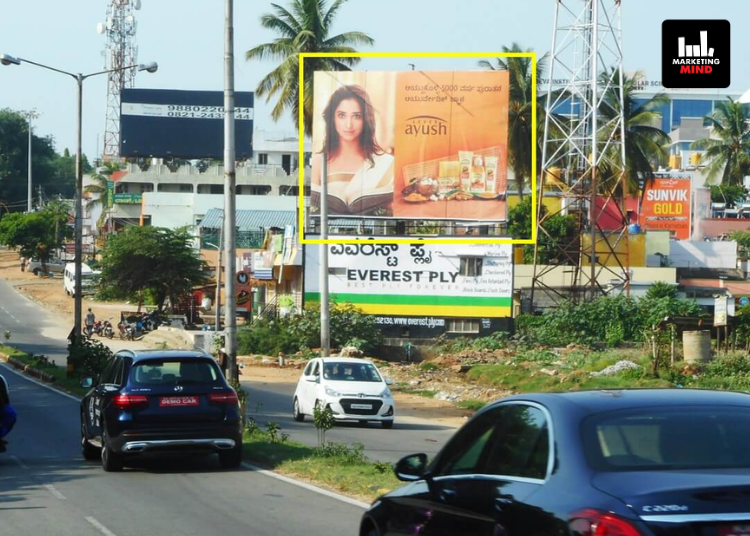
The Karnataka Legislative Assembly has passed the Karnataka Municipalities and Certain Other Laws (Amendment) Bill, 2026 to regulate outdoor advertisements and enable municipal bodies to levy and collect fees on hoardings and billboards across the state. The Bill has been adopted after it was moved by Urban Development and Town Planning Minister B. S. Suresha.
The legislation has empowered municipal councils and corporations to levy an advertisement fee on any person who erects, exhibits, fixes or displays advertisements on land, buildings, walls, hoardings or other structures within municipal limits, as per media reports. The fee has been set to be determined by local bodies through a resolution, within minimum and maximum limits prescribed by the state government.
However, the Bill has provided exemptions for advertisements related to public meetings of municipalities or corporations, elections to legislative bodies and candidature in such elections.
The amendment has also mandated that advertisements in municipal areas must be displayed only after obtaining written permission from the concerned municipal council or corporation commissioner and after payment of the prescribed fee. Permission will not be granted if the advertisement violates municipal by-laws or if the required fee has not been paid.
The legislation has further authorised municipal authorities to remove or demolish unauthorised advertisements that violate these provisions. Officials have been empowered to issue notices to the owner or occupier of the land or structure to remove such advertisements, failing which authorities may enter the premises and remove them.
Under the provisions, unauthorised advertisements have been made liable for penalties and fines. Those delaying the payment of advertisement fees or penalties have also been made liable to pay interest at 18% per annum from the date the payment becomes due until it is cleared. Authorities may recover outstanding dues through mechanisms similar to property tax recovery, including seizure and sale of advertisement materials if required.
The Bill has also validated previous levies and collections of taxes, cess or fees by municipalities and corporations, stating that such actions will be treated as lawful despite any court judgment, decree or order to the contrary.
During the discussion, Suresha has said the legislation is intended to curb unauthorised hoardings and ensure that revenue from outdoor advertising flows to local bodies. He has indicated that boards installed without authorisation have not been contributing taxes and the government plans to remove such structures and bring them under a tender process to generate revenue.
He has further explained that advertisements placed on government land, private land and personal property will fall under different categories but will still be subject to taxation. According to him, while authorities cannot forcibly remove boards installed on an individual’s own property, the applicable municipal tax will still need to be paid.
Suresha has also warned that private advertisements placed on government land will face stricter regulation, with the government or municipal corporations fixing the applicable fee and awarding advertising rights through a tender process.
He has added that the move is expected to help local bodies generate significant revenue, potentially amounting to hundreds of crores.