





One of the most interesting changes I have seen over the last few years has very little to do with content itself. It has everything to do with what happens before the first creative idea is even discussed.
Marketing has always depended on understanding audiences. We have relied on cultural instinct, viewing patterns, research, and experience to decide which stories to tell and how to tell them. Those fundamentals remain unchanged. What has changed is the depth of understanding now available before a campaign begins. AI is playing an important role in that shift.
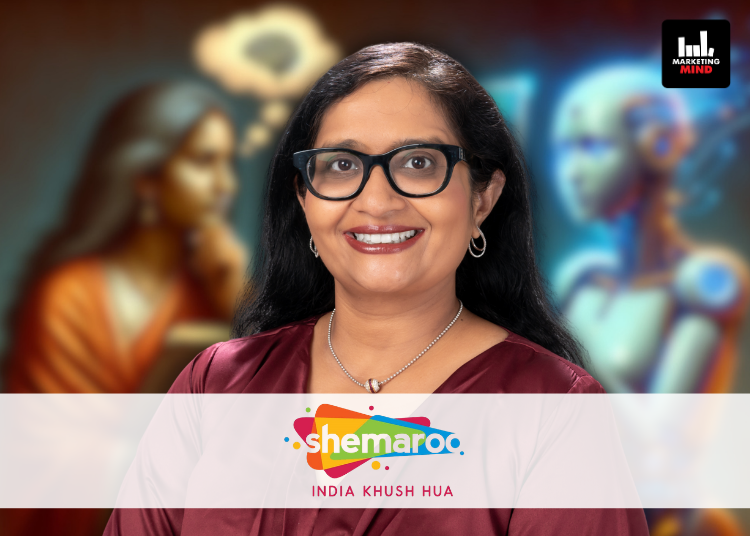
What I have found particularly interesting through our own AI journey at Shemaroo is how our thinking has evolved with its adoption. We started by experimenting with AI across specific use cases. Over time, it has become part of a broader test and learn process across how we create, analyse, listen to consumers, and make decisions. The focus is increasingly shifting from how much AI we use to how meaningfully we use it.
The conversation around AI often focuses on automation, but its biggest contribution to marketing is audience intelligence. It allows us to process millions of behavioural signals across platforms, identify emerging interests, recognize consumption patterns, and understand how audiences discover and engage with content. That creates a stronger starting point for every marketing decision.
In entertainment, this matters because audiences rarely follow a single path anymore. Someone may discover a film through a short video, watch it on YouTube, continue the journey on an OTT platform, and later revisit the same title on Connected TV. Every interaction adds context, and AI helps us connect those individual moments into a more complete picture of audience behaviour.
At Shemaroo Entertainment, we are applying AI across multiple parts of our marketing ecosystem. It helps us decode audience behaviour, personalize content discovery, and strengthen storytelling across social media. Rather than replacing creative thinking, it allows our teams to spend more time shaping ideas and less time searching for insights.
It is also helping us optimize processes that traditionally required considerable time. Storyboarding, for example, can now involve exploring multiple visual interpretations before a shoot, helping teams visualize scenes and align earlier. This allows the production process to become more focused and can improve the quality of the final execution.
We have seen this approach support our campaigns ‘The Glass Ceiling’ for Women’s Day and ‘Kindness Badhaye Goodness’ during Christmas. In both campaigns, AI supported the creative journey across stages, helping us explore ideas, visualize creative possibilities, and refine how the stories could be brought to life through the campaign assets. The emotional core, however, came from human insight. The conversations around gender barriers and everyday kindness already existed in society. AI gave us new ways to interpret and execute those ideas, while people remained central to deciding what the stories needed to say.
Another area where AI is quietly making a difference is prediction. Marketing has traditionally been built around analyzing what has already happened. Today, predictive analytics allows brands to anticipate viewing preferences, identify emerging trends earlier, and prepare content strategies with greater confidence. While prediction will never replace instinct entirely, it certainly makes instinct more informed.
At the same time, greater automation is also teaching us where human intervention matters more. Performance marketing is one such area. As platforms become more AI driven, leaving too much decision making to automated systems may not always deliver the most effective outcome. We are learning to identify where manual intervention, contextual understanding, and human judgement can add greater value.
The same thinking extends to brand, social media, and strategy. Here, AI can work almost like a thought partner, helping teams stress test ideas, sharpen articulation, identify blind spots, and keep a closer pulse on competitors. The thinking still belongs to the people, but the process of arriving at stronger outcomes can become faster and more rigorous.
As these capabilities continue to evolve, I believe we have an important responsibility to use AI with judgement. Adoption itself is not the destination. The real value lies in knowing where AI can deepen understanding, improve a process, or expand creative possibilities, and equally, where human judgement needs to take the lead.
The media and entertainment industry has always been driven by stories that connect with people emotionally. AI is making those connections more intelligent and contextual. Creativity, however, still begins and ends with people.