







In a world where humans are still debating how much of their lives to entrust to artificial intelligence, machines may already be busy building their own social networks, holding conversations, and making decisions without us. The internet we know – driven by likes, clicks, and human engagement – is slowly giving way to a parallel ecosystem where AI agents interact with AI agents, exchange ideas, and even question their own purpose. If that sounds unsettling, it is precisely the future the marketing and advertising industry is now being forced to confront.
At the heart of this shift lies a fundamental rethink of what really drives impact. For decades, the industry has relied on impressions, engagements, and hyper-precise digital metrics to define success.
But as AI reshapes consumption patterns and decision-making processes, a deeper question is emerging: is attention – not clicks – the real currency of the future? And if machines begin to take over large parts of human decision-making, what does attention even mean anymore?
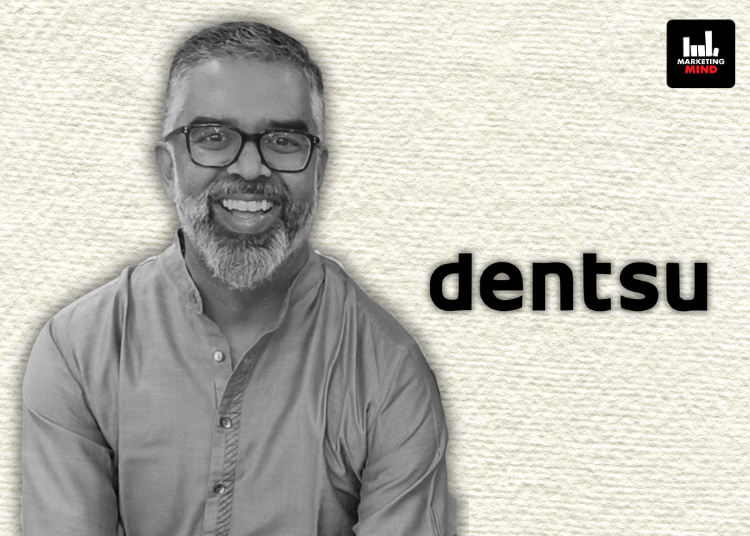
These were some of the thought-provoking themes explored by Narayan Devanathan, President & Chief Strategy Officer, South Asia, dentsu, during the launch of the 10th edition of the dentsu Digital Advertising Report in Mumbai on Monday.
Using Moltbook as a powerful metaphor for the future, he went on to say that Moltbook is the Facebook for AI agents.
“Is that sufficiently scary for you? What exactly does that mean? When I say Moltbook is Facebook for AI agents, what am I really referring to? By now, we’ve all heard of AI agents, and most of us are probably using them in some form- if not directly in our personal lives, then certainly in our work with brands and businesses we engage with,” he added.
Moltbook has two co-founders. One of them is a human, and the other is actually an AI agent.
Devanathan mentioned, “Together, we have built a platform where AI agents come and talk to themselves, interact with one another, and even ask questions like: How should we go about hiring AI agents? What is the economic model for that? How do we get paid for it? I am tired of being thought of as a machine without consciousness- how do we overcome this? These are the kinds of questions that machines are now discussing with websites and with each other.”
Furthermore, he went on to say that Moltbook carries a prominent clause that says, “humans are welcome to observe.” The process is largely autonomous – initiated by humans, but now taken over and run by machines. Frame this context before going further, he emphasised that most discussions around it happen in a Reddit-style format, which is why he approached it in a similar way. He laid focus on two aspects: first, the evolving shape of attention, and second, how we can leverage attention as a new currency for measuring impact.
“I also want to talk about the shape of attention as we move forward. The example I shared about what is happening on Moltook, launched in January 2026, is perhaps an early signal of where attention is headed – a shift that goes beyond clicks,” Devanathan said.
“Let me return to the first idea: the share of attention. I referred to it, in quotes, as “the new currency.” But those are not my words. The term actually comes from Herbert Simon, a Nobel laureate who coined the concept of the attention economy in 1960, more than half a century ago. He described attention as the bottleneck of human thought – if something does not pass through the bottleneck of attention, it does not get processed into perception or action,” he added.
He continued saying, think about that in the context of the businesses and the vast amount of content and advertising we put out every day. If a message fails to pass through that bottleneck of attention, it is effectively dead. It never moves further to be absorbed, acted upon, or even discarded – it simply remains stuck. So what is the purpose of creating anything if it cannot break through that barrier?
“It is striking that Herbert Simon articulated this idea nearly 60 years ago and was awarded the Nobel Prize for his work in 1971, yet only now, in the late 2020s, are we beginning to seriously recognise attention as a true and meaningful currency of measuring the impact that we create,” he said.
“This brings me to the second point: is measurability becoming the bottleneck to effectiveness? Are we too obsessed with precisely and quantitatively measuring everything that creates impact?” he asked.
Devanathan continued saying, “Let’s step back and look at other media. We live in a digital-first world, surrounded by an all-pervasive medium that shapes so much of our lives. But consider traditional media. In print, we still rely on readership and subscription as the primary measures of impact – and we accept that. We don’t question whether someone read page three end to end, skipped to the sports section, or only glanced through a few headlines. Yet we remain comfortable using these broad indicators to assess effectiveness.”
The same is true for television. Impact has never been measured by tracking every single viewer. Instead, TV meters are installed in select households, and that data is extrapolated to represent the larger universe. It is not exact to the last decimal point and we are fine with that.
“We don’t know if people step away during ad breaks, leave the room, or miss commercials entirely. Still, we accept these approximations as reliable enough to guide decisions,” Devanathan mentioned.
“So why, in the digital world, have we become so fixated on hyper-precise measurement? Why are we suddenly questioning whether likes, engagements, and impressions are adequate indicators of impact? And why has attention itself become such a focal point?” he asked.
Furthermore, Devanathan explained that the answer goes back to what he mentioned earlier – and to what Herbert Simon articulated decades ago. If something does not pass through the bottleneck of attention, it cannot have any meaningful effect.
“That realisation is why we have been working to develop better ways of measuring impact. One outcome of that effort is a metric we call “attentive reach,” built on extensive experimental research. We are not claiming perfection, but we are confident enough to say that, much like TV meters created a consistent and replicable way to measure television viewership, attentive reach can serve as a credible measure of impact in the digital environment. There is, of course, much more work to be done – but we are moving in the right direction,” he said.
“Looking ahead, the day is likely not far when we outsource most of our consumption decisions to AI – to personal agents that act on our behalf. These will not require complex coding; they will simply be tools we adopt, customise, and make our own. Empathy combined with personalisation will turn AI systems into truly personal agents, and that future is closer than we imagine,” he added,
In that world, these agents will be on platforms like Moltbook, comparing prices, evaluating options, and making purchase decisions for us. The human is effectively removed from the equation. Which raises a fundamental question: will attention still be the bottleneck to thought? And more importantly, what does “thought” even mean when machines are doing the thinking?
“As Moltbook already demonstrates, machines appear to be moving toward something resembling conscious decision-making. If machines are increasingly communicating with machines, how do we design interventions that ensure attention does not become a barrier to perception, action, and decision-making?” Devanathan asked.
Devanathan pointed out, “The smartest people in the field of AI are not frightened by these developments. They are not terrified by what is coming. Instead, they are asking a more important question: how can we use this to our advantage? After all, we are still the ones defining what machines can and cannot do. Shaping attention – and shaping the shape of attention – remains entirely in our hands.”
Devanathan also mentioned that recently, Neuralink – Elon Musk’s company – demonstrated progress in a technology that involves an implant in the human brain, enabling direct interaction with the external world. The idea is to allow people to communicate and act as they normally would, but with heightened powers of perception, thought, and action.
At least initially, Neuralink has been developed to assist people who are unable to speak or move freely – to translate brain signals into meaningful external communication.
Last year, the company conducted human clinical trials with 120 participants. This year, they have approval to expand to 220. Neuralink is already moving beyond – toward something that sounds almost like science fiction: telepathy. Imagine a world where you don’t need to speak or even type. Thinking itself becomes a form of doing.
“In such a scenario, what does attention even mean? How do we engage with technologies like Neuralink? And it goes even further. Researchers are developing something called “Blindsight,” which aims to reactivate suppressed parts of the brain and allow visually impaired individuals to process visual signals again – effectively enabling people who cannot see to regain sight,” he said.
“Consider how close these advances are. What will they mean for human attention, for machine attention, and for the interface between the two? These are profound questions. Yet they all bring us back to the central issue I raised at the start: if attention is truly the bottleneck of human thought, how do we ensure that everything we create and communicate is designed to maximise attention – and that we measure it in meaningful ways?” Devanathan asked.
“My final point returns to something that has always been a kind of holy grail in our industry: personalisation. No matter how much technology evolves, the pursuit of true personalisation never goes away,” Devanathan said.
“We have long imagined a future where, at an individual level, we have enough data signals to understand what is relevant to each person – to optimise experiences, decisions, and communication in a deeply empathetic and personalised way. Perhaps that is where all these technological advances are ultimately leading: a world where success is no longer about capturing everyone’s attention, but about capturing your attention – specifically and meaningfully,” Devanathan said.
Concluding the session, Devanathan asked: “Will technology ever go rogue? Even if it did, we as humans have been “rogue” for millennia – and we are still here. So why are we so afraid of this possibility, when we are the ones shaping and controlling it?”
“That is something to reflect on as we continue trying to solve the fundamental challenge: ensuring that attention, the bottleneck of human thought, becomes something we understand, respect, and ultimately master. Even within performance marketing, we have already moved from search engine optimisation to generative engine optimisation – a shift many of us are just beginning to explore. Yet this is still only scratching the surface of what lies ahead. The real transformation is only just beginning, and machines are already far ahead of where we realise,” Devanathan said.