







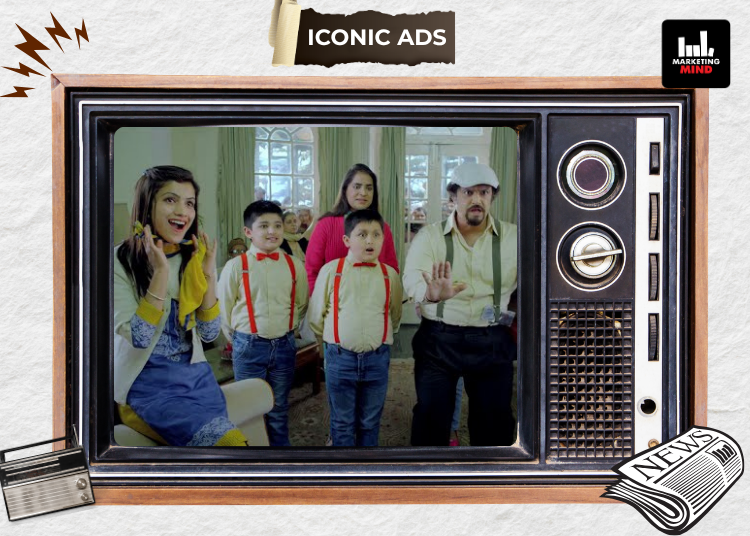
There has always been a certain theatre to Indian streets. A passing spectacle rarely goes unnoticed, whether it’s a wedding procession, a political rally, or, in this case, a gloriously oversized television cruising through traffic like it owns the skyline. Because in India, size has always meant status, until this ad has cheekily turned that idea on its head.
This unforgettable campaign has been crafted for Star India to push adoption of HD channels in the early 2010s, a time when India has been transitioning from sheer size obsession to experience-driven viewing.
Directed by the legendary ad filmmaker Prasoon Pandey and produced by Corcoise Films, the film has carried all the signatures of timeless Indian advertising, sharp insight, cultural familiarity, and humor that has lingered long after the screen has gone black.
The film has opened like a moving parade of pride. A man has been driving ahead, chest subtly puffed, as a massive HD television has followed behind on a tempo, almost like a baraat for consumerism. Heads have turned. Eyes have widened. A woman has paused mid-step, visibly impressed. A father teaching his son to cycle has gotten so distracted by the spectacle that the child has nearly toppled over. Two painters, midway through their work, have completely lost focus, one has absentmindedly begun painting the other’s face instead of the wall.
Admiration has been everywhere. The TV hasn’t just been a product, it has been a moving symbol of aspiration.
And just when the spectacle has reached its peak, the man has arrived home, slipping into the role of a proud patriarch: “Chalo bachchon ghar pe jaake khelo, mehenga TV hai, ball-wala lag jaayega.” (Come on kids, go play at home, it’s an expensive TV, the ball might hit it.)
Inside, the living room has transformed into a stage of pride. The brothers have circled the television like it’s a newly acquired trophy. “Waah bhaiya, HD TV!” (Wow brother, an HD TV!)
But then, advertising magic has struck. The screen has flickered to life only to reveal, in brutal simplicity: “HD CHANNELS ARE NOT SUBSCRIBED.”
And just like that, the illusion has collapsed.
One brother has delivered the line that has since lived rent-free in pop culture: “Phir toh yeh TV nahi dabba hai… dabba kya dabba hai.” (Then this isn’t a TV, it’s a box… what a useless box.)
What has followed isn’t just a punchline, it has been a full-blown cultural roast.
A girl has appeared, almost like a narrator of public opinion, breaking into the now-iconic jingle:
“Dabba dabba hai dabba, uncle ka TV dabba,
Dabba dabba hai dabba, uncle ka TV dabba…” (It’s a box, just a box, uncle’s TV is a box…)
“Kitna bada dabba, bahut bada dabba, Uncle ka TV dabba…” (What a big box, such a big box, uncle’s TV is just a box…)
As the song has played, the narrative has cleverly looped back. The same people who have once admired the TV have now been laughing at it. The woman’s awe has turned into amusement. The distracted father has become part of the joke. The painters, still messy, have found something new to laugh about. The spectacle has flipped. The pride has dissolved. The “big TV” has shrunk into a punchline.
Why This Ad Has Stayed Iconic
What has made “Dabba Hai Dabba” unforgettable isn’t just its humor, it’s the brutal honesty wrapped in playfulness. It has taken a deeply Indian truth, our obsession with appearances, and has flipped it into a moment of collective self-awareness. The ad hasn’t mocked the consumer; it has mirrored them.
It has said: what’s the point of owning something grand if the experience inside is hollow?
The jingle has done what the best advertising always does—it has escaped the screen. It has been hummed, joked about, repeated in living rooms, and casually thrown into conversations. It hasn’t just been a line; it has become language.
By the time the film has closed, the message has landed with disarming clarity: technology isn’t about possession, it’s about experience.
The ad hasn’t just sold HD channels; it has sold a shift in perspective.
And somewhere, in a quiet Indian living room, every oversized television has felt just a little smaller, unless it has truly delivered w