







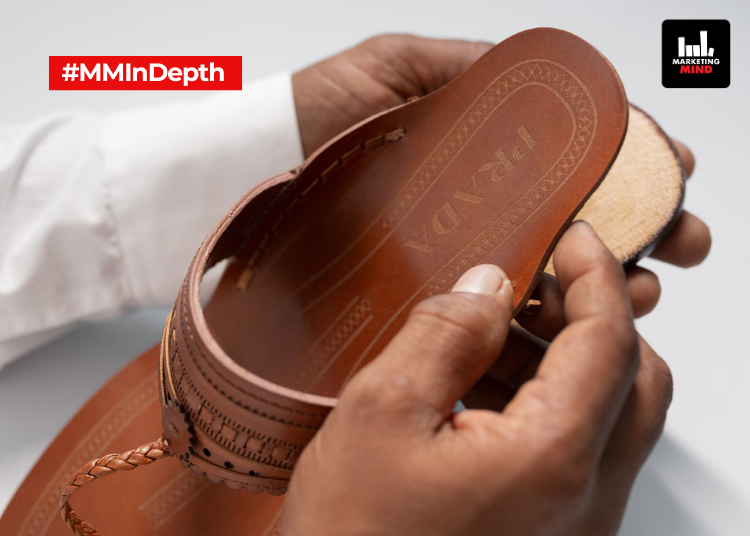
If you’ve grown up in India, you’ve probably owned a pair of Kolhapuris without thinking twice about them. They sit quietly in the background of everyday life. Picked up from a local market, worn through summers, softened over time. They are not introduced as design. They are just there.
Which is why it always feels a little surreal when something so familiar reappears on an international runway, under bright lights, carrying a price tag that makes you look twice. For years, that has been the story of Indian craft. Recognisable, everywhere, and yet oddly anonymous.
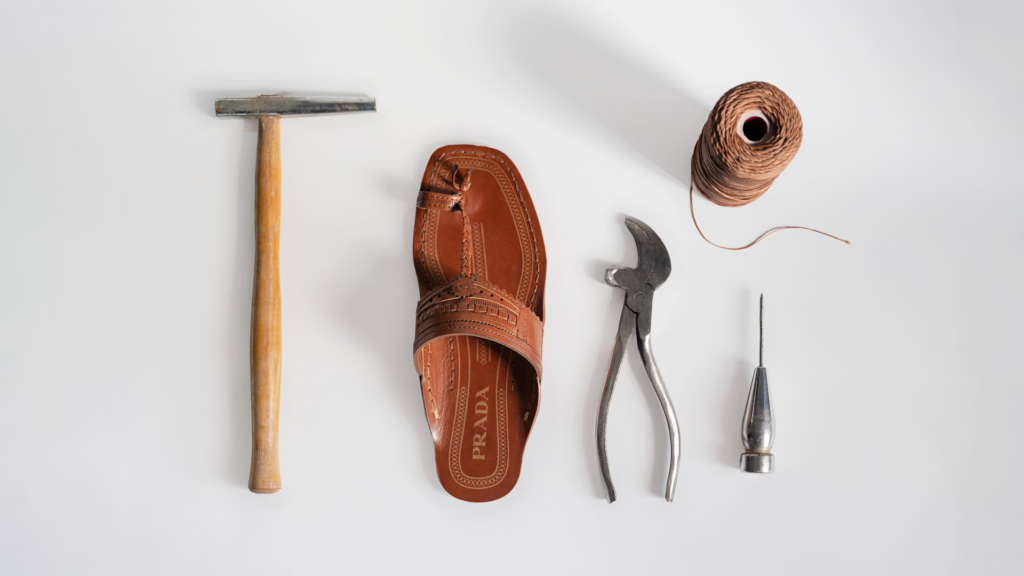
So when Prada announced its “Made in India x Inspired by Kolhapuri Chappals” collection, it did not feel like a grand revelation. It felt like something much simpler and far rarer. It felt like acknowledgement.
The collection is being manufactured in India by artisans from Maharashtra and Karnataka, developed with organisations like LIDCOM and LIDKAR, and backed by a three year training programme in collaboration with institutions such as NIFT and KILT. It is structured, funded, and unusually specific in its intent.
And that specificity is precisely what makes it stand out. Because if you look closely, the history it is responding to is long.
A Pattern That Keeps Repeating, Only the Labels Change
The global fashion system has, for decades, drawn deeply from Indian craft. Not occasionally, not accidentally, but consistently.
Bandhani, for instance, is one of the most recognisable textile techniques from India. Originating in Gujarat and Rajasthan, it involves intricate hand tying and dyeing that creates its signature dotted patterns. And yet, in recent years, it has appeared in global collections described simply as “tie dye”.
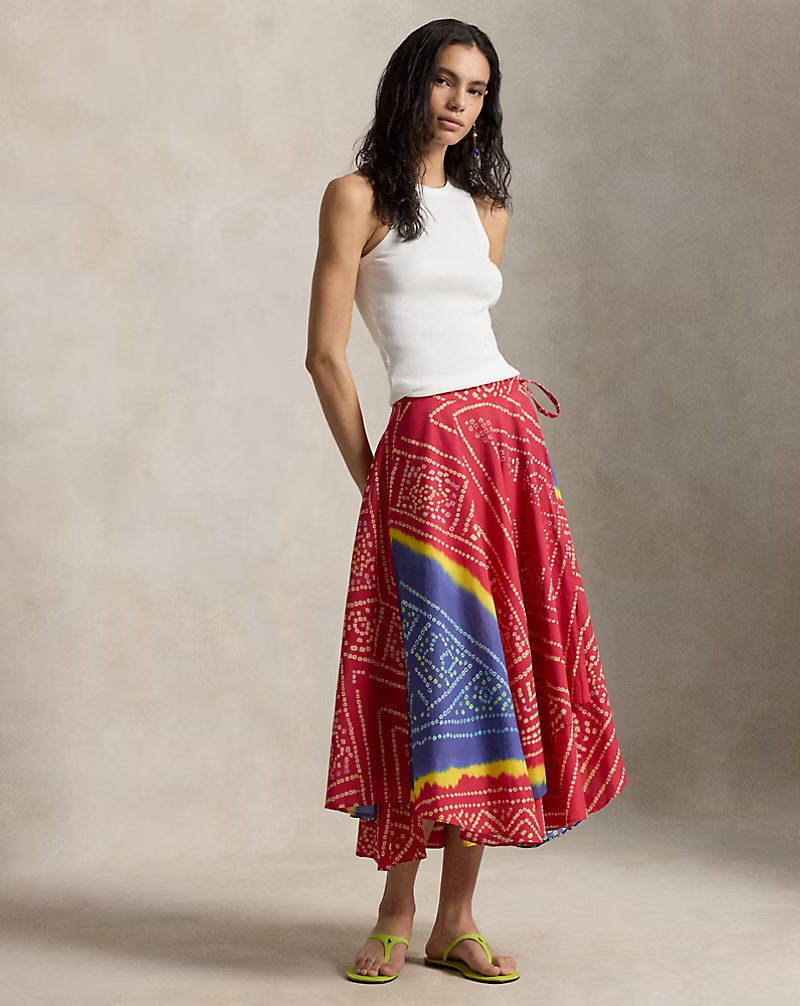
When Ralph Lauren showcased a Bandhani inspired skirt in its Spring Summer 2026 line, priced at around Rs 44,800, the criticism was immediate. Not because the design existed, but because its lineage did not.
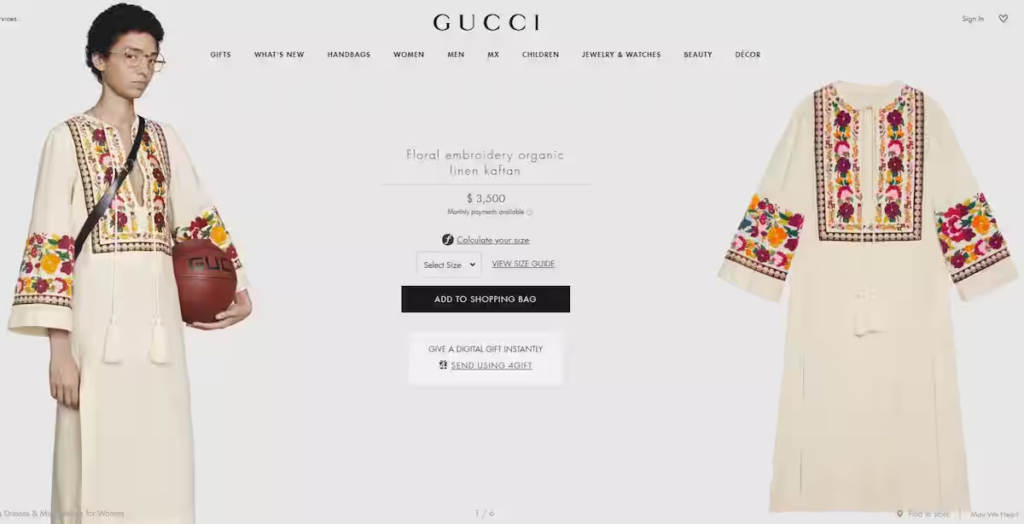
The same quiet reframing has happened with silhouettes. Gucci drew backlash for marketing a floral embroidered linen garment as a kaftan, despite its strong resemblance to the Indian kurta. For Indian consumers, this was not a matter of interpretation. It was a matter of recognition.
Even everyday visuals have been absorbed into luxury narratives. Louis Vuitton’s auto rickshaw shaped bag turned a familiar Indian street symbol into a high fashion object. It was playful, certainly. But it also raised a question that keeps resurfacing. At what point does inspiration begin to feel extractive?

This is not limited to recent moments.
Fast fashion has played its part too. Brands like Zara and H&M have, over the years, released garments echoing Indian kurtas, block prints, and ikat patterns, often stripped of cultural context and presented as globally generic.
And then there are the quieter incorporations. Dior has long worked with Indian embroidery ateliers, particularly for techniques such as zardozi and mukaish. While these collaborations exist, conversations have emerged around how visibly the artisans and their traditions are acknowledged in the final storytelling. The craft is present. The credit is less so.
When Appreciation Becomes Aesthetic, And Context Slips Away
What makes this conversation complex is that it is not always about intent. It is about structure.
Designers like Jean Paul Gaultier have repeatedly engaged with Indian aesthetics, from saree inspired drapes to traditional jewellery elements like the nath. His collections have often celebrated these forms, but through a lens that transforms them into spectacle rather than situates them in context.

Chanel’s Paris Bombay show in 2011 is another example. It was elaborate, immersive, and widely discussed. The Grand Palais was turned into a vision of India, filled with gold, textiles, and ornamentation. But it was also a reminder of how easily a culture can become a theme.
Even more recent collections continue this pattern. Louis Vuitton’s menswear lines under Pharrell Williams have drawn from Indian silhouettes such as Nehru jackets and kurtas, while integrating Indian collaborators in certain aspects of production and staging. These moments suggest movement in the right direction, but they also highlight how inconsistent the industry remains when it comes to explicit acknowledgment.
Because fashion does not just borrow ideas. It reshapes narratives.
And when those narratives travel without names, the imbalance becomes difficult to ignore.
The Economics Behind the Aesthetic
Beyond the runway, there is a more grounded reality.
A Kolhapuri chappal is not just a design. It is a livelihood. It is part of a local economy that often undervalues the labour behind it. When a similar design enters the luxury ecosystem, its price increases dramatically, not necessarily because the craft has changed, but because the context has.
This gap is where the conversation becomes less about fashion and more about fairness.
Indian crafts like Kolhapuri chappals are protected domestically through Geographical Indication tags. But these protections do not always translate effectively on a global scale. Designs can be reinterpreted, renamed, and resold without formal obligation to the communities that originated them.
So the question is not whether inspiration should exist. It is who gets included in its value chain.
Why Prada Feels Different This Time
This is what makes Prada’s current approach worth examining more closely.
It is not just referencing Kolhapuri chappals. It is naming them. It is placing them geographically. It is working with organisations that are directly tied to the craft. It is investing in artisan training, not as a one time initiative, but as a structured programme.
It is also worth noting that this comes after its own earlier controversy with similar sandals. In that sense, this is not just innovation. It is a correction. And perhaps that is where the shift lies.
Not in the act of drawing inspiration, but in the willingness to acknowledge it openly. Indian craftsmanship has always travelled. It has influenced, adapted, and endured without needing validation. But recognition changes something fundamental. It shifts visibility. It restores authorship. It opens up the possibility, however gradual, of more equitable participation.
So yes, Kolhapuris have made their way to Milan before.
That part is not new.
What is new, at least for now, is that this time, they have arrived with their name intact.