






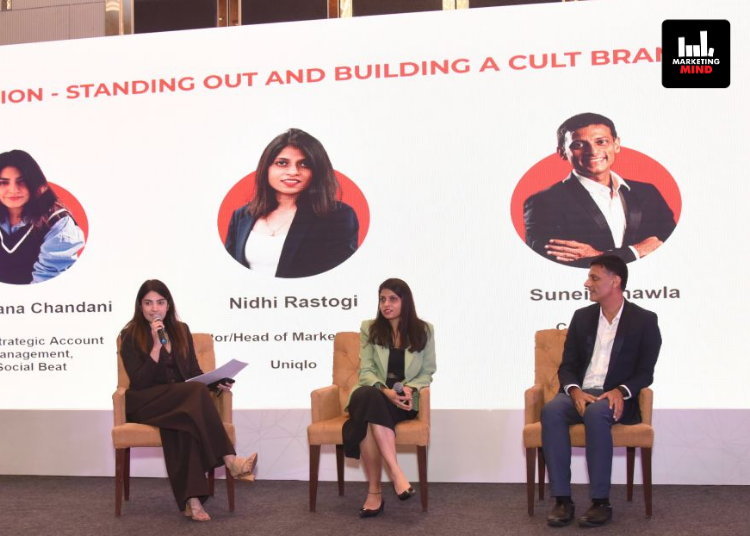
At the 16th edition of the Digital Leadership Summit, a panel featuring Nidhi Rastogi, Director and Head of Marketing at Uniqlo India, Suneil Chawla, Co-founder of Social Beat, and Meghana Chandani, Executive Vice President – Digital & Social Growth (North and West) at Social Beat, has explored how fashion marketing in India has evolved into a balance of authenticity, content, and measurable growth.
Rastogi has challenged the conventional notion of complexity in building global brands locally. “I feel building a brand in India right now is probably the easiest, given the kind of demographic awareness we have,” Rastogi said.
“The only thing that changes for a global brand to make a local brand in India is understanding the customers.” Emphasising the universality of fashion, Rastogi said, “everybody wants comfortable clothes and that’s what Uniqlo is banking on,” while reinforcing the brand’s philosophy, “we are now in the world where less is more, it’s not about having too much, it’s about just having the right product,” she added.
Chawla has connected this product-first thinking to the rise of content-led influence. “The brands which stand out don’t fake it. You can fake it only for a while, but brands which have an authentic story to tell stick to those values,” Chawla said. He added, “India is not just shopping online but is also making up its mind significantly by the content it’s consuming,” highlighting the shift from traditional decision-making channels to digital ecosystems.
As the discussion has moved to influencer marketing, Rastogi has underscored the importance of authenticity over reach. “We actually do a check as to whether they really have even used Uniqlo,” Rastogi said. “If you have not tried the product, you will not be able to influence people.” She added, “a lot of our content is around storytelling, how people feel when they’ve tried HeatTech or Airism.”
Chawla has expanded on this by pointing to how brands are rethinking creator ecosystems. “They’ve flipped the angle by partnering with smaller creators and helping them grow,” Chawla said. “That is where authenticity, trust, and exclusivity come in naturally.” He also highlighted the rise of regional content, adding, “vernacular is selling, Hindi, Tamil, Bengali, Gujarati, a lot of brands are now starting to create content in different languages.”
Rastogi has acknowledged that while fashion benefits from high influence, it also faces heavy content clutter. “If there’s actually clutter of any content, it’s probably fashion and beauty,” Rastogi said. She added, “we don’t call ourselves a fashion brand, we call ourselves a lifewear brand,” reinforcing that Uniqlo focuses on functionality and longevity. “We are always product first, we don’t chase trends,” she said.
On retail strategy, Rastogi has described store launches as highly localised experiences. “Every store will be different because the customers are different,” Rastogi said. She added that the brand builds connection through thoughtful gestures, “for all the people who queue up, we give them refreshments, it’s a way of saying thank you,” creating what she described as a festive and welcoming atmosphere.
Addressing the role of celebrities versus creators, Rastogi has clarified their distinct roles. “For image and awareness, using celebrity is the best way,” Rastogi said, explaining that personalities are chosen based on cultural relevance to specific markets. She added, “where micro and nano creators come into play is further down the funnel.”
Chawla has reinforced this dual approach. “Both play different roles,” Chawla said. “Creators offer flexibility and are relatively de-risked, while celebrities still hold strong cultural influence in India.” He added, “brands that are breaking down some of their guardrails are seeing stronger consumer impact.”
On future trends, both speakers have emphasised the growing dominance of content. “Content will become the king,” Chawla said. Rastogi added, “people are spending more than 10 hours on their phone, what they see is what they buy.” She continued, “content is going to keep getting better, and with AI and immersive experiences, fashion will lead that change.”
Even Uniqlo’s niche positioning has been reframed as a strength. “Uniqlo is not about the brand, it is about the products,” Rastogi said. “We don’t chase trends, you will always need a good pair of denim or a functional jacket.”
The conversation has concluded with a sharp focus on ROI and accountability. “If brand building is not leading to business, you’re not building the brand,” Rastogi said. She added, “marketing is not marketing, marketing is growth,” stressing that campaigns must move business metrics. “If you’re not seeing the needle move, there’s something that needs to be fixed.”
Chawla has added a longer-term perspective. “Brands that invest in brand building tend to win in the medium term,” Chawla said, while acknowledging that patience must still lead to results.
By the end of the session, the discussion has made one thing clear: authenticity is no longer optional, content is the primary driver of influence, and growth has become the ultimate measure of marketing success.