







The conversation around brands and activism isn’t new.
From Black Lives Matter and #MeToo to farmers’ protests, LGBTQ+ rights and global conflicts, every politically or socially charged moment has reignited the same question:
Should brands speak?
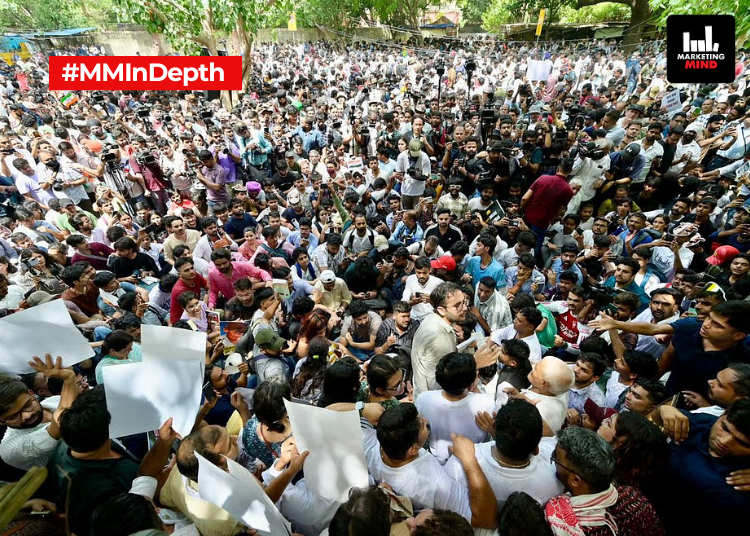
In recent days, the student protests have evolved into one of the country’s most closely watched movements, with activist Sonam Wangchuk at its centre. Now on the 26th day of his hunger strike in solidarity with students protesting the alleged NEET 2026 paper leak and demanding accountability from the education system, Wangchuk has become the face of a growing public conversation- one that has sparked widespread reactions from brands, citizens, public figures and sections of the media.
The ongoing student protests in the national capital, and certain parts of the country, have once again put corporate communication under the microscope. This time, however, the debate isn’t just about whether brands are silent- it’s also about whether silence itself has become a communication strategy.
Across LinkedIn and Instagram, marketers, creators, founders and communication professionals appear sharply divided. Some believe brands have a responsibility to acknowledge moments that matter to their consumers. Others argue that not every issue deserves a brand statement and that restraint is often the more responsible choice.
The Growing Demand For Brands To Speak
As images and updates from the protests continue to dominate social media, a parallel conversation has emerged within India’s advertising and marketing ecosystem.
Creators, marketers and communication professionals have increasingly begun questioning why many brands have continued with business-as-usual content while one of the country’s most talked-about public issues unfolds.
For many, the expectation stems from the evolution of brand purpose itself. Over the past decade, brands have positioned themselves as entities that stand for more than just products- championing conversations around mental health, gender equality, sustainability, diversity and inclusion.
The argument now being made is simple: if brands choose to have a voice during moments that align with their values, can they remain silent when their primary audience – Gen Z – is at the centre of a national conversation?
Several creators have echoed the sentiment that “a reel can wait” or “a campaign can wait,” arguing that there are moments when acknowledging reality matters more than maintaining a content calendar. Some have gone a step further, calling out fellow creators for continuing with regular entertainment content while the protests dominate public discourse.
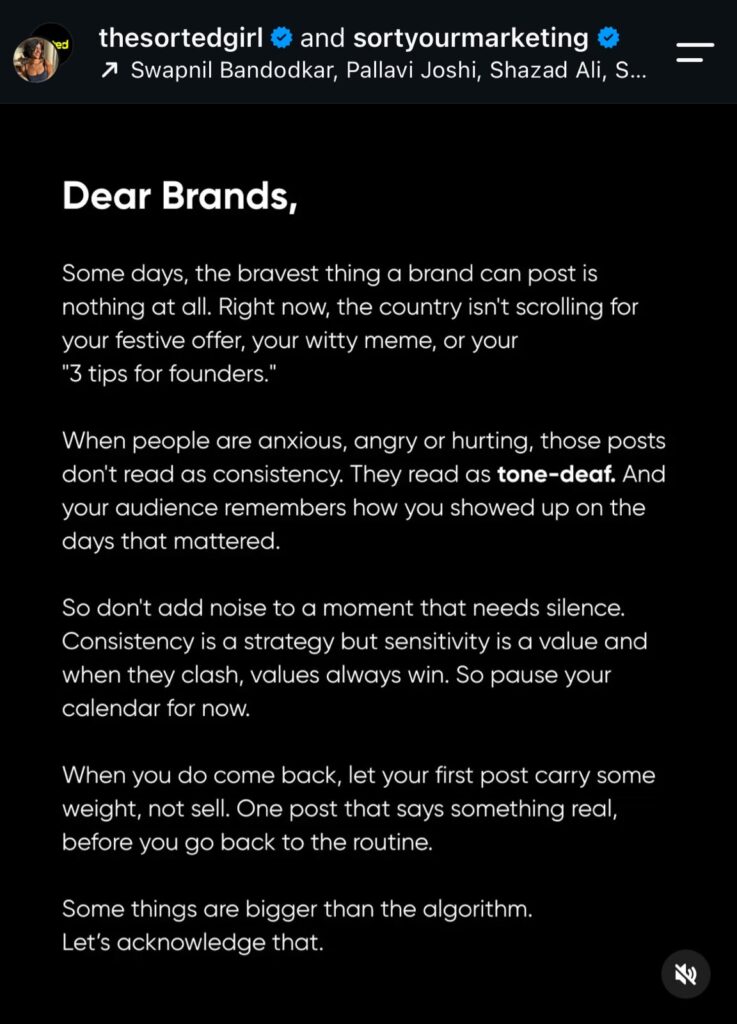
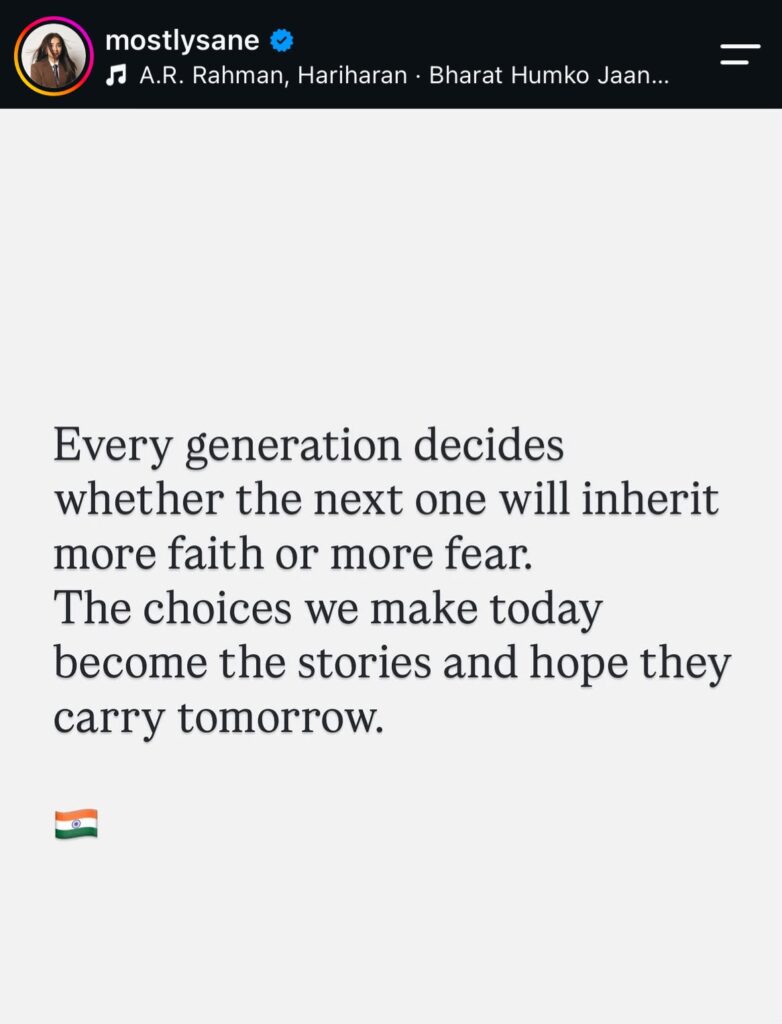
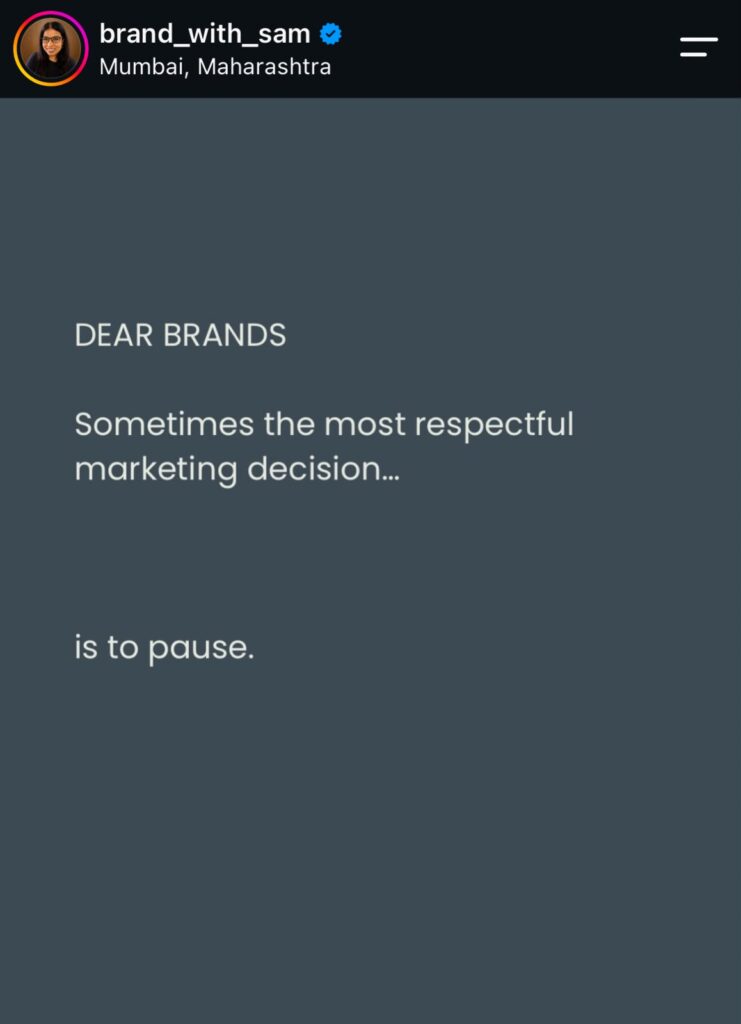
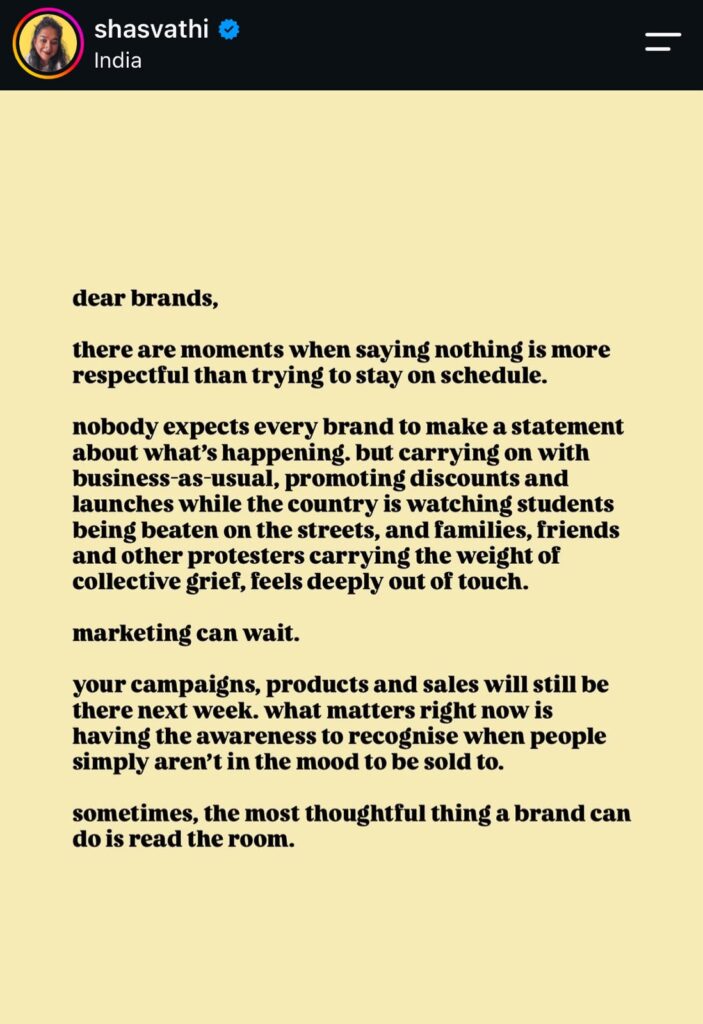
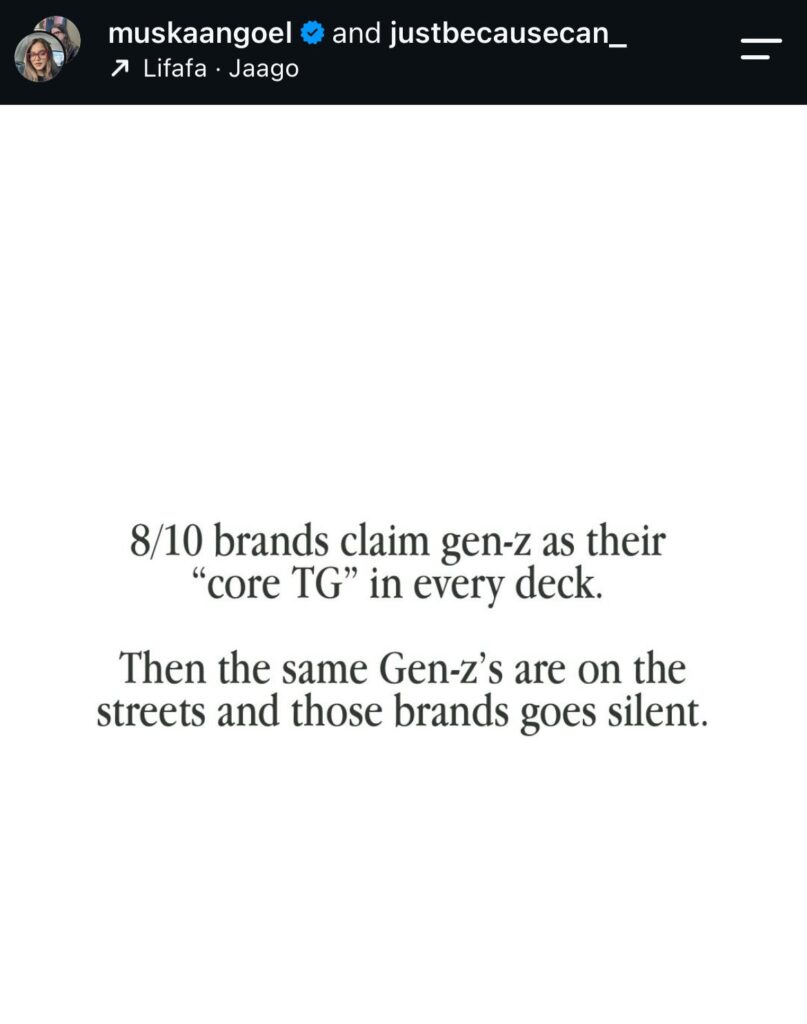
Another recurring criticism online revolves around Gen Z. Many creators have pointed out that brands frequently position Gen Z as their core target audience in presentations and marketing strategies. Yet, when members of that very audience are leading conversations on the streets and across social platforms, critics argue that many brands appear noticeably absent.
The discussion has also extended beyond brands. Several users have shared screenshots of unfollowing celebrities, influencers and companies they believe have chosen silence, suggesting that audiences are increasingly evaluating public figures not only on what they say but also on what they choose not to say.
Meanwhile, some content creators have attempted to imagine what brand communication could look like if companies publicly supported the movement, creating mock campaigns and speculative creatives that have been widely circulated across Instagram.
Certain publishers and creator-led platforms have also publicly stated that they did not feel it was appropriate to continue posting light-hearted or humorous content at the moment. Others, particularly meme pages, have actively used their platforms to express solidarity through regular protest-related posts.
The Argument For Silence
However, the expectation that every brand should publicly respond is far from universally accepted.
Another section of the advertising and communications industry believes that the growing pressure on brands to comment on every major social or political issue misunderstands the role of corporate communication.
Many industry professionals argue that brands are not public institutions or political organisations. Every statement issued by a company carries commercial, legal and reputational implications that extend far beyond social media. A “poorly considered” response, or even a well-intentioned one, can quickly become a source of controversy, creating consequences for employees, partners, investors and customers alike.
Some have argued that if a brand chooses to take a stand, it must be prepared to remain consistent when future issues arise, regardless of “how commercially uncomfortable those conversations become”. According to this school of thought, inconsistency damages credibility far more than silence does.
Several industry voices have also cautioned against reducing serious humanitarian or political developments to opportunities for moment marketing. They believe that not every public issue should become a brand communication exercise and that, in certain situations, saying nothing may reflect restraint rather than indifference.
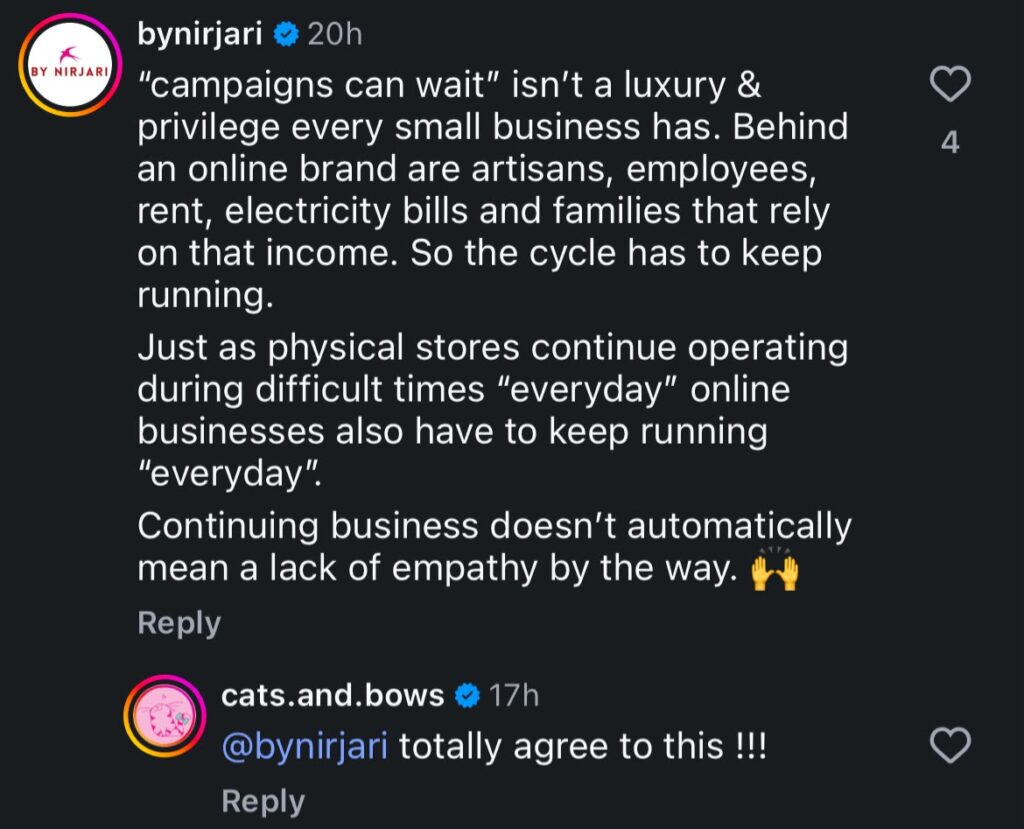
For smaller businesses, the conversation becomes even more complex. Some founders and entrepreneurs have pointed out that unlike large corporations, they often operate with limited resources and cannot easily absorb consumer backlash, political scrutiny or commercial consequences arising from public statements. For them, remaining silent is less about avoiding responsibility and more about protecting the sustainability of their businesses.
When Silence Becomes The Story
Perhaps the most frequently discussed example within advertising circles has been Amul.
Known for its topical creatives that have commented on everything from politics and sports to international affairs and cultural moments, Amul has built a decades-long reputation for responding to news through its instantly recognisable illustrations and wordplay.
This time, however, it was not a campaign that drew attention- it was the absence of one.
Communications strategy consultant Karthik Srinivasan highlighted this on LinkedIn, observing the contrast with an earlier hunger strike more than a decade ago, when the brand had publicly reflected the moment through its advertising.
This observation quickly became part of the wider debate, with many questioning whether the absence represented a conscious strategic decision or simply reflected changing corporate priorities. Importantly, the discussion was less about demanding a campaign and more about how expectations evolve once a brand becomes known for consistently participating in cultural conversations.
Is This Really About Brand Purpose?
At the heart of the debate lies a broader question: what does brand purpose actually mean?
Over the years, purpose-driven marketing has encouraged companies to position themselves around values rather than just products. Campaigns celebrating diversity, inclusion, sustainability and social progress have become increasingly common, often helping brands build stronger emotional connections with consumers.
That history has also changed consumer expectations.
Many online commentators argue that “purpose cannot be selective”- that brands cannot actively champion values during commercially safe moments while remaining absent during more uncomfortable conversations. In their view, audiences today are quick to notice inconsistencies between messaging and action.
Others, however, believe this expectation places an unrealistic “burden” on brands. They argue that purpose does not necessarily require public commentary on every issue and that responsible communication also involves recognising when a brand has little meaningful contribution to make.
The debate therefore is no longer simply about speaking or staying silent. It is increasingly about consistency, authenticity and whether purpose is viewed as a long-term commitment or a campaign strategy.
A Familiar Question, Different Moment
This is not the first time brands have found themselves navigating difficult public conversations.
Whether during social justice movements, public protests, geopolitical conflicts or humanitarian crises, the advertising and marketing industry has repeatedly revisited the same question: where does corporate responsibility end and commercial responsibility begin?
There are no universally accepted answers.
For some, silence signals caution. For others, it reflects selective purpose. For still others, it is simply a sound business strategy.
Perhaps that is why this debate continues to resurface with every major public moment. In an era where consumers increasingly expect brands to have personalities, values and opinions, every statement, and every omission, is interpreted through a wider lens.
Whether brands should speak is ultimately a question each organisation will answer differently.
What remains undeniable, however, is that silence itself is no longer invisible. In today’s communication landscape, choosing not to say anything has become a statement that audiences, marketers and creators are just as willing to analyse as any campaign that does.