





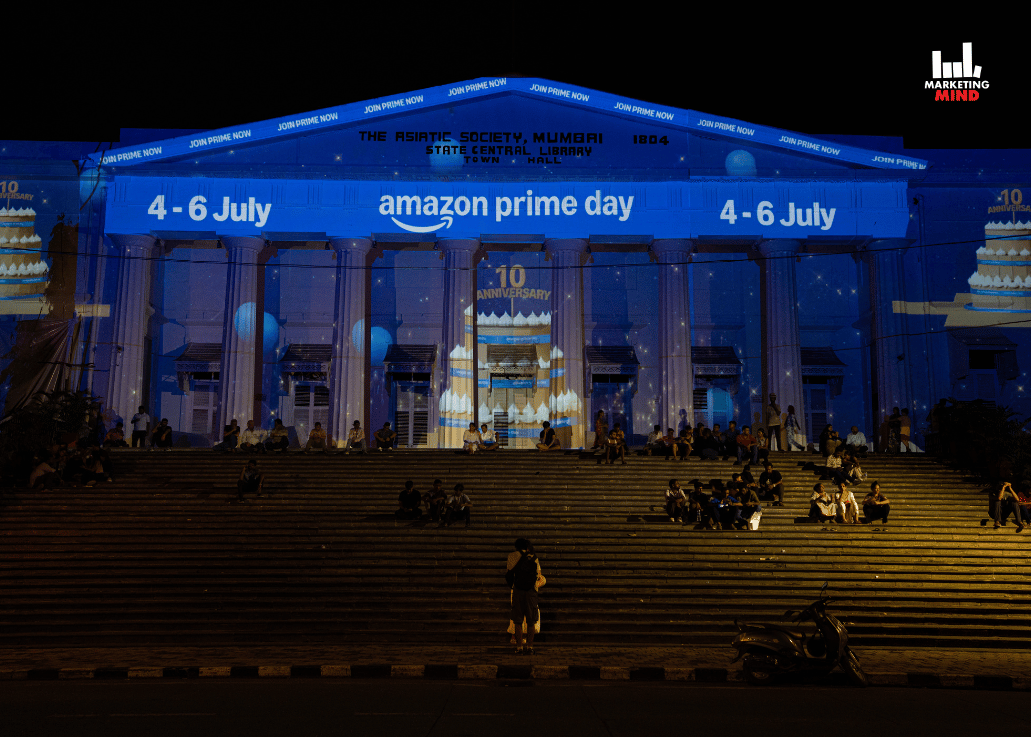
For ten years, Prime Day in India has meant one thing to most people: a countdown, a wishlist, and a very specific kind of July anxiety about whether that phone will finally drop to the price you’ve been waiting for. This year, Amazon decided the anniversary deserved more than a banner ad and a discount code. It decided to light up Mumbai.
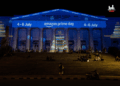
On 26th June, the Bandra-Worli Sea Link turned into a canvas. Two days later, on 28th June, the Asiatic Library got the same treatment. Large-format projection mapping, the kind usually reserved for national landmarks on Independence Day or New Year’s Eve, was pointed at two of the city’s most photographed structures, all to announce that Prime Day is turning ten.
If you’re in marketing, this is the part where you stop scrolling and pay attention.
The Insight Nobody Says Out Loud
Sale events have a shelf life problem. The first year, a sale is news. By year five, it’s routine. By year ten, if you’re not careful, it’s wallpaper. Consumers have been trained to expect discounts every other month now, from festive sales to mid-year sales to sales that exist because the calendar had a free week. The thing that made Prime Day special once, scarcity and anticipation, has been diluted by an industry that discounts constantly.
Amazon’s read on this seems to be simple: if a decade of Prime Day has earned cultural weight, then the tenth edition shouldn’t behave like a regular shopping event. It should behave like a public moment. Rather than relying on the usual sale-season vocabulary, Amazon is turning the anniversary into a public-facing spectacle one designed to be noticed, photographed, shared, and remembered before anyone even opens the app.
Why Landmarks, and Why These Two
There’s a reason brands keep circling back to iconic architecture when they want a moment to travel. A landmark already comes loaded with recognition, emotional association, and, crucially, a built-in audience that photographs it constantly without being asked. The Sea Link and the Asiatic Library aren’t just structures, they’re shorthand for Mumbai itself, the kind of visual that shows up in a thousand Instagram grids without a single paid boost.
View this post on Instagram
By projecting onto them instead of building a standalone installation somewhere, Amazon skips the hardest part of experiential marketing: getting people to show up. The audience already exists. The landmark already has gravity. All the brand has to do is borrow it for a night.
View this post on Instagram
This is also, quietly, a rare move. Public architecture at this scale doesn’t get handed over to brand campaigns often, and when it does, the logistics alone, permissions, safety, timing, technical execution, make it a genuine flex of scale rather than a gimmick. That rarity is doing a lot of work here. It signals that Amazon didn’t just book a slot on a hoarding, it earned a night on two of the city’s most recognisable silhouettes.
From Sale Event to Cultural Event
This is really the throughline of the whole campaign. Somewhere in the last decade, the smartest brands running annual sale moments figured out that the event itself needs its own identity, separate from the discounts inside it. Think of how award shows build anticipation weeks before anyone cares about who wins. Prime Day’s tenth anniversary campaign is doing something similar: building a moment people talk about before a single deal goes live.
The projection mapping isn’t selling a product. It’s not even really selling the sale. It’s selling the idea that Prime Day, as an occasion, deserves a spectacle. That’s a subtle but important shift for a brand that has spent a decade being primarily transactional in how it communicates during this window.
The Marketing Takeaway
By its tenth year, Prime Day no longer needed to introduce itself, the scale of past editions already did that. What this campaign proves instead is that even a mature, well-established property can still generate first-time excitement if you change the register you’re speaking in. Most brands treat anniversaries as a reason to say “thank you for ten years” in a press note. Amazon treated it as a reason to make the city look up. That is the bigger lesson for anyone planning a milestone campaign: don’t just look backward at what the event has achieved, but look for a single, ownable act that makes people feel the milestone rather than read about it. A decade of Prime Day fits on a slide. Two landmarks lit up across a city fits in a story people tell each other, which, in July 2026, might be the more valuable currency of the two.