


In an industry defined by constant disruption, staying relevant for two decades is no small feat. Over the last 20 years, digital marketing has transformed repeatedly, from the rise of search and social media to mobile-first behaviour and, more recently, the rapid adoption of generative AI.
Few companies have navigated these shifts as consistently as LS Digital, which celebrates its 20th anniversary this year. What began as a performance marketing agency has evolved into an integrated digital business transformation company spanning media, creative, customer experience, UI/UX, data, and technology.
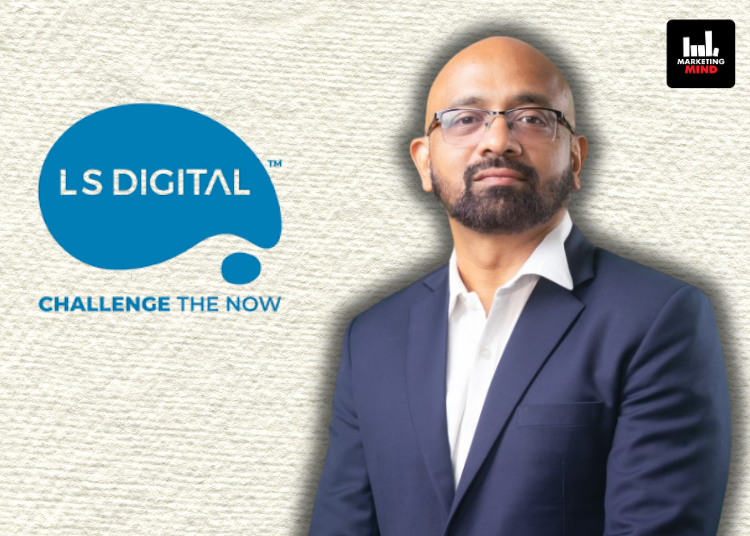
At the centre of that journey is LS Digital’s Founder and CEO, Prasad Shejale, whose philosophy has remained unchanged: stay close to consumers, anticipate behavioural shifts, and build solutions around real business challenges.
In a conversation with Marketing Mind, Shejale reflected on LS Digital’s evolution, the changing role of agencies, the impact of AI, and the principles that continue to guide the company.
Twenty Years of Staying Close to Consumers
Shejale noted he never started out with the ambition of building a 20-year company. Entrepreneurship, he believes, is about solving one problem at a time and adapting along the way.
He compares it to running a marathon. “Most first-time marathon runners never complete the full 42 kilometres during training, yet most finish the race once they begin. Business is similar. You encounter challenges, opportunities, setbacks, supportive partners, and difficult clients. The key is to keep moving forward,” he observed.
The company’s longevity, he says, comes from understanding changing consumer behaviour.
“I’ve always believed that I’m a consumer first and a marketer second. Whenever I notice a change in my own behaviour, I ask whether that reflects a larger shift that could help our clients grow,” Shejale
In LS Digital’s early years, he made it a point to experience the customer journey of every major client firsthand, even purchasing nearly Rs 70,000 worth of specialty cookware from one client to better understand the consumer experience. “That immersion helped us build better strategies,” he recalled.
For Shejale, the lesson from two decades in business is simple: stay close to consumers, understand how behaviour evolves, and help brands adapt.
The Integration Imperative: Moving Beyond Silos
Today, LS Digital’s capabilities span media, technology, data, customer experience, UI/UX, and creative services. Yet Shejale believes the real value lies not in individual capabilities but in how they work together.
At the start of this financial year, Shejale revealed that nearly 70% of the company’s clients were already using two or more LS Digital services. The focus now is on increasing adoption across multiple functions because, as he puts it, “modern business problems require integrated solutions.”
The need for integration is being accelerated by changes across the ecosystem. Consumers are increasingly using AI-powered assistants for research and discovery, while creative fatigue is setting in faster than ever.
“Earlier, a campaign could run for years and remain effective. Today, consumers may not even remember the advertisement they saw yesterday,” he pointed out.
AI’s Real Role: Redesigning Workflows and Amplifying Human Capability
For Shejale, the most significant transformation underway isn’t just the adoption of AI tools. Rather it’s the redesign of how businesses operate.
“AI isn’t about simply adding a few tools into existing workflows. It’s about redesigning workflows from the ground up,” he said. “The objective is to improve efficiency, solve customer problems faster, and create a meaningful competitive advantage.”
That philosophy has shaped LS Digital’s ambition to become an AI-native organisation, where AI sits at the centre of problem-solving rather than functioning as an add-on.
Yet despite the excitement around automation, Shejale is clear that AI will not replace human judgment. He rightfully observed, “Humans bring context, and context is critical. Even the most advanced foundation models require context to produce meaningful outcomes.”
Instead, he views AI as a capability enhancer. Drawing an analogy, he compares it to the suit worn by Iron Man. Not a replacement for the individual, but a layer that extends their abilities and helps them perform at a much higher level.
“AI helps people make better decisions; it does not make the decision for them,” Shejale claimed.
Whether it’s a media planner evaluating campaign opportunities or a CFO analysing investments, AI can improve access to information, strengthen analysis, and surface better options. The final call, however, remains a human one.
From Transactional to Transformational: The New Brand-Agency Relationship
According to Shejale, the brand-agency relationship has evolved from a transactional model to a growth partnership. “Brands are ultimately looking for one thing: partners who can help them grow,” he noted.
Earlier, agencies were often hired for specialised functions such as media buying or creative development. Today, businesses expect partners who can combine strategic thinking with execution.
Adding to this shift, he said, “The pace of change is simply too fast for lengthy consulting engagements followed by delayed implementation.”
This shift was one of the key reasons behind LS Digital’s evolution into an integrated business transformation company. Business challenges are rarely confined to a single discipline, and performance issues can stem from creative, customer experience, data, technology, or media.
“If a campaign isn’t performing, the issue may not be media. It could be the creative, the customer experience, the data strategy, or the technology infrastructure supporting the campaign,” he said, offering a dynamic outlook.
In Shejale’s view, the future belongs to partners that combine multidisciplinary expertise with flawless execution. “Brands are looking for partners who can not only tell them what needs to be done, but also deliver it effectively and at speed,” he further stated.
His approach to acquisitions reflects the same philosophy. Rather than imposing uniformity, LS Digital follows what he calls “osmosis.” Companies such as Social Panga, Langoor, F1Studioz, and DataQuark retain their individual cultures after joining the group.
“We don’t try to change those cultures because they are often the reason those businesses have been successful,” Shejale admitted. Instead, integration happens through collaboration. Teams from different businesses work together on client challenges, share expertise, and gradually adopt best practices from one another.
Starting Over: What Would Change and What Would Stay
When asked about what he would do differently if he were building LS Digital today, Shejale’s answer is immediate. “I would build the company as a technology-first organisation from day one,” he said.
Before founding LS Digital, he spent nearly 12 years in IT and software companies. In the early years, he consciously downplayed that background because technology and advertising were viewed as separate disciplines. Today, he believes that distinction has disappeared.
What he would never change, however, is his commitment to understanding consumers.
“The ability to spot trends early, understand what they mean for consumers, and translate those insights into opportunities for clients is something I would absolutely preserve.”
For Shejale, the enduring advantage lies elsewhere: curiosity, adaptability, and staying close to the customer. “Technology, platforms, and consumer behaviour may change. But the discipline of staying curious and remaining close to the customer will always remain valuable,” he concluded.