




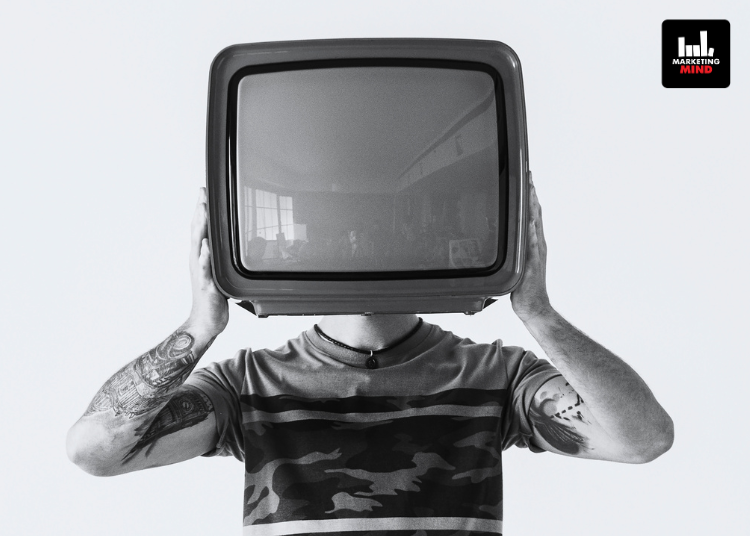
There was a time when advertising didn’t just sell products, it scripted culture. When Cadbury Dairy Milk told us “Kuch Meetha Ho Jaaye,” it felt like a sweet ritual. When Lifebuoy cheekily asked “Tera Saabun Slow Hai Kya?”, it slipped effortlessly into everyday banter. And long before playlists and reels, the unmistakable ‘Washing Powder Nirma’ jingle turned household chores into chorus lines.
These ads created a defining era of pop culture, embedding themselves into everyday language and memory. But in today’s algorithm-driven ecosystem, that authority has eroded. The identifying blocks of culture markers have passed to the audience, with brands now taking cues from viral moments, fads, meme culture, and youth-driven trends rather than defining them.
To analyse and understand this role reversal, Marketing Mind gathered insights from brand consultants, who offered nuanced perspectives on this evolving dynamic. The conversations unpacked how advertising has moved from cultural authorship to cultural adaptation and risks of trend-chasing. The talks also brought forward critical themes of the gap in creativity and innovation in today’s advertising space.
From Cultural Authority To Cultural Catch-Up
The transition from shaping culture to chasing it is closely tied to how quickly trends now emerge and evolve. Highlighting this change, Nisha Sampath, Managing Partner at Bright Angles Consulting, said, “platforms like Instagram and YouTube have accelerated the pace of creation and adoption of trends. Brands are often not in a position to set trends; they are busy playing catch up.”
This shift is not just cultural, but structural, rooted in how media itself has evolved. As Samit Sinha, Founder and Managing Partner of Alchemist Brand Consulting, explained, “television was a one-way medium for the whole family. Naturally, the type of engagement was different. You had to get it right.” Adding onto the centralisation on TV, he also said, “it was very important to be noticed and to be remembered, which pushed creativity to a level where brands could truly touch a nerve with the public and become part of popular culture.”
Extending on this shift further, Harish Bijoor, Business & Brand Strategy Specialist & Founder of Harish Bijoor Consults, added, “If you really relate it to advertising of the 80s, 90s, and early 2000s versus what we see today, you will witness a sharp change. Advertising is not top down as it used to be. Now it is bottom up. Today, consumers and influencers reshape the imagination of buyers.”
Trend-Chasing Vs. Meaningful Cultural Participation
At the heart of this distinction is clarity of role. As Sampath laid out, “Culture is a vast space. Strong brands define the specific part of culture they participate in.” She explained this with examples from Nike and Amul. “In such cases, the trend becomes a vehicle to express what the brand already stands for. In contrast, trend-chasing is when brands opportunistically leverage surface signals like slang, formats, and viral templates, without any real connection. This may get short-term engagement, but it rarely builds memory,” she observed.
This opportunism is further amplified by the rise of moment marketing. As Bijoor stated, “Opportunistic trend chasing is typical when it comes to moment marketing. But change will come when you step out of it to get meaningful cultural participation.”
Creativity As The Last True Differentiator
With increasingly indistinguishable products and widely accessible trends, creativity remains the last true differentiator. Yet, it is where the industry seems to be struggling the most. Backing this revelation, Sridhar Ramanujam, Founder and CEO of Integrated Brandcom, said “There is a definite drop in the quality of the creative product. Of course, there will be the excuse that we are talking about tight budgets, trends and influences, but the whole thing boils down to creativity.”
The outcome is a visible creative gap. As Ramanujam noted, “Even for doing something as basic as toilet cleaners, you have to rely on a celebrity. This is a sad state for advertising.” He also poses the question, “Can you tell me one outstanding ad which is currently on air? I can’t, and I watch a lot of TV,” drawing attention to the creative gap in the existing advertising landscape.
The shift in process has also played a role. “It’s become more hit-and-trial rather than something that you had complete faith and conviction in,” explained Sinha. “With algorithms, measurability, and rapid feedback loops driving decisions, brands are increasingly risk-averse, often defaulting to what’s already working.”
The Illusion Of ‘Gen Z’ As A Homogeneous Audience
For an audience that dominates marketing conversations, Gen Z is often understood in the most reductive way. As Sampath explained, “Gen Z is often treated as a homogeneous cohort, but in reality it breaks down into distinct segments. They come with very different needs and aspirations. Broad stereotypes must be replaced with sharper, need-based archetypes, since the young audiences need precise targeting.”
This oversimplification is further compounded by an over-reliance on visible digital behaviour. “While younger populations exerted purchasing power earlier, which makes them disproportionately important. But going purely on youth trends is opportunistic and risky,” she further explained.
The ripple effects of this broad-brush approach show up in how brands communicate. As Sinha notes, “If it’s worked for brand A, then it must work for my brand. For example, when you take on a particular celebrity at the height of the celebrity’s popularity, you suddenly realise that 50 other brands also onboarded them, which kind of defeats the purpose.”
This perspective describes a pattern where marketers replicate what’s already visible rather than tailoring messaging to distinct audience segments. This, in turn, contributes to the monotony that Ramanujam pointed out. He explained, “brands are trying to adapt to the same concepts over and over, making communication repetitive rather than differentiated. The issue is that most of the products are similar, there is not much differentiation. The differentiation comes from the advertising, yet there’s nothing very striking or different from the creative process. That’s the bigger gap.”
Moment Marketing & The Trap Of Opportunism
The pressure to be relevant, especially in today’s always-on ecosystem, has made moment marketing almost unavoidable. This is further intensified by shrinking attention spans. “If there is something which doesn’t immediately attract your attention, you can immediately switch off,” noted Sinha. He further explained, “Getting people to engage with your message has become that much more difficult. But the timeless principles of being relevant and being unique are far more effective.”
On the contrary, Bijoor made a distinct observation. He noted, “Nostalgia tends to work with some sets of consumers, while a forward thinking appeal works with yet another audience. A market is mixed, and literally everything works. Different strokes for different folks,” he claims. In this context, moment marketing often leans into opportunism, chasing what works in the moment rather than aligning with long-term brand intent.
Advertising is undergoing a recalibration as culture becomes faster, more fragmented, and increasingly consumer-led. Brands are now adapting in real time, often prioritising immediacy over longevity. As industry leaders highlight it, the challenge now is not just to keep up with culture, but to engage with it meaningfully, balancing relevance with originality, and speed with strategic clarity. Because while the direction of influence may have shifted, the fundamentals of building lasting brand memory should remain unchanged.