





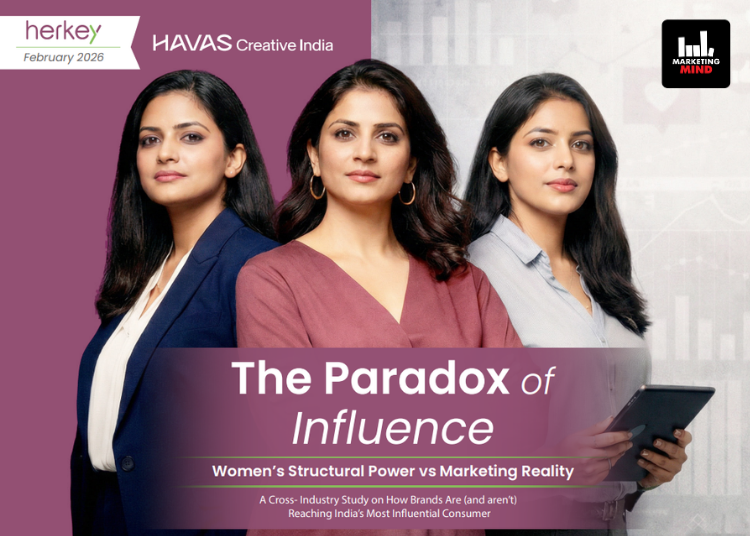
A new cross-industry study by HerKey and Havas Creative India has highlighted a growing disconnect between women’s economic influence and how brands market to them.
The report titled “The Paradox of Influence: Women’s Structural Power vs Marketing Reality” has examined how organisations approach women as consumers across sectors including FMCG, fashion, BFSI, retail, auto, healthcare and personal care. According to the study, women have influenced 70–85% of purchase decisions in India, yet many brands continue to treat women-centric marketing as experimental or occasional rather than strategic.
The study has surveyed 48 marketing leaders across industries and combined quantitative insights with interviews and secondary research to assess how companies understand and engage women consumers.
Findings from the report have shown that 79% of marketers say women’s influence has increased over the past two years, but only 14% consider themselves leaders in women-centric marketing, suggesting that most organisations remain in a transitional phase.
The research has also highlighted that sectors such as fashion, personal care and retail demonstrate the most consistent year-round engagement with women consumers. In contrast, categories like auto, BFSI and alcohol beverages continue to treat women as a secondary or emerging audience despite growing participation.
Another key insight from the report has been the execution gap between recognition and investment. While over 60% of brands have increased spending on women-focused marketing over the past three years, budget allocation continues to prioritise content creation and paid media over research and consumer insight.
The study has further indicated that legacy assumptions and data gaps remain major barriers, with 44% of marketers citing outdated thinking and limited data as key obstacles to understanding women consumers.
Despite increased visibility in campaigns, the report has noted that representation still leans heavily on familiar portrayals such as caregivers, particularly in sectors like healthcare, FMCG and food and beverage.
Looking ahead, the study has suggested that the next phase of women-centric marketing will be shaped by community-led ecosystems, AI-driven personalisation and culturally relevant communication, signalling a shift from reach-based advertising to relationship-driven engagement.
“At HerKey, our work with millions of women professionals and thousands of organisations has shown us just how quickly these dynamics are evolving. Women are redefining what ambition, success, and financial influence look like. The brands that listen carefully and invest in deeper understanding will be the ones that build relevance and trust over time.” – Neha Bagaria, Founder and CEO, HerKey