







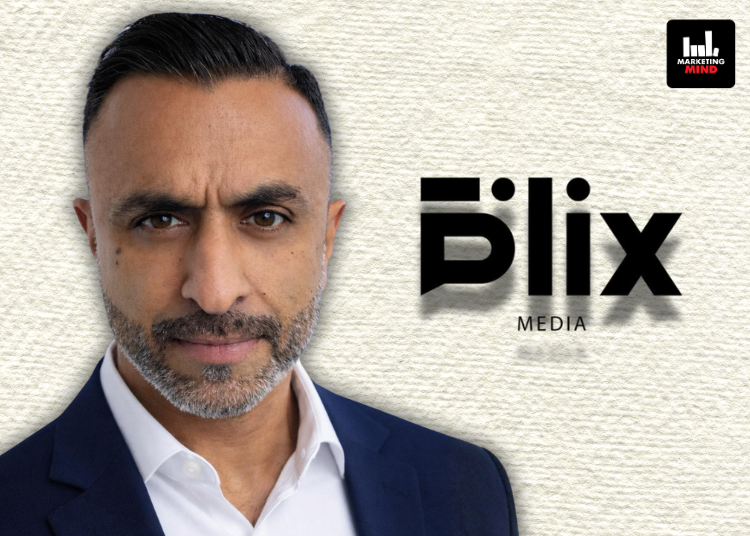
The modern creator economy has often felt like a carnival of chaos, loud, fast, algorithm-charmed and relentlessly attention-hungry. Yet beneath the scroll-speed spectacle, there has existed a quieter architecture of systems, strategy and sustained thinking. In conversation, IPLIX Media’s Founder and Co-founder, Jag Chima has not merely described that architecture, he has embodied it.
At a time when influencer marketing has been dismissed as fleeting and AI has been framed as existential disruption, Chima has spoken with the calm conviction of someone who has watched the ecosystem evolve from experimentation to infrastructure. His worldview has blended entrepreneurial instinct with long-horizon patience- part gym discipline, part boardroom pragmatism.
Or as he has put it, simply: “Everything I have done has been interconnected. If it has moved my needle and created impact, I have got involved.”
India’s Orange Economy Has Shifted From Emergence To Scale
The professionalisation of content creation has not arrived through one defining moment. It has happened quietly, steadily and, in hindsight, inevitably.
Chima has consistently pointed to a cultural shift that has been generational rather than technological. Creation has no longer been positioned as a rebellion against traditional careers — it has become one.
“We have already started seeing content creation being accepted as a career path across India. Parents have started encouraging children as young as seven to build creator careers.”
What was once dismissed as hobby culture has evolved into workforce infrastructure. “Creator labs have become infrastructure for the future of work, not hobby centres,” he has said, framing the shift as structural rather than trend-driven.
Even policy momentum, he has believed, has reflected inevitability rather than experimentation. “Implementation might take time, but it has become inevitable because the government has understood how large this sector has become for India’s global positioning.”
More importantly, the ripple effect has extended far beyond creators themselves. “The creative economy has created jobs you would never associate with it, finance, compliance, education, analytics, everything.”
Influencer Marketing Has Evolved From Visibility To Enterprise
If the first decade of influencer marketing has been about visibility, the current phase has been about enterprise.
Chima has been direct about the gap between content creation and business building. “Content creators have been brilliant at creating content, but building a business has required an entirely different ecosystem.”
That shift has pushed creator-led brands toward product-first thinking. “The product has needed to be strong enough to survive even without the creator pushing it every day.”
The success stories, he has argued, have rarely been accidental. “The successful ones have always had teams of experts behind them- R&D, operations, supply chain, strategy. If a product has solved a real problem and the creator has believed in it organically, success has followed.”
But he has also been candid about failure rates. “Many creator brands have failed because they have skipped research and gone straight to manufacturing.”
Meanwhile, brand marketing allocations have already reflected this transition. “Many new brands have already spent 35–40% of their marketing budgets on influencer marketing,” he has noted. “Some have spent as high as 90–95%, keeping traditional media only for symbolic presence.”
AI Has Become A Capability Multiplier, Not A Creativity Replacement
Few conversations in marketing have been as polarised as AI. Chima has approached it as an efficiency multiplier, not a creativity replacement.
“AI has become fantastic at processing data, what took three days now takes three minutes.” But speed alone, he has argued, has not created strategy. “Human judgment still decides what to do with that data.”
On employment anxiety, he has remained unequivocal. “AI has created more jobs than it has taken. We are hiring people with AI skills for roles that never required them earlier.”
Even so-called AI creators, he has pointed out, have remained deeply human-led. “AI creators still require teams, strategists, engineers, designers, because quality does not happen by accident.”
His view of the divide has been blunt but practical. “If you have learned to work with AI, it has made you faster. If you have refused to learn it, then yes, it has replaced you.”
Looking ahead, he has maintained a clear long-term view. “AI will never replace human connection. It will only amplify it.”
Trust Has Emerged As The Real Long-Term Currency
In creator partnerships, alignment has mattered more than metrics. “Energy and values have mattered more than follower counts. If visions have not aligned, we have parted respectfully rather than forcing relationships.”
Perhaps most revealing has been how he has defined success beyond retention. “If someone has outgrown us and moved on, we have still considered it a win, because we have been part of their journey.”
If the orange economy has represented India’s next industrial shift, voices like Jag Chima’s have sounded less like hype cycles and more like infrastructure planning.
In an industry obsessed with virality, he has spoken about durability. In a landscape fearful of AI, he has spoken about augmentation, not extinction.
Or, as he has distilled it: “Quality has always outlived trends.”