




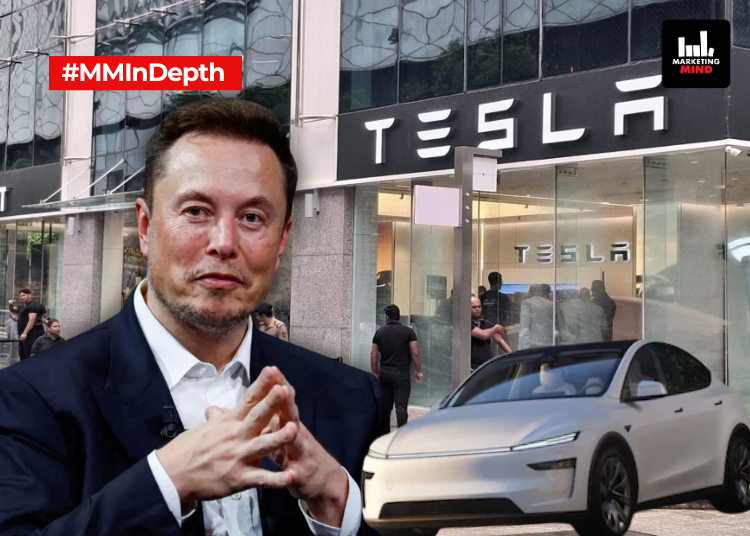
Tesla is finally here. Yes, the Tesla. After years of ‘will-they-won’t-they,’ bureaucratic wrestling, and crazy speculation that turned every Musk tweet into a breaking news moment, India just got its first Tesla showroom. Planted right in the middle of Mumbai’s Bandra Kurla Complex (BKC), the 4,000-square-foot showroom isn’t just a retail space, it’s so much more than that. In a way it is a statement.
But that’s just the facade. The real drama? It begins at the crossroads where India’s ‘jugaad’ spirit meets Tesla’s ultra-minimalist cool.
This is a country where jugaad isn’t just a word, it’s a way of life. Here, luxury doesn’t always scream restraint, it often comes with extra garnish, free sunshades, a Ganesh idol on the dashboard, a Diwali mega-offer that throws in insurance, accessories, and sometimes even a gold coin. Buying a car is an event, a family affair, conversations over chai and coffee and the never ending bargaining battles. Into this ritualistic dance walks Tesla, all clean lines, silent clicks, and zero-nonsense.
No discounts. No drama. No dealers. In a place where people find pride in snagging the best deal, Tesla just walked in and said, “Here’s the price. Take it or leave it.” And honestly? People are taking it.
Because here’s the twist: Tesla doesn’t behave like an automaker. It behaves like a tech cult, and that’s by design.
Widely known for its audaciously titled “$0 marketing strategy,” Tesla doesn’t believe in mass-market advertising. Forget TV spots, hoardings, or jingles. What you get instead is a global ripple effect set off by Elon Musk’s tweets, meme-worthy product demos (remember the Cybertruck glass smash?), and the sheer weight of FOMO. The kind of buzz money literally can’t buy.
In fact, Tesla has flipped the traditional dealership model on its head. Instead of franchised outlets with festive bunting and salespeople trying to hit targets, it has “Service Plus” centers. Sleek, company-owned spaces that combine retail and servicing under one brand-controlled roof. No franchise owners, no conflicting incentives. Just Tesla, controlling the message, the margins, and the customer experience from start to finish.
That kind of control? It’s marketing gold. And in India, where most automakers rely on aggressive campaigns, celebrity tie-ups, and end-of-year clearance carnivals, Tesla’s restraint feels almost rebellious. No loud claims, just confidence.
The loudest thing about Tesla in India right now? Elon Musk himself. Unlike the typical Indian CEO who keeps to corporate keynotes, Musk is a headline machine. He tweets, he trolls, he teases. And every time he posts something, whether it’s about AI, Dogecoin, or a vague ‘coming soon to India’, the internet goes wild.
Musk’s influence might just be what carries Tesla through its India journey, at least in the beginning. Because even without traditional ads, Tesla’s appeal is undeniable. It’s aspirational, it’s elite, and it’s got that shiny global aura. Think Apple, but on wheels.
Of course, India is not an easy playground. Roads here are pothole-riddled plot twists, EV infrastructure is still evolving, and local competitors like Tata and Mahindra know the terrain better than anyone. But it seems like Tesla doesn’t need to dominate overnight, it just needs to stay desirable.
So will it eventually localise its content? Maybe. But expect it to be subtle: a YouTuber explaining Tesla’s tech in Hindi, an influencer vlogging a late-night drive in a Model 3, or a viral post about charging your Tesla during a monsoon power cut. Less marketing, more myth-making.
Because Tesla isn’t selling just a car. It’s selling an identity. The cool kind you don’t need to shout about, just park it and let the neighbours whisper.
And honestly? That whisper might be all it needs.
Only Tesla could pull this off.
And maybe, just maybe, only India could make it feel this cinematic.