







What if one morning you opened your campaign dashboard and saw the numbers every marketer dreams of, thousands of impressions, a spike in engagement, a neat stack of likes, only to realise half of it came from bots? It sounds like a nightmare scenario, but in digital advertising today, it’s increasingly the norm. And as a social-first platform, the experience hits even closer: you see numbers rise, but you cannot always tell who’s human and who’s not.
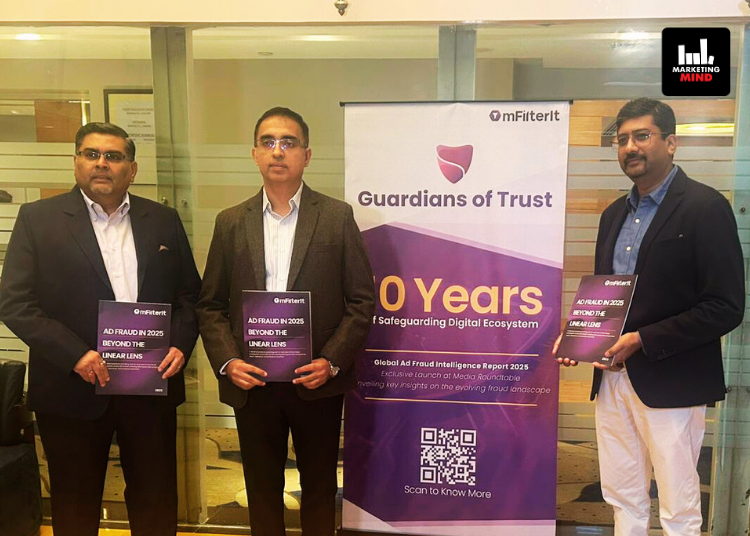
That tension shaped the roundtable hosted by mFilterIt for the launch of their 2025 report: Ad Fraud In 2025: Beyond The Linear Lens, a session that didn’t begin with jargon or metrics, but with a question marketers rarely ask out loud: Who are we actually reaching?
“There has always been a question of where the real audiences are,” said Amit Relan as he opened the conversation.
The CEO and Co-Founder explained that publishers often present numbers that look clean on the surface. “They’ll show you this much reach, this many impressions, and everything looks correct. But unless someone independently validates it, you don’t really know what’s real,” he said.
Relan described how mFilterIt’s tags distinguish real users from bots, track whether each impression is actually unique and reveal precisely how often the same user is being hit. “It tells you about your unique reach. It tells you how many times one person has seen the ad. And when brands know that, they know who to work with and who to avoid,” he added.
He shared an example to ground the point. “One client ran a campaign across thousands of websites, and only three or four did the actual work,” Relan said. The brand eventually struck direct deals with just those publishers. “Media money should go to publishers with real audiences, not the ones running junk,” he said.
Then came the shift in context, one that only someone who has seen the industry change over decades could articulate.
“This figure you see of 50% today used to be 10% in 2007,” said Vineet Mathur, Chief Growth Officer.
He recalled an era when digital barely existed in the media plan. “Most of the money went straight to TV, then newspapers and outdoor. Digital got the last 5–10%. Even the biggest brands- Pepsi, Coke, Reckitt- weren’t talking about digital at all,” he said.
And with spends exploding, fraud followed. “When the money grows, fraud grows with it. It’s almost inevitable,” Mathur added.
From that point, the conversation was led largely by Dhiraj Gupta, Co-Founder of mFilterIt, whose clarity made the hidden mechanics of fraud almost disturbingly visible.
“When brands run ads to bots, they are targeting ghosts,” Gupta said plainly.
Ghosts don’t buy anything. Ghosts don’t engage. “And the worst part is they give you fake data,” he added. “Brands make decisions based on that fake data, and the entire plan gets compromised.”
Gupta echoed a frustration many marketers feel but rarely articulate: dashboards can be deceiving. “Videos look great on dashboards, but is anyone actually watching them?” he asked.
He described how mFilterIt measures not just viewability but genuine attention. “If you’re watching OTT and the ad plays, and you minimise it and go to any other app, we know. That tiny picture-in-picture window doesn’t count as attention,” he said. “We can measure that.”
Attention not impressions, has become the new indicator of efficacy.
Gupta also highlighted frequency abuse, a drain on both budgets and user experience.
“If the brand sets a frequency of three, our tag ensures the ad never serves a fourth time,” he said. “If the system says stop at three, why is the user seeing five or six? That’s wasted money.”
This connected seamlessly to the report’s central message: a detailed playbook showing how fraud travels through impressions, clicks, visits and installs, creating blind spots that warp reach, relevance and real outcomes.
It is not framed as a threat. It is framed as the truth.
And the truth is backed by data that is hard to ignore. The report reveals that 30–45% of programmatic traffic labelled as “valid” collapses under deeper scrutiny, exposing behaviours no real human would exhibit.
Even inside walled gardens, often thought to be clean, 9–18% of activity shows non-genuine patterns, subtle enough to pass surface checks but damaging enough to distort attribution. In performance-heavy channels, the problems magnify: 43% of invalid traffic in affiliate networks comes from aggressive fraud tactics, from forced redirects to click flooding. The issue extends to frequency as well, with 15–18% of display and video impressions exceeding their frequency caps, meaning advertisers unknowingly pay for impressions that should never have been served. And app installs aren’t spared either: 45–55% of attributed installs show abnormal click-to-install times, a classic sign of CTIT manipulation that no real user journey reflects.
Gupta said all of this underscores one non-negotiable principle.
“Every impression, every click, every visit, every event, you have to map all of it,” he said. If impressions don’t turn into clicks, or visits don’t turn into events, something in the funnel is leaking. “It shows you which parts aren’t contributing anything. You can reverse-optimise from there,” he explained.
And the results speak for themselves. Gupta pointed to the work done for Royal Enfield. “They saw better conversions because we cut out traffic that was never going to buy a bike,” he said.
Relan opened with the question the industry avoids: Are these audiences even real?
Mathur reminded the room how drastically and rapidly digital spends have shifted.
Gupta revealed, with precision and data, how fraud infiltrates every stage of the funnel, often undetected and always expensive.
In a world where dashboards glow confidently and half your impressions might be ghosts, mFilterIt left the room with one undeniable truth: “You cannot optimise what you cannot verify.”