






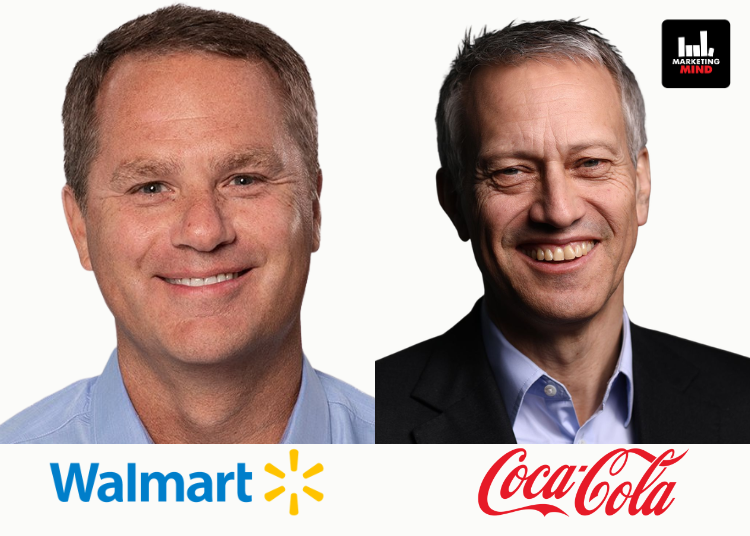
In a striking development that underscores how artificial intelligence (AI) is reshaping not just business operations but also corporate leadership, the CEOs of two of the world’s most iconic companies, Coca-Cola and Walmart, have publicly linked their departures to the rapid rise of AI and the strategic demands it creates for their organizations.
After nearly a decade as CEO of The Coca-Cola Company, James Quincey said that the company’s shift into an AI-driven future played a key role in his decision to step aside. Quincey, who has led Coca-Cola since 2017, told CNBC that while the company made strong progress in a ‘pre-AI and pre-gen-AI mode,’ the next phase of growth will require different energy and leadership focus.
“My job is also to think who’s the best team to put on the field to get the next wave done,” Quincey said, adding that he concluded it was time for someone else to steer Coca-Cola’s transformation as AI reshapes everything from consumer insights to supply chain efficiency.
Quincey will be succeeded by Henrique Braun, the company’s Chief Operating Officer, who inherits not just a global beverage giant but the expectation of integrating AI more deeply into marketing, product innovation, and operational decision-making.
At Walmart, former CEO Doug McMillon, who led the retail giant for more than a decade, also framed his exit in the context of AI’s accelerating impact. McMillon, who stepped down from his role in January 2026, acknowledged that while the timing of his retirement involved personal and professional considerations, the sheer scale of the AI-driven transformation ahead also influenced his choice.
In an unusually candid reflection, McMillon told CNBC that he could start the next big set of AI-related transformations at Walmart, but couldn’t see them through to completion, which is a rare admission from a sitting CEO about the limits of a leadership tenure in the face of technological change.
He specifically referenced the rise of agentic commerce that would go on to redefine retail. “About a year ago, I really started feeling like this next run, and everything that needs to happen over the next few years. It really caused me to think that now was the right time,” he says.
These leadership transitions are more than executive reshuffles; they reflect a shift in how boards and CEOs are thinking about succession in the AI era. Where past leadership changes were often tied to performance cycles or market pressures, today’s departures are being framed around the technological era with AI cast as the dividing line between one generation of leadership and the next.
As legacy firms across sectors accelerate AI adoption from predictive analytics to generative content and autonomous systems, boards are increasingly evaluating leadership against AI fluency, data-driven strategy execution, and the ability to navigate ethical and governance challenges posed by these technologies