






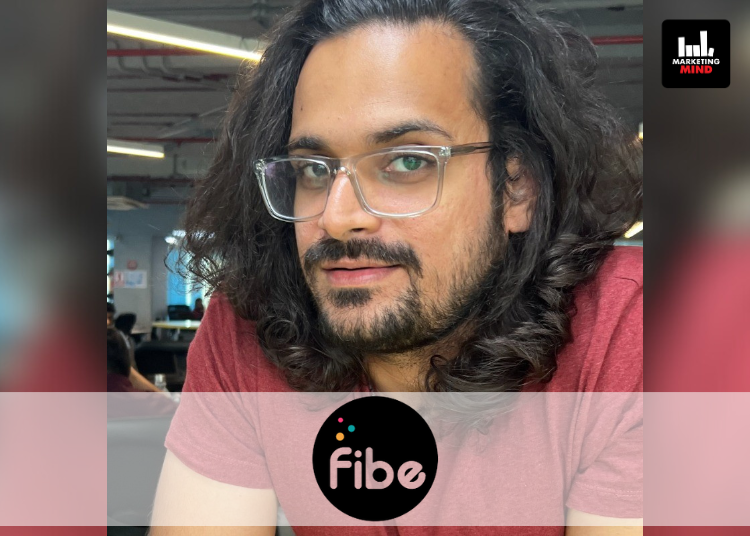
Since its inception in 2016, Fibe (formerly EarlySalary) has focused on delivering credit access to young, salaried professionals often underserved by traditional banks. But over time, the company’s ambition has grown. Today, Fibe positions itself not just as a lending platform but as a lifestyle and financial wellness partner. This evolution is deeply reflected in its marketing- especially through its early and strategic use of generative AI.
“We’ve been the early adopter of generative AI and we introduced it to the marketing team back in October 2023. This is the time when Midjourney had just come in, and in fact, the team adopted it really well,” said Sudesh Shetty, Founding Member and Head of Marketing at Fibe.
The team uses generative AI to accelerate and scale campaign creation dramatically. “We are able to do campaign work in like 10 minutes, ad copies in five minutes…We built out a playbook and now it’s 3x faster to build creatives.”
That agility has translated into real performance gains. “We’ve gotten 7x ROAS, which is very difficult when you’re spending a decent amount…Some campaigns were giving us around 45% CTRs. I remember we had one campaign that went as low as Rs 8 per customer acquisition.”
In one AI-led Diwali campaign, Fibe invited users to share their celebrations and used AI to reimagine their stories visually. “We asked people to share their Diwali moments, and we created AI-generated content and images of them celebrating with their loved ones.”
Engagement through co-creation and authentic storytelling
Beyond paid performance, Fibe has used AI to engage its audience in more immersive ways. One example: an AI-powered fraud simulator built on a GPT model.
“We built a module, our GPT fraud simulator- where people were put into different scenarios and it would tell you whether the action you’re taking is the right thing to do. It’s gamified and built to educate. It was completely organic. We had close to 30,000 people who had clicked on that messaging, and about 3,000 entries came in,” Shetty said.
Fibe’s marketing also leverages AI for personalisation at scale. “We are able to identify who’s responding to which kind of communication and draft accordingly. Depending on what channel is more responsive, email, WhatsApp, SMS, we are able to optimise that in real time,” he said,
“We’re able to send signals saying that hey, so-and-so responds better to SMS and this kind of messaging. All that is now real time, rather than the old-school way where we used to just figure out who’s responding to what, which was quite tedious. So this is something that we’ve been able to use very efficiently and in fact, there are case studies that Google has put in terms of how efficiently we are able to use this particular piece,” he added.
Furthermore, Shetty went on to say that right now, AI has become like an add-on to everything.
“Even our marketing cloud systems are now AI-enabled. It helps us figure out the kinds of audiences that are interacting with our communications. Even our analytics system is automated. It gives us real-time dashboards and feeds back into our campaign planning,” he added.
These efficiencies support Fibe’s large customer base, Shetty mentioned while adding that they are able to approve almost 1.5 lakh customers in a month and that’s possible because of the system they built, which learns over time.
“We start with a close to 88% repeat ratio. If we’re disbursing to 100 people today, close to 88% are already repeat customers who have taken loans with us earlier,” Shetty said.
“In the last year alone, we saw over 10 million unique visits to our website and disbursed over five million loans. That’s massive scale and that comes with a need to keep personalising and optimising at every touchpoint. We cater to a salaried segment right between the age group of 22 to say 35, even 40 for that matter,” he added.
Furthermore, he added that however, the brand has expanded its relevance by addressing new needs across health, education, and lifestyle.
“We have a health EMI product, BNPL, for hospitals and surgeries. Similarly, for education as well, we’ve tied up with universities. There was a time when communication used to be only about, say, taking a flight or going on a trip. Now it’s evolved. For someone in their 30s planning a family, our positioning speaks to that. We’ve even tied up with IVF clinics,” Shetty said.
He added, “Basically, our marketing has become more contextual. If you go to a hospital that we’ve tied up with, you’ll see our communication talk about that particular use case. For education, the messaging is more about upskilling and being aspiration-led.”
He highlighted that they have identified segments of customers and modified their communication as per the use case. It’s not necessarily shopping, it covers a broad spectrum now.
A standout example of this repositioning was Fibe’s campaign featuring Vikrant Massey. Shetty explained that the entire premise of this last campaign was based on R.K. Laxman’s common man.
“He comes from a middle-class background and still has that grounding. It didn’t look like a celebrity with a big aura selling a product, it felt like someone like us, someone saying, hey, this works for me. He spoke about how we had advised him about actually working towards sponsoring kids’ UPSC exams- that’s something we’re actively doing,” he said.
A marketing playbook rooted in engagement and growth
Fibe tracks impact not just by conversions but engagement. Shetty said that the measurement is engagement, but they measure it in DAUs and MAUs- daily active and monthly active users.
“We keep doing engagement campaigns inside the app – Olympics quizzes, gamified touchpoints. That’s important for a brand like us, because we’re not a delivery or daily-use app. For performance marketing, it’s transaction and cost per transaction. We’ve created an internal benchmark where if a campaign doesn’t hit our engagement rate target, like say, at least 12–15% on Instagram or LinkedIn, it doesn’t pass the success threshold,” Shetty mentioned.
Looking ahead, Fibe prefers short-lived, user-driven micro-campaigns over long-term celebrity endorsements.
“It makes sense to create micro-campaigns rather than one big campaign. Content that you create will not be relevant for more than two weeks. In courting Gen Z, Fibe embraces snackable storytelling and gamification. Gen Z is used to short-form. They’re not consuming long-format and they hate being told what to do,” he pointed out.
Shetty added, “We’re launching another product where we’re using gamification to communicate the benefits rather than just listing features. We’re cutting down product-related pushes. We want storytelling-centric communication.”
This emotion-led storytelling, backed by real-time AI precision, encapsulates the new Fibe: equal parts fintech and lifestyle partner.