






In a world that often celebrates loud wins and visible milestones, leadership journeys are just as deeply shaped by the quieter, more personal moments that rarely make it to the forefront. Especially for women navigating evolving roles at work and at home, these moments of introspection, resilience, and choice often become the true foundation of how they lead, grow, and inspire. It is within these layered experiences that leadership moves beyond titles and outcomes, becoming a reflection of perspective, empathy, and intent.
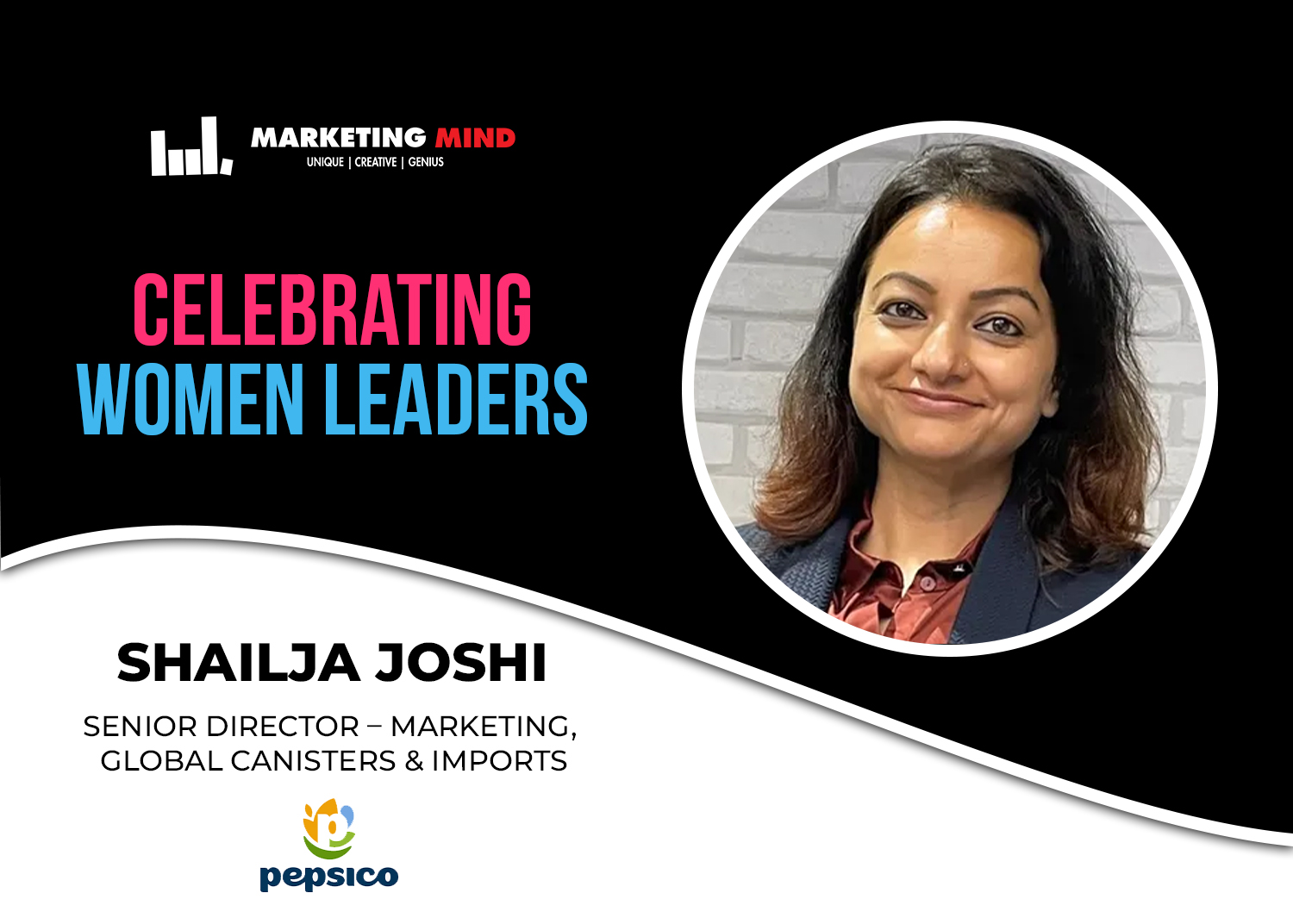
In a conversation with Marketing Mind for its Celebrating Women Leaders series, Shailja Joshi, Senior Director – Marketing, Global Canisters and Imports, PepsiCo, reflected on the experiences that have shaped her leadership over the years. From redefining success across different phases of her career to navigating moments of vulnerability and self-doubt, her journey offers a nuanced look at how leadership is continuously evolving rather than being defined by a single moment or milestone.
She further delved into the importance of authenticity in leadership, the subtle shifts that can make workplaces more inclusive, and the role of mindfulness in shaping both personal and professional growth.
Reflecting on her journey and a moment that quietly shaped her as a leader, one that largely went unnoticed, Joshi said, “Becoming a mother 15 years ago quietly changed the way I lead. It taught me that in many things in life and in businesses there are no fixed playbooks—only evolving contexts. And that shifted everything. I became more patient, more empathetic, but also far more comfortable with uncertainty.”
She went on to say that motherhood forces you to adapt in real time. Just when you think you’ve figured it out, the context changes—and you have to show up differently again.
“That stayed with me. I focus on staying open, learning fast, and responding to what the moment truly needs,” Joshi stated.
When asked about a moment of vulnerability that ultimately made her stronger as a leader, Joshi candidly shared, “I once lost my calm in a tough conflict—and that discomfort became a turning point.It taught me this: when you assume positive intent and separate people from the problem, you lead better.”
That one shift made her calmer, clearer, and far more effective in navigating high-stakes situations.
Having worked across legacy brands and evolving roles, Joshi explained how her definition of “success” has changed over the years. Early in her career, success was largely about delivering business KPIs. Over time, that definition has expanded.
“Today, I see success as much more contextual—how you navigate ambiguity, how you respond in moments of crisis, and how you shape outcomes beyond what you inherit. Even in roles that may not seem “meaty” on paper, success is what you choose to build from them and how they shape you. Equally, a big shift for me has been around team leadership. Success is no longer just what I deliver, but how I enable my team to grow, step up, and succeed.”
She also spoke about a time when she felt the need to “fit in” to grow, and how she eventually found her authentic leadership voice.
“There were definitely phases where “fitting in” meant chasing visibility over value.
But I made a conscious choice early on—to stay anchored to building the business, not just the moment. Even if it meant being less seen in the short term. That patience shaped my leadership voice—one that prioritises long-term impact over short-term applause,” Joshi shared.
When asked about one belief around women in leadership that she has personally challenged or unlearned, Joshi asserted, “That women need to lead like men to succeed.”
Furthermore, she went on to say that in reality, the most powerful women leaders she has seen are those who don’t pretend to be someone else. They lead with empathy, authenticity, and conviction—and that becomes their edge.
“My own belief in this has only grown stronger at PepsiCo. It’s a culture that truly embraces inclusivity and creates the space to show up as your authentic self every day.I see so many women leaders here—not leading like men, but each in their own distinct way—and yet consistently driving real impact,” she mentioned.
Joshi also candidly spoke about the subtle shifts in decision-making rooms that can make women feel more heard and valued. She pointed out that the shift is simple but powerful—moving from who is speaking to what is being said.
“In my own journey, I’ve learned that if you have a strong, well-thought-through point of view, you have to put it on the table—with confidence and clarity. At the same time, leaders in the room need to consciously create space for diverse voices. The voice may sound different from the majority—but what matters is the substance,” Joshi added.
On being asked that beyond titles and achievements, what kind of impact she hopes her leadership leaves on people who work with her, Joshi shared, “If I can help even a few people experience how mindfulness can shift the way they look at work—making them feel more present, more balanced, and more content in what they do every day—that would be deeply meaningful to me.”
Joshi also shared a piece of advice for women who are capable yet hesitate to take the next big step, saying, “Build a strong support system around you—family, friends, and colleagues who can be your anchor when you’re pushing your boundaries.”
Let go of the guilt that comes from feeling like you need to have everything under control all the time. You don’t. And learn to delegate—both at work and in life.
Furthermore, she went on to say, “You don’t have to do it all alone, and it’s important to be comfortable asking for support when you need it. Often the next big step isn’t just about capability—it’s about allowing yourself the space and support to take it.”
In conclusion, when asked what the core message of her journey would be for the next generation of women leaders, if it were told as a story, Joshi said, “I feel like I’m still writing the story. But there was a point in my journey when I was tempted to step away and prioritise other parts of life. I chose to stay—because I genuinely loved what I did and looked forward to coming to work every day. If there’s one message I would share, it would be this: believe in yourself and learn to love the journey more than the destination.”