



For decades, marketers have relied on search to understand what consumers want. But as consumer behaviour becomes more fragmented, contextual and conversational, the role of search is evolving far beyond keywords and clicks.
Today’s consumers no longer type simple queries into a search bar; they ask complex questions, seek personalised recommendations and expect answers tailored to their unique needs.
This shift is forcing brands to rethink how they approach discovery. In a world where five generations can coexist under the same roof, consumers are navigating the internet through vastly different lenses, making context and intent more valuable than demographics alone.
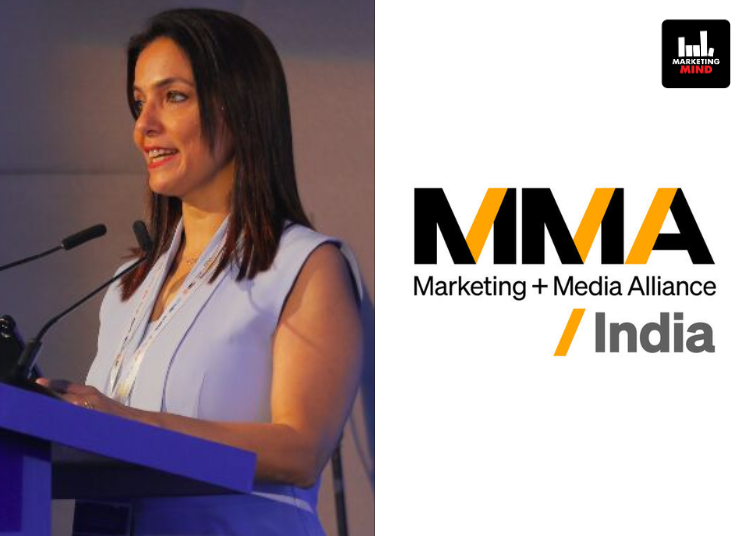
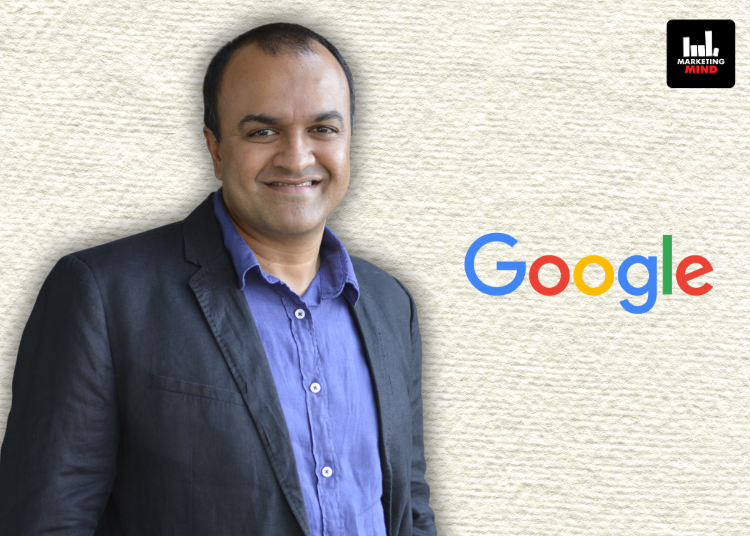
Against this backdrop, artificial intelligence is rapidly transforming search into a more intuitive and personalised experience. In conversation with Marketing Mind, Satya Raghavan, Director, Marketing Partners, Google India, spoke about how AI is reshaping consumer discovery, why search is emerging as one of the strongest signals of intent, and how marketers can tap into increasingly contextual and conversational consumer journeys.
Why Search Is Becoming The Most Powerful Intent Signal
Raghavan explained that it is very important to realise, and marketers already know this, that the consumer is changing. The more important question is how marketers contextualise this change in the context of discovery.
“Take a typical household today. There is a very high probability that five generations are living under the same roof at the same time-Boomers, Gen X, Millennials, Gen Z, and Gen Alpha. So, within the same household, you have multiple generations of consumers coexisting simultaneously,” he said.
Furthermore, he went on to say that the challenge for marketers, then, is how to cut through to all of them and search is a wonderful way to do that because every individual is searching within their own context. In that same household, you could have a parent and a young teenager searching for similar things, but each from a completely different perspective.
“That is where search has become even more intelligent. It can understand the context and intent behind a query, and consumer preferences. That is personalisation at the next level, and that is where search is today-powered by all the AI capabilities that Gemini brings underneath,” Raghavan said.
He added, “Another important shift is in the way people search. Five or ten years ago, consumers were often using very simple, one-word queries. They might type something like “travel tickets” or simply enter a brand name. Today, however, people understand that they can have a conversation with search.”
Raghavan, while citing an example, elaborated, “If someone is looking for a holiday destination, they might ask, ‘Give me the best possible destination for a family of four, of which one of them is a vegetarian.’ These are the kinds of queries we are increasingly seeing. Search is now able to engage in a conversation, and the deeper that conversation goes, the stronger the consumer intent becomes.”
As a result, the ads that appear within these conversations are reaching users who are demonstrating much higher intent. That is why advertisers are loving this evolution-they are able to tap into highly intent-driven conversations through search.
Raghavan also highlighted, “So, that is how marketers should think about search today. Consumers are out there seeking answers to increasingly complex questions, and Google Search, powered by AI, is right there helping them find the best possible solutions. That is the opportunity marketers should be thinking about at this point in time.”
“Take shopping for example. We recently rolled out our biggest upgrade to shopping in AI Mode in Search in India. When users ask a shopping question, AI Mode leverages Google’s Shopping Graph that has over 60 billion product listings to provide an intelligently organized response that brings together rich visuals, and comparison tables,” he said.
For instance, people have been finding the ads within AI Overviews helpful because they can quickly connect with relevant businesses, products and services to take the next step at the exact moment they need them.
“Crucially, we see monetisation of AI Overviews at approximately the same rate as traditional search, which gives us a strong base on which we can innovate even more in the future. Our AI-powered campaigns make it easy for advertisers to show up and move at this scale and speed of the consumer. Existing campaigns, such as Performance Max and AI Max for Search campaigns with broad match, are fully eligible to serve ads within AI Overviews and AI Mode, ensuring that businesses can connect with customers at critical, high-intent moments in their journey,” he added.
The Future Of Search In The AI Era
Raghavan mentioned that at this point in time, AI is powering Search. It is the superpower behind Search today and has fundamentally shaped the way Google Search operates.
“In fact, Google declared itself an AI-first company nearly a decade ago. Since then, AI has become deeply embedded across all of its products, whether it is Google Search, YouTube, or Maps,” he said.
“Search was already an incredibly powerful and highly desirable product. However, with AI enhancing its capabilities through AI Mode, it is evolving into an experience that is not only more powerful but also even more beloved by users,” he added.
The key thing to understand is that Search exists to solve problems for consumers. What Search is increasingly seeing is that the questions consumers ask are becoming longer, more detailed, and more nuanced. AI is helping unlock the most relevant answers to those evolving queries, Raghavan mentioned.
The Real Brand Challenge: Attention Or Relevance?
“I do not look at it in terms of problems at all. Instead, I prefer to think in terms of opportunities.
For me, the opportunity for a brand is to think about how it can provide the best possible solution to five generations of consumers living under the same roof. While there is an inherent challenge in communicating the right message to the right person at the right time, AI transforms that challenge into an opportunity,” Raghavan pointed out.
“I’d like to explain this through what I call it – two bookends. The first bookend is first-party data and the ability to use the best AI solutions to derive meaningful insights from that data. The second bookend is personalised and creative. The real opportunity lies in using those insights to serve the right ad, to the right person, at the right time, with the right message. That is what AI is unlocking. AI today is actually the marketer’s superpower,” he added.
From Marketing Constraints To Marketing Capabilities
Every generation of marketers unlocks its own superpower, Raghavan highlighted.
Furthermore, he went on to say that five or ten years ago, marketers spent considerable time trying to predict where consumers would be and how best to reach them before serving the right advertisement. Today, however, the landscape has changed dramatically. Wherever the consumer goes, marketers can serve the right creative in a split second and at the right moment.
“So, I don’t think marketers overvalue any one thing. I think every generation is grappling with its own opportunities. Let’s put it that way,” he added.
The Future Of Marketing Leadership In The AI Era
The marketer will be able to unlock the potential of their teams even further.
To put it into perspective, just five years ago, a marketer would spend significant time crunching data, often working through spreadsheets. It could take a week to analyse that data and arrive at meaningful insights.
Today, however, the same marketer can process vast amounts of data in a fraction of the time using platforms like Gemini. Insights that once took days or even weeks to uncover can now emerge almost instantly, enabling marketers to be far more responsive and agile in their decision-making.
I think that is really the opportunity. Marketing has always relied on outsourcing certain functions. However, the next evolution involves delegating critical tasks to AI agents that can execute them much faster. This, in turn, allows marketers to focus on reaching the right consumer at the right time with greater precision and effectiveness. So, we have moved from the generative AI era into the agentic era.