






Some jingles fade the moment the television switches off. Others refuse to leave. They become the soundtrack of first crushes, school corridors, college festivals, awkward eye contact and butterflies that words simply cannot explain. “Paas Aao Na” belongs to that rare league. Nearly two decades later, all it takes is someone humming “Paas aao, paas paas aao…” and an entire generation instinctively joins in.
Long before social media taught brands how to go viral, Closeup had already discovered a universal language which is music. Instead of selling toothpaste, it had sold confidence. Instead of talking about oral care, it had celebrated the magic of getting just a little closer.
Released in 2008, Closeup’s now-iconic “Paas Aao Na” campaign has transformed a simple bubble into one of Indian advertising’s most memorable symbols of freshness and romance. Created by Lowe Lintas, the musical commercial has featured an original composition by Ram Sampath, while Sona Mohapatra has lent her unmistakable voice to the track and produced the project. What began as a song for an independent pop album eventually found its perfect home in advertising, creating a campaign that has travelled across continents and been adapted into more than 17 languages.
Interestingly, Paas Aao had not originally been written for a commercial at all. Ram Sampath and Sona Mohapatra had created it as part of their pop album Raat-Din, a collection celebrating the moods of day and night. At a time when India’s independent music scene had been struggling, fate had intervened. Executives from Lowe Lintas’ Bangkok office came across the song while working on Closeup’s latest campaign and immediately recognised that its infectious optimism perfectly captured the brand’s promise. The partnership has gone on to create one of advertising’s most enduring musical identities.
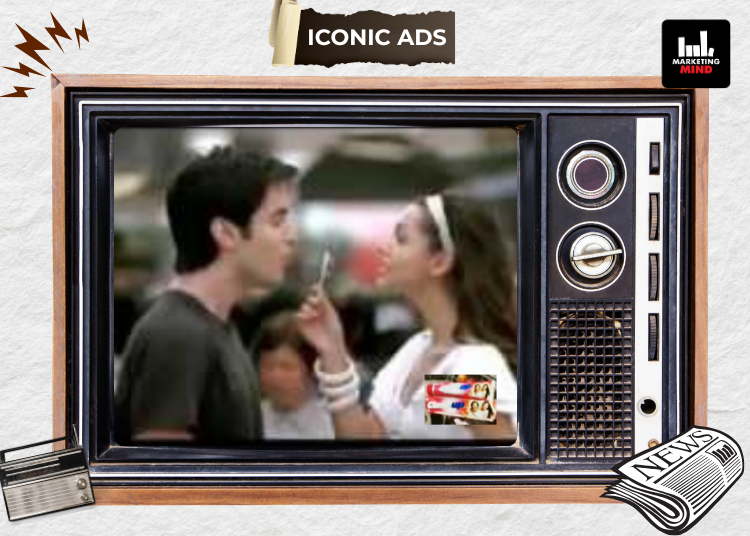
The film has opened inside a bustling neighbourhood reminiscent of a vibrant Chinatown. The streets buzz with life, people move in every direction, and amidst the chaos, a young woman notices a stranger. She says nothing. Instead, she gently blows a bubble. That’s when the melody begins. “Paas aao, paas paas aao, paas aao na…”
The bubble floats through the crowded streets like an invisible invitation. It drifts past curious onlookers, catches the attention of a man watching from his balcony, glides over another passerby’s head, fascinates a woman, and even earns a puzzled glance from a monkey. Every frame has carried a sense of childlike wonder, allowing the bubble to become the film’s silent storyteller.
Finally, it reaches the young man. The bubble softly lands on his head and bursts, releasing an invisible wave of freshness. He turns around, only to discover dozens of bubbles floating gently towards him.
Following their trail, he finds the girl. Without uttering a single word, he smiles, blows a bubble back in her direction, and the two exchange a shy glance that says everything.
The story has ended exactly where it needed to, without grand declarations or dramatic confessions. Just freshness, confidence and the possibility of something beautiful beginning.
Unlike conventional toothpaste commercials that once relied heavily on dentists, demonstrations or exaggerated claims, Closeup has spoken the language of emotion. The product has remained central, but freshness has never been presented as a clinical benefit. Instead, it has become the confidence to initiate a conversation, the courage to make eye contact and the invisible spark that brings two people closer.
The campaign’s biggest triumph has undoubtedly been its music. Ram Sampath’s composition, paired with Sona Mohapatra’s warm, breezy vocals, has elevated the commercial far beyond traditional advertising. The song has lived independent lives on television, radio, streaming platforms and live performances, proving that great advertising sometimes begins with great music.
Over the years, Paas Aao Na has been recreated in multiple versions, with newer adaptations featuring Bollywood stars. Yet the original has continued to enjoy a cult following, largely because of its simplicity. No celebrity endorsements. No elaborate storytelling. No spectacle. Just a melody, a floating bubble and two strangers discovering that sometimes the shortest distance between two people is simply the confidence to move a little closer.
Like the lingering fragrance of rain on warm earth, the campaign has stayed long after the final frame faded to black. It hasn’t merely sold toothpaste, it has bottled the excitement of young romance into a tune that India still remembers, proving that some advertisements are heard long after they are seen.