






If you look at how real estate brands usually communicate in Mumbai, the pattern starts feeling familiar after a while. There is almost always a new launch being announced somewhere. Outdoor spaces are filled with future skyline visuals. Digital ads highlight upcoming towers. Films revolve around the promise of what life will look like once construction is complete.
It makes sense because real estate is built on aspiration. People are investing significant amounts of money in something that impacts their long-term lifestyle. So brands naturally lean into imagination and future projections as a marketing tool.
But now and then, a brand decides to shift that conversation slightly and anchor its narrative in what has already been delivered instead of what is yet to come.
Piramal Realty recently unveiled its new corporate campaign titled “Design Led, Delivery Focused.” At first glance, it reads like a positioning line. But when you see how it has been translated across film, hoardings, and digital presence, it feels like a conscious decision to centre credibility over anticipation.
Instead of leading with upcoming projects, the campaign focuses on completed developments that already exist across Mumbai. That choice changes the tone of communication.
The Campaign Film Focuses On Delivered Assets
The film immediately establishes the direction.
Rather than heavy reliance on 3D renders or exaggerated lifestyle storytelling, it showcases projects that have already been delivered. You see spaces where families are already living. Amenities that are already functioning & communities that are already active.
Piramal Aranya in Byculla, which includes India’s second-tallest residential tower, Piramal Mahalaxmi with its unobstructed racecourse facing residences, Piramal Vaikunth in Thane where the city’s first ISKCON temple sits inside a residential community, and Piramal Revanta positioned next to the green cover of Sanjay Gandhi National Park, all become part of the narrative.
These are not concept visuals. They are completed structures that physically exist and contribute to the city’s skyline.
The interesting part is the restraint in how the film communicates luxury. It does not over dramatise exclusivity. It simply shows lived-in spaces and lets execution speak for itself.
Over the last two years, the company has delivered more than 4,200 homes across 21 towers covering over 6.2 million square feet. Instead of pushing those numbers as abstract achievements, the campaign subtly integrates them as proof of consistency.
In an industry where delays often dominate buyer conversations, delivery statistics become a powerful credibility marker.
Design Philosophy Reflected In Built Projects
The stronger part of the campaign is how it connects design thinking to actual completed developments.
Rather than talking about design as an abstract idea, the brand demonstrates it through projects.
At Piramal Aranya, Byculla, the design approach emphasizes vertical scale while maintaining openness and light penetration. The tower presence defines the skyline, but spatial planning ensures that residents experience views and ventilation as core components of daily life. It re-enforces company’s architectural depth.
Piramal Mahalaxmi reflects a different dimension where location itself becomes part of the design strategy. The racecourse-facing residences integrate urban context into living spaces, making surroundings a functional part of the experience.
Piramal Vaikunth showcases how community infrastructure is embedded into residential planning. The inclusion of Thane’s first ISKCON temple within the development signals that design extends beyond apartments to shared spaces and cultural integration.
Piramal Revanta in Mulund highlight proximity to natural landscapes, positioning green surroundings of Sanjay Gandhi National Park as an intentional element rather than a secondary benefit.
Across these examples, the underlying message is consistent. Design is not treated as visual decoration. It is tied to planning decisions, execution discipline and real-world delivery.
That alignment strengthens the campaign because it grounds positioning in visible proof.
Hoardings That Highlight Completion
The outdoor rollout reinforces the same idea.
Across key locations like Byculla, Mahalaxmi, Mulund and Thane, the hoardings highlight projects that are already completed and handed over. What makes this notable is that most real estate billboards usually focus on projects that are under construction or about to launch.
Here, the narrative flips.
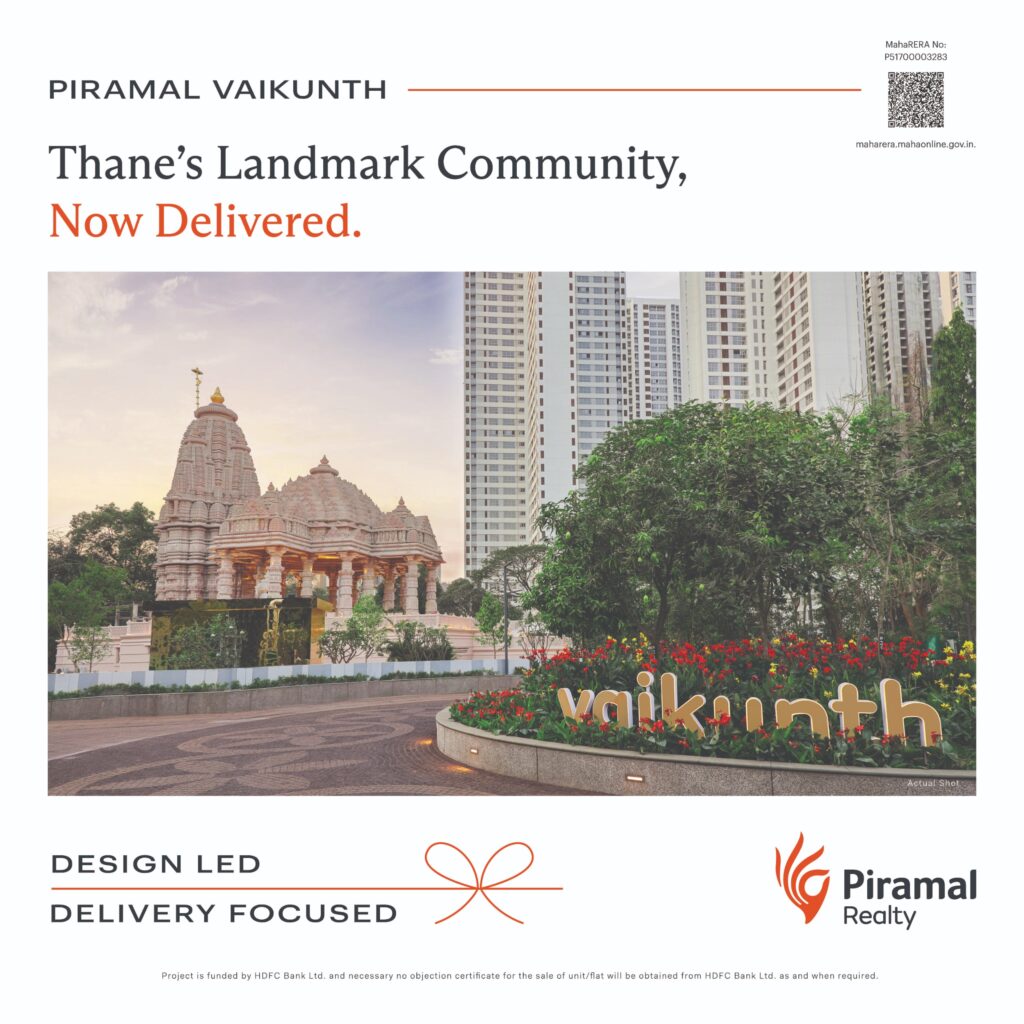
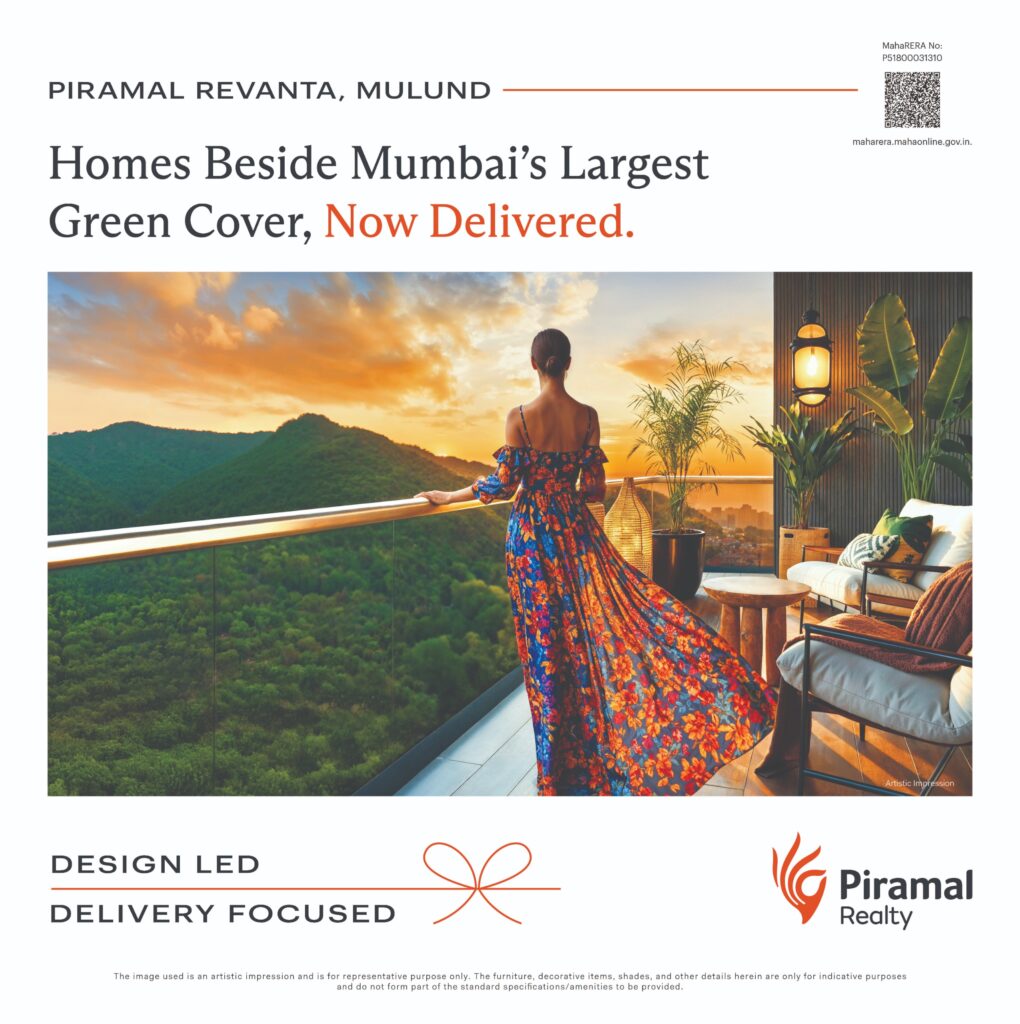
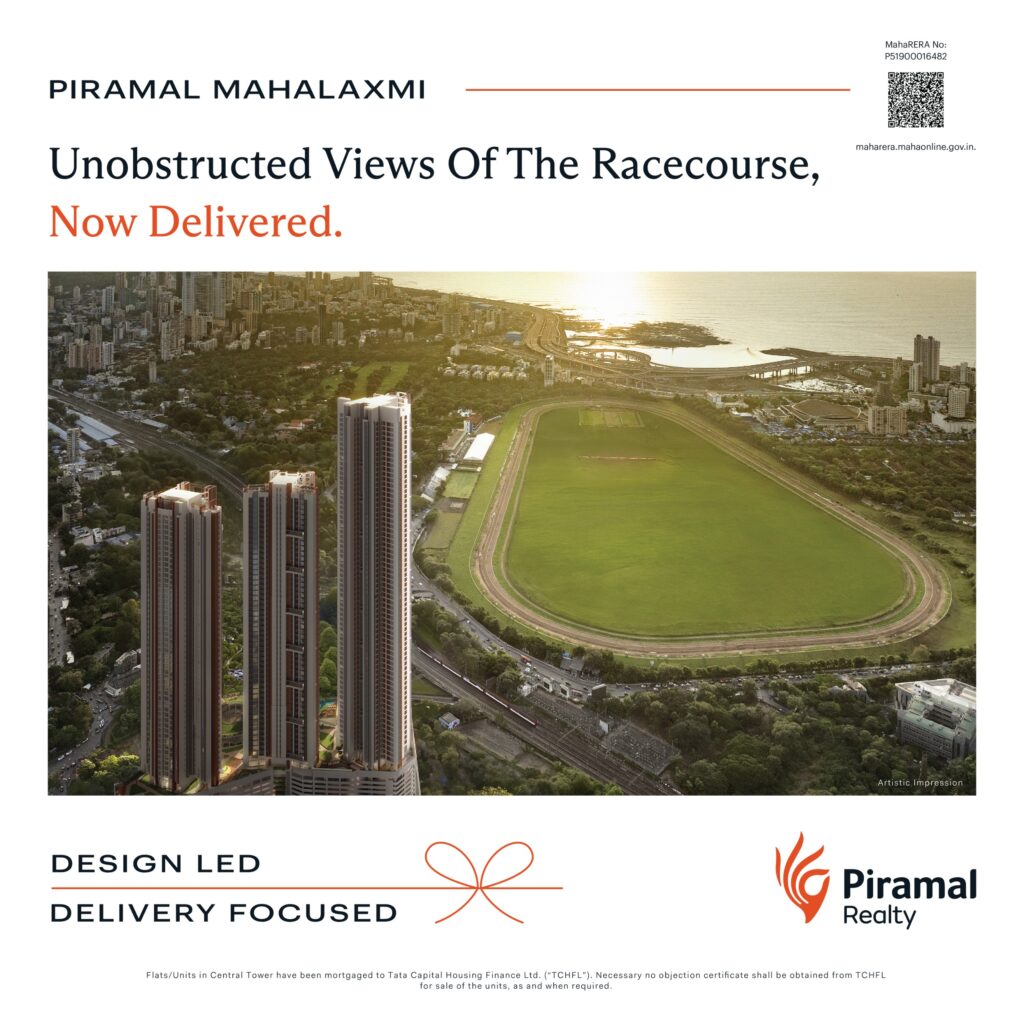
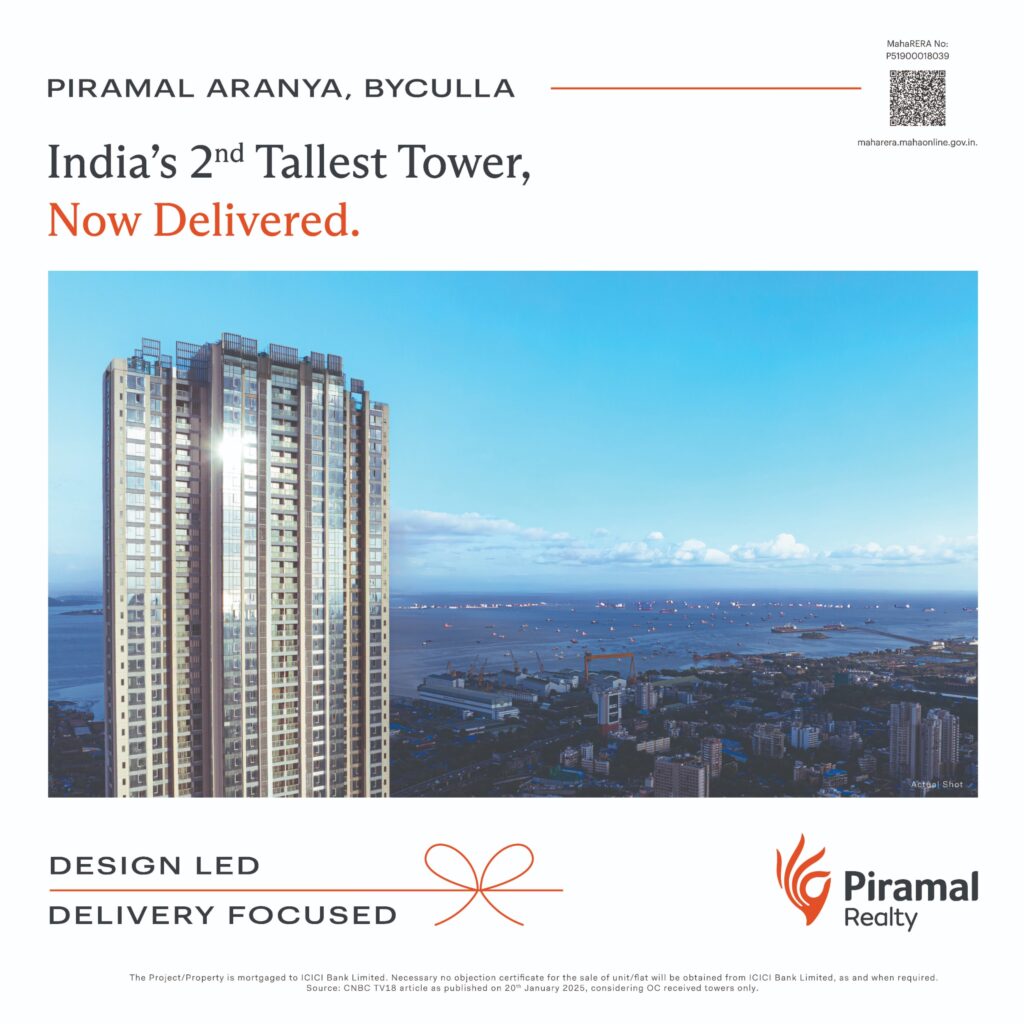
The visuals spotlight built structures rather than architectural renderings. The communication does not ask people to imagine a future skyline. It shows a skyline that already exists.
A small but significant creative element across these hoardings is the ribbon motif integrated into the completed landmarks. The ribbon symbolises a promise fulfilled, almost like marking completion with a visual seal.
Importantly, the ribbon is placed on delivered projects, not on future developments. That detail strengthens the core message of the campaign. It reinforces that the brand is celebrating outcomes, not intentions. Sometimes a simple design element can amplify positioning when it is used consistently and intentionally.
Creator Collaborations As A Strategic Extension
One of the most interesting extensions of the campaign was how it translated into creator collaborations.
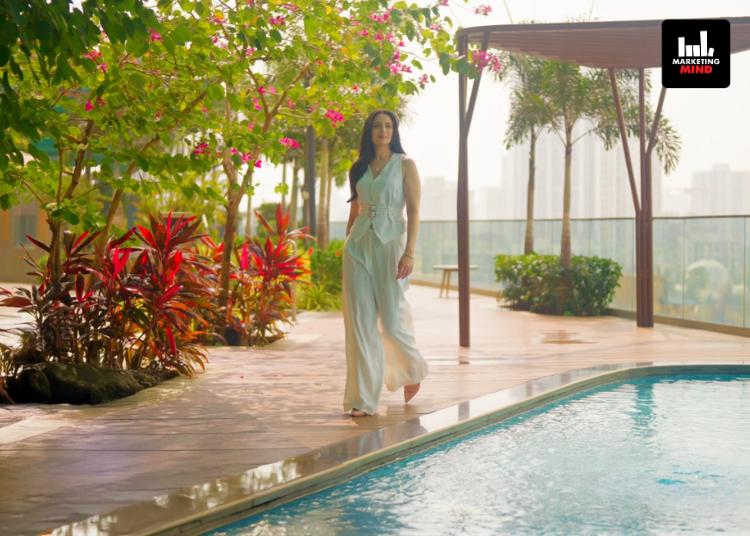
Prominent Influencers like Zoya Afroz, Vogue Vanity and Parul Kakad were not brought in to create lifestyle content. They were positioned inside already delivered communities, experiencing the spaces as actual environments rather than staged backdrops.
That distinction is important. Instead of filming at construction sites or using mock setups, the content showcased real homes, functioning amenities and lived-in spaces. The storytelling felt natural because the setting itself reinforced the campaign promise.
When a creator walks through a delivered tower and speaks about design, quality and experience from within that space, the message carries more authenticity than a scripted brand narration.
It also expands reach beyond traditional real estate audiences. These collaborations allow the positioning to travel into lifestyle and fashion communities while still staying aligned with the core narrative of delivery.
In that sense, influencer content becomes a strategic amplification tool rather than just promotional content.
Why This Campaign Stands Out
In real estate marketing, design is usually presented at the blueprint stage. It is framed as aspiration. Something that will materialise in the future.
Piramal Realty’s campaign reframes that conversation by tying design directly to execution. The underlying argument seems to be that design only truly holds value when it survives construction and gets delivered responsibly.
From a strategic perspective, this creates differentiation in a market crowded with launch announcements. When every player is talking about what they are about to build, focusing on what has already been built becomes a clear point of contrast.
More importantly, it addresses buyer anxiety around delays and transparency. Highlighting completed towers and delivery milestones signals operational discipline.
The campaign does not reject aspiration. It grounds aspiration in evidence.
Because in real estate, visibility may create attention. But delivery is what ultimately shapes reputation.