






In India, relief rarely arrives quietly. It arrives with a song, a little drama, and often with a familiar voice humming somewhere in the background. The daily Indian grind, traffic jams, long shifts, endless responsibilities, has always demanded small rituals of comfort. A cup of tea. A stolen afternoon nap. And perhaps the most nostalgic of them all: a “champi”, that soothing head massage that promises instant calm.
In 2017, one advertisement captured that collective longing for relief and turned it into a spectacle of rhythm, nostalgia, and theatrical charm. When Emami Navratna Cool Oil has introduced its campaign featuring Amitabh Bachchan as the flamboyant “Raahat Raja,” the brand has not merely sold a hair oil. It has staged a musical intervention for India’s everyday aches and stresses.
The result has been a commercial that feels less like advertising and more like a travelling performance, one that dances through streets, homes, and workplaces, sprinkling relief wherever it goes.
The campaign has been created by Leo Burnett Orchard, with filmmaker Nitesh Tiwari, best known for directing the blockbuster film Dangal, helming the project.
Released around April–May 2017, the campaign has drawn inspiration from the classic Hindi song “Sar Jo Tera Chakraye”, while also borrowing the playful rhythm of Bombay Vikings’ track “Kahe Ghabraye.” Instead of a traditional celebrity endorsement, the agency has crafted a character. Amitabh Bachchan has not simply appeared in the commercial, he has transformed into a theatrical, nautanki-style rapper who arrives like a folk hero of relief. The idea has been simple yet imaginative: if life’s pains had a nemesis, it would be Raahat Raja, the king who banishes headaches with a single champi.
When The Curtain Rises
The advertisement has opened like a stage performance. A man with a microphone announces dramatically: “Takleefon ka baajane baaja, aa raha hai Raahat Raja.” (The one who will silence your troubles is arriving, the King of Relief.)
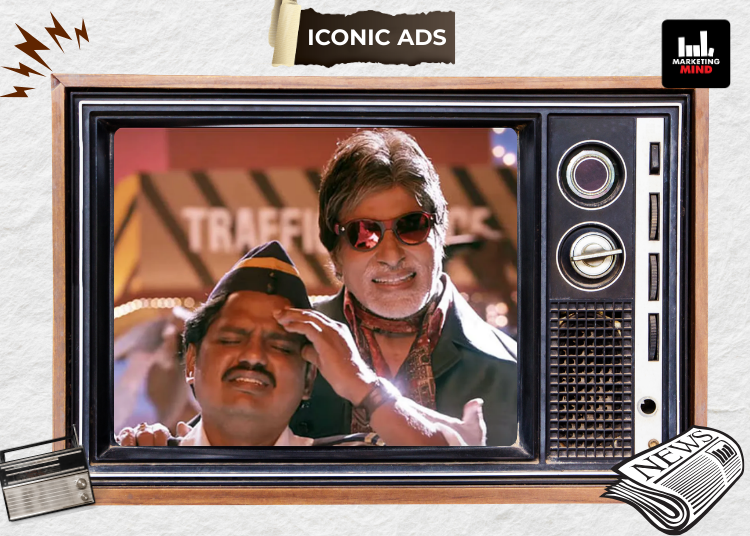
And then, almost like a magician stepping into a spotlight, Amitabh Bachchan appears. Dressed flamboyantly, mic in hand, Raahat Raja begins with a playful proclamation: “Maalish, thandi maalish… Champiiii!” It is theatrical, exaggerated, and instantly memorable.
The scene shifts to a traffic policeman, pressing his hand against his head as if battling a pounding headache. From behind him enters Raahat Raja, singing as he walks into the frame:
“Sarr dard se phat ta jaye,
Aur badan kahe aaye haye,
Aaja pyaare paas humare,
Navratna azmaye,
Ek champi toh ho jaye.”
He hands over a bottle of Navratna Cool Oil, and relief arrives almost instantly. But the Raahat Raja’s journey has only just begun.
The commercial then moves through slices of everyday Indian life. A porter, exhausted from labour, appears on screen as Raahat Raja sings: “Thakaan ho jab tan mein…”
Then he turns to a security guard, acknowledging life’s constant worries: “Tanav ho jeevan mein…”
Next comes a housewife, weighed down by responsibilities: “Bhari jawani baal pakein…”
And finally, a man on a rocking chair, staring sleeplessly into the night: “Aur neend na ho akhiyan mein…”
Each moment has felt instantly relatable. Each character represents a different kind of everyday stress that millions recognise.
And then Raahat Raja bursts into a playful refrain:
“Arre sun sun, o beta sun,
Ho jo body mein short circuit sun,
Navratna lagake, saare dard mitaale,
Phir tujhme bajegi ek nayi dhun.”
It is half folk performance, half street theatre, and completely unforgettable.
As the music crescendos, the message becomes clear. “Aayurvedic jadibootiyan, isme hai samaye, Navratna azmaye.” The performance ends the way it began: with spectacle, rhythm, and the promise of relief.
The brilliance of the Raahat Raja campaign lies in its joyful exaggeration.
It has taken something deeply familiar, an Indian head massage, and transformed it into a pop-culture performance led by one of the country’s most recognisable voices. By blending humour, nostalgia, music, and theatrical storytelling, the campaign has turned a simple product demonstration into an experience that viewers remember long after the ad ends.
More importantly, it has celebrated something uniquely Indian: the idea that sometimes relief does not need to be complicated. Sometimes, it arrives with a bottle of cooling oil, a rhythmic song, and a flamboyant king who walks into your day and declares with flair: “Maalish… thandi maalish… Champiiii.”