





Some endings are not meant to be changed. Kundan’s wasn’t just a character arc. It was a heartbreak wrapped in realism, the kind that lingers in your chest long after the credits roll. He didn’t get the girl. He didn’t get a redemption arc. He got what most real-life lovers get, a tragic end painted with quiet dignity.
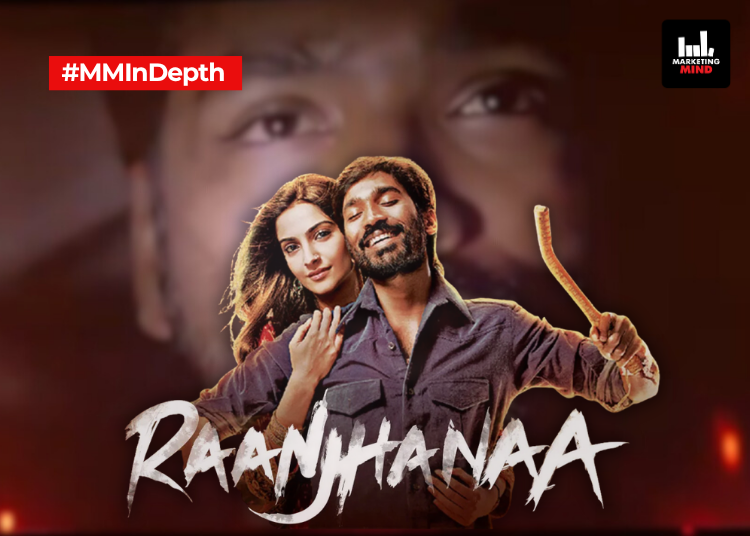
So when Raanjhanaa, a film that many still carry like a heartbreak anthem, was re-released in Tamil as Ambikapathy with a brand new, AI-generated ending where Kundan lives, the collective gasp from cinephiles was almost audible.
He lives? Excuse me, what now?
Yep. He opens his eyes in a hospital bed. No death. No poetic sacrifice. Just a happy, life-goes-on edit that turned one of Indian cinema’s most gut-wrenching climaxes into a feel-good meme in motion.
“This is not the film I committed to.”
Those words weren’t from a fan ranting on Reddit. They were from Dhanush, the actor who played Kundan in Raanjhanaa. He took to X, visibly disturbed, writing, “The re-release of Raanjhanaa with an AI-altered climax has completely disturbed me. This alternate ending has stripped the film of its very soul.”
For the love of cinema 🙏 pic.twitter.com/VfwxMAdfoM
— Dhanush (@dhanushkraja) August 3, 2025
And that wasn’t even the most heartfelt reaction. That came from the film’s director Aanand L. Rai, who posted an emotional note on Instagram, calling the whole exercise a “reckless takeover”. His words didn’t feel like a publicist’s soundbite. They felt like mourning. Mourning a film he had once poured himself into.
View this post on Instagram
“What’s now being circulated is not a tribute. It is a reckless takeover that strips the work of its intent, its context, and its soul.”
And that was the mood across many parts of the internet too. While a small crowd seemed oddly okay with the feel-good twist, others, especially those who had grown up loving the rawness of Raanjhanaa, were furious. One fan wrote on X, “they just killed the soul of the movie instead of Kundan.”
they just killed the soul of the movie instead of Kundan #RaanjhanaaReRelease #Ambikapathy #Raanjhanaa pic.twitter.com/5LxJwoDV1L
— Watch Mechanic (@Mouli_offl) August 1, 2025
Another echoed that sentiment, “They didn’t just change the ending of Raanjhanaa using AI, they ripped the soul out of the movie😪”
But wait, how does someone even do that?
Turns out, it’s not just a creative decision. It’s a legal and ethical jungle.
Let’s start with the obvious: Dhanush did not give consent. He said so himself. Aanand L. Rai didn’t either. In fact, no one from the original crew had anything to do with this alternate version. Yet, the film was re-edited and re-released using generative AI tools that can swap faces, tweak expressions, clone voices, and, let’s be honest, fake it till it breaks.
Welcome to the future, folks. Where dead characters come alive not through reincarnation, but reconstruction.
And the tech is scarily seamless. Instagram is already full of deepfake reels that leave you questioning what’s real. There’s a creator who makes fake brand ads using AI, eerily accurate, completely made-up. Harmless? Maybe. But it shows how far we’ve come.
View this post on Instagram
Worse still, fake news spreads faster through WhatsApp family groups than truth can catch up. If you’ve ever checked your parents’ WhatsApp forwards, you’ve probably seen an “inside footage” from a crash, a miracle, or a speech that never happened, all AI-generated, all sent with total conviction.
Case in point? The deepfake of Rashmika Mandanna entering a lift, viral, fake, and convincing.
And it’s not just celebrities caught in this AI storm. Across social media, especially on platforms like Instagram and WhatsApp, AI-generated videos of prominent national figures — from political leaders to freedom fighters — are going viral. There’s even a now-infamous Instagram reel where Mahatma Gandhi is seen vlogging in Parbhani, selfie-style, as if he’s an influencer reviewing chai stalls. Sure, some might call it clever, but where does clever end and disrespect begin?
View this post on Instagram
Because what follows is often a flood of content that’s not just fictional, but casually irreverent. AI Gandhi dancing to trending audio? AI Bhagat Singh cracking jokes? It’s not satire anymore, it’s distortion, and it raises a chilling question: If we can make anyone say or do anything, where do our ethics go?
Or the Aamir Khan deepfake, where he seemingly endorsed a political party on polling day. It wasn’t him. But it looked like him. And thousands believed it.
So legally, who owns a character’s face?
It’s murky. In India, the producer or studio typically owns the film and its distribution rights, not the actor, not even the director. That’s why the studio could technically re-release Raanjhanaa as Ambikapathy without asking the creators.
If we go in depth, producers (or studios) are typically the first owners of copyright in a film under the Indian Copyright Act, 1957, unless there’s a contract stating otherwise. Specifically, Section 17(b) of the Act states, “In the case of a cinematograph film, the producer shall be the first owner of the copyright.” This means that even though directors, writers, and actors may have poured their souls into creating the story, characters, music, and emotions that audiences fell in love with, they don’t necessarily control what happens to that work once it’s sold. Distribution, licensing, dubbing, AI-edited remixes, all of that can legally be handled by the producer or studio, unless otherwise agreed to in writing.
So, creators like Dhanush or Aanand Rai might not have any legal recourse when something like this happens. And that’s not just heartbreaking, it’s a reminder of how creative control often ends where contracts begin.
But it’s not just about legal ownership. It’s about moral rights.
Under Section 57 of the Indian Copyright Act, creators have the right to protect the integrity of their work. If someone distorts your story or changes the tone in a way that affects your reputation or intention, you can object. That’s exactly what writer Mannu Bhandari did in 1986 when a film adaptation mangled her novel’s core message. And she won.
More recently, the law is catching up with personality rights too.
In 2024, Arijit Singh sued a company for using AI to clone his voice and style in a virtual concert he had nothing to do with. The Bombay High Court sided with him, declaring that a celebrity’s voice, name, mannerisms, even their vocal interpretations, are protected. The court called it what it was: technological exploitation.
Then came Amitabh Bachchan in 2022. The Delhi High Court gave him a sweeping “John Doe” order, meaning even unknown future violators couldn’t misuse his face, voice, or image without permission.
And yes, Anil Kapoor, Karan Johar, and even Daler Mehndi have gone down the same road to protect their image from becoming someone else’s toy.
But what’s the line between tribute and tampering?
That’s the big, uncomfortable question. Is editing a 12-year-old film to give it a happy ending just a form of fan service, or is it vandalism?
As per media reports, director Neeraj Pandey doesn’t mince words. In an interview, he said, “If a piece of cinema is being altered without involving the director and writer, then it’s utterly disrespectful. AI is a tool. The intent behind its use is what matters.”
Because let’s face it, remastering a film for 4K or sound quality is one thing. But reworking the actual narrative? That’s not an enhancement. That’s rewriting.
And it’s not just about creators. It’s about us, the audience. The trust we place in what we watch.
When Raanjhanaa first released, you knew what you were seeing was what the director meant you to see. But now? If anything can be changed, how do we ever know what’s real?
Does the original even matter anymore?
The nostalgia crisis
There’s something sacred about the movies we grow up with. Raanjhanaa was a part of many people’s college years, heartbreak playlists, even Instagram captions. Changing it isn’t just a plot tweak. It’s an emotional whiplash.
Fan forums have lit up. Some call the new version “an insult to the grief we processed.” Others ask, what next? Will they bring back Jack from Titanic? Let Simba’s dad survive?
Because once you open this door, where does it stop?
The slippery slope of future content
We’re not being dramatic when we say this might be the beginning of a new, unsettling chapter in content creation.
Imagine AI-driven remakes where old footage is stitched into new stories. AI sequels. AI prequels. AI dubbing. Netflix already personalizes thumbnails, how long before it personalises endings? You’re sad? Boom, happy climax. You’re nostalgic? We’ll add that 90s filter.
Films could become living documents, forever updating, shifting, adapting, not to reflect art, but to serve algorithms.
To make sense of this new wave of digital trickery, it helps to understand the difference between VFX, deepfakes, and generative AI, terms that often get tossed around like interchangeable tech jargon.
VFX, or visual effects, are the oldest and most familiar of the bunch, these are the explosions, de-aged faces, and fantastical creatures we’ve seen in cinema for decades, crafted painstakingly by artists using software.
Deepfakes, on the other hand, are more deceptive, they use AI to swap faces or voices onto people, often without their consent, creating eerily realistic but entirely fake content. And then there’s generative AI, a rapidly evolving beast that doesn’t just modify reality, it creates new content altogether. It can write scripts, rewrite endings, clone emotional expressions, and in the case of Raanjhanaa, bring fictional characters back to life with a few keystrokes.
One is human-crafted. The others can be disturbingly autonomous.
So where do we go from here?
AI is not the villain. It’s a tool. Like a camera. Like a pen. It can help restore lost films, dub voices in multiple languages, or even make experimental art. But it must be wielded with consent, context, and conscience.
We need laws. We need awareness. But more than anything, we need intent.
Because if AI is used to strip stories of their pain, their purpose, and their people, then what are we even watching anymore? So here’s the only question that truly matters: If we can change the past…should we?