






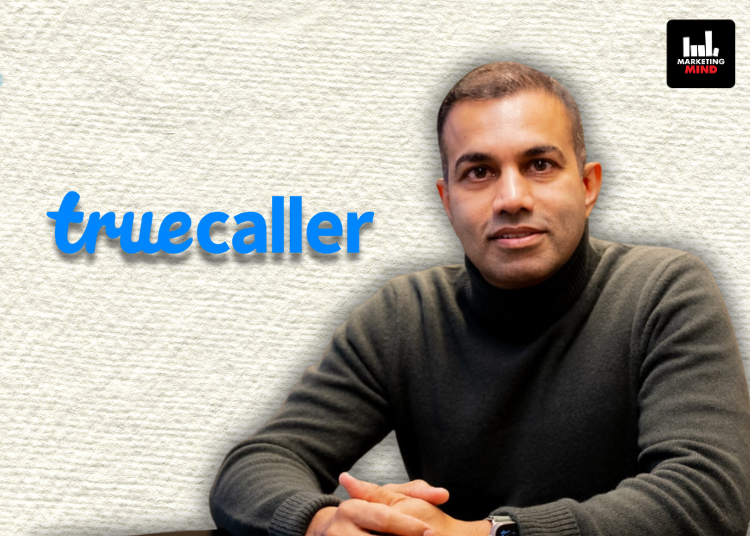
As 2025 comes to a close, the story of Truecaller in India is not defined by a single launch or campaign. Instead, it unfolds in everyday moments, when a phone rings, a name appears, and a decision is made in seconds. According to Kari Krishnamurthy, Chief Commercial and Strategy Officer at Truecaller, the year marked a decisive shift in how the platform is perceived and used.
“Looking back at 2025, Truecaller’s most defining milestone in India wasn’t one moment, it was a series of deliberate leaps that all pointed in the same direction: making communication safer, smarter, and more intuitive for millions,” he said.
That journey, Krishnamurthy explained, culminated in a deeper change, moving beyond utility into something more foundational.
“If I had to pick one standout, it would be the shift from being an app people rely on to a digital infrastructure they trust,” he said.
Product innovation played a central role in enabling that trust, particularly as AI capabilities became more refined and human-centric.
“2025 was the year our AI-driven features matured from ‘smart’ to ‘smart and human,’” he said. “Whether it was smarter call reasoning, contextual caller verification, or AI Assist stepping in to handle spammy or suspicious calls before users even picked up, these weren’t just features, they were moments where users said, ‘Oh wow, this actually helps,’” he added.
Trust and safety, however, extended beyond product interfaces into real-world impact.
“One of the most defining steps was verifying critical helplines like 1930 and deepening our collaboration with cybercrime agencies,” he said. “When users see a verified helpline flash on their phone during a crisis, that’s not UI, it’s trust delivered in real time,” he added.
User growth in India, Krishnamurthy noted, reflected relevance rather than raw scale.
“We didn’t just add millions of users; we added millions of reasons for them to stay,” he said. “People actually say, ‘Share your number, I’ll Truecaller it,’ and that’s when you know you’ve crossed from product to habit,” he added.
At the same time, 2025 revealed how quickly fraud itself was changing. “Spam and fraud didn’t just evolve; they became faster, more targeted, and alarmingly sophisticated,” he said.
“We saw the rise of micro-scam tactics, short, high-pressure calls designed to deceive users within seconds, and scams becoming hyper-local, with fraudsters impersonating neighbourhood services or local bank executives,” he added.
These insights directly influenced Truecaller’s product roadmap, particularly through ScamFeed. “ScamFeed gives us a countrywide radar of emerging fraud patterns,” he said. “It helps us spot trends early, identify clusters of suspicious numbers, and integrate insights from agencies in near real time,” he added.
India, as Truecaller’s largest and most engaged market, remained the focus of India-first innovation. “If we can solve communication challenges at Indian scale, we can solve them anywhere,” he said.
“We expanded Verified Business Caller ID across essential sectors like banking, deliveries, and utilities, and tuned AI-driven fraud alerts to regional languages and hyper-local scam patterns,” he added.
As smartphones and digital payments became default, Truecaller’s role widened organically.
“Today, Truecaller is increasingly becoming a trusted communication and verification layer for the country’s digital ecosystem,” he said.
“We are helping users understand the intent of a call even before they pick up, while also supporting trust behind digital transactions,” he added.
The scale of this responsibility is reflected in daily intervention volumes.
“In India alone, Truecaller flags 63 million scam attempts and 166 million spam calls every single day,” he said.
“Over the last 90 days, we identified more than 2 billion fraudulent calls in India,” he added.
On the business front, growth mirrored this trust-led adoption. “Our strongest momentum this year came from subscriptions and enterprise solutions,” he said.
Enterprise adoption highlighted how verified communication has become essential for brands. “Sectors like banking, financial services, logistics, e-commerce, travel, and digital-first healthcare are using verified calls, branded messaging, and conversational AI to reduce drop-offs and minimise fraud,” he added.
Truecaller’s marketing approach in 2025 also evolved toward authenticity rather than spectacle. “We didn’t rely on one marquee campaign,” he said. “Real user stories, product-led credibility, and contextual integrations helped elevate Truecaller from a utility into a trusted communication ally,” he added.
AI continued to power many of these advances behind the scenes. “Our AI layers can piece together several suspicious signals and add warnings even before community markings come in,” he said.
“The goal is always to find better ways to protect consumers,” he added.
Looking ahead to 2026, Krishnamurthy distilled Truecaller’s priorities into a single principle. “We are relentlessly focused on making Truecaller better and simpler to use,” he said. “Ultimately, our ambition is to make Truecaller an essential layer of safety and identity on every connected device,” he added.
As the year closes, Truecaller’s 2025 narrative reads less like a technology story and more like a trust ledger, built quietly, call after call, in a market where every ring of the phone now carries a little more certainty than it did before.