



India’s advertising and marketing ecosystem is entering a phase where the lines between media, technology, commerce, and culture are dissolving faster than ever before. AI is redefining operational speed, retail media is rapidly becoming a serious growth engine, and audiences are fragmenting across platforms, formats, and languages. In this evolving landscape, agencies are being pushed to rethink not just capabilities, but the very architecture of how marketing solutions are designed and delivered.
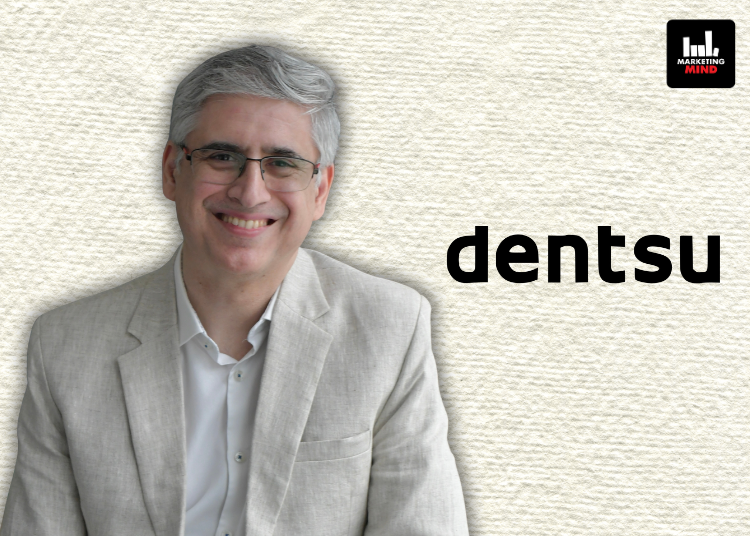
In an exclusive conversation with Marketing Mind, Harsha Razdan, CEO, South Asia, dentsu, spoke about how the agency network is positioning itself for this next phase of transformation. Razdan outlined dentsu’s approach of building a unified growth ecosystem where marketing, technology, consulting, commerce, and experience operate within one integrated model – an approach he believes will define competitive advantage in the decade ahead.
The discussion also explores how India is steadily emerging as a global innovation engine within the advertising ecosystem. From the rapid rise of vernacular content and creator-led platforms to the expanding influence of Tier 2 and Tier 3 markets, Razdan explains why solutions built for India’s complexity are increasingly shaping global thinking. With initiatives such as the Dentsu Bharat strategy and innovation platforms like Dentsu Lab, the market is becoming both a testing ground and an export hub for scalable marketing innovation.
Another central theme of the conversation is the evolving relationship between data, creativity, and human insight. As AI continues to automate processes and enhance precision, Razdan emphasises that the real differentiator will lie in judgment, empathy, and cultural understanding.
Below is the full conversation with Harsha Razdan.
Your leadership has actively positioned dentsu at the intersection of marketing, technology, and consulting. How will this blended capability model – especially in areas like CX, retail media, and data – define the competitive advantage for agencies and brands in the next 10 years?
If I look at the next ten years honestly, I don’t think competitive advantage will come from having more capabilities. It will come from how well those capabilities actually work together.
At dentsu, we have consciously built ourselves as a growth partner. Marketing, technology, and consulting are not separate conversations internally – they sit within one operating model across Media, Creative, CXM, BX and Entertainment, Gaming and Sports. And that sounds simple, but in practice it takes discipline. Every capability is aligned to outcomes. Not outputs. Not activity. Outcomes.
We have strong depth across creative, media, performance, retail media and Out-of-Home, commerce, technology and transformation, Entertainment Gaming and Sports, innovation, automation, reputation, and content. The real work has been ensuring those teams operate as one connected growth ecosystem under One dentsu. Because clients are navigating complexity at a speed that doesn’t allow fragmentation.
The context makes this even more urgent. Digital already accounts for 59% of advertising spends – Rs 71,621 crore – and is projected to reach 70% by 2027, roughly Rs 98,034 crore. AI has already driven efficiency across the system. The harder question now is effectiveness. How do we make every interaction more meaningful? How do we create participation, not just presence? Advantage will come from intelligence continuity – connecting signals across media, experience, and commerce to drive measurable growth.
Over the next decade, I believe differentiation will be defined by B2B2S outcomes – creating value for buyers, sellers, and society at the same time. Media, data, CX, and retail media are converging quickly. Integration is no longer optional. Intelligence must be applied. And impact must be measurable.
Through One dentsu, our Media++ framework, and the unified data and technology engine we launched in 2025, we are building a system where creativity, data, and commerce operate together by design, not by coordination. Scale is becoming easier to access. Precision, accountability, and judgment are not.
And that, I believe, is where the next decade will be won.
India’s media ecosystem is uniquely diverse – vernacular markets, short-form content, regional media consumption and varied growth segments. How are you positioning dentsu South Asia to lead global innovation out of India, and what role will Indian media trends play in shaping the broader APAC and global ad landscape?
For a long time, India was described as an emerging market. I don’t think that framing holds anymore. India today is a centre of leadership and innovation – and increasingly, a point of origin.
Through our Dentsu Bharat strategy, we have leaned into what makes this market complex. India’s linguistic and cultural diversity gives us strategic depth and our value conscious mindset gives us a powerful platform for innovation. If you can build for this level of diversity, you build muscle that travels.
A significant share of growth is coming from Tier 2 and Tier 3 cities. Vernacular content is mainstream. Short-form video, OTT, and CTV are reshaping media behaviour at scale. Advertiser confidence reflects that shift. India closed 2025 at Rs 1,21,339 crore, with stable growth and a 7.5% outlook for 2026, supported by strong domestic consumption and policy-led momentum.
What that creates is a living lab. Our work in the influencers domain led by Dentsu AMP and TAG is clearly differentiated to clients as it is a beautiful balance of “speed, scale, quality, outcomes”.
With Dentsu Lab teams across Mumbai, Bengaluru, and Gurgaon, we prototype, test, and refine innovation in real time. Indian talent brings mobile-first thinking, vernacular storytelling, and applied innovation into everything we build. Several BX, AI, and retail media solutions that scaled globally in 2025 were refined here first.
There is a certain pragmatism in this market. Innovation has to work, scale, and deliver measurable outcomes. That discipline creates solutions that are both effective and exportable.
And when you solve for India’s complexity, you often end up solving for the world – which is why India is emerging not just as a growth market, but as a global innovation engine shaping the next phase of the advertising ecosystem.
You’ve said the future of advertising is a ‘show of mind, not strength’ – intelligence, empathy, and agility over scale. How should brands balance data-driven precision with human-centric relevance in an increasingly fragmented and attention-scarce media landscape?
A show of mind begins with intent.
Today’s media environment demands orchestration. Distribution remains important, and programmatic already accounts for 42% of digital spends – Rs 30,081 crore – but reach on its own does not sustain impact. In an increasingly fragmented and attention-scarce landscape, scale alone cannot drive influence.
Attention has become the real currency. Success needs to be measured through attention minutes, quality of interaction, time spent, and emotional response – indicators that offer a more honest view of effectiveness.
Balancing precision with relevance requires recognising that data and empathy play complementary roles. Data provides context, timing, sequencing, and personalisation at scale, while human insight delivers meaning, emotion, and memorability. At dentsu, we use data to deepen human understanding and humanise – not homogenise – engagement, enabling brands to ask better questions and build dialogue and community through meaningful participation.
The future belongs to modular creativity anchored in a single human truth that can flex across formats – from long-form storytelling to short-form, culturally reactive content. This is especially critical in regional, vernacular, and creator-led ecosystems, where data guides responsiveness while empathy ensures authenticity and resonance.
As AI continues to improve targeting and efficiency, judgment becomes the defining capability – deciding what deserves attention and how brands earn it responsibly. Brands must think in data, speak in culture, and act with empathy. That is what a show of mind looks like: intelligence, relevance, and restraint working together to create value without interruption, enabling brands to lead with conviction and cultural intelligence in today’s landscape.
You’ve positioned AI centrally within dentsu but made it report directly under the CEO’s office to drive adoption and reduce resistance. Looking ahead over the next decade, how do you see AI reshaping the strategic role of human insight in media and creative decision-making?
I think the conversation around AI sometimes swings between excitement and anxiety. The reality is far more practical. AI is a force multiplier and creative co-pilot that will expand how quickly and how deeply we can generate insight. It changes the scale of what’s possible. It doesn’t remove the need for judgment.
At dentsu, we placed AI under the CEO’s office quite deliberately. That decision was less about structure and more about signalling seriousness. When something sits at the centre of leadership, adoption follows. And we have seen that – across operations and in the way we design client solutions, embedding intelligence into daily decision-making and accelerating organisation-wide adoption.
Today, automation handles billing, reporting, reconciliation – the kind of work that benefits from consistency and speed. We are also seeing this extend into areas like talent screening and operational workflows. That shift gives our teams more space for strategic thinking and creative problem-solving.
Where it gets more interesting is in how AI expands our field of vision. We can simulate audiences, detect cultural patterns and micro-signals earlier, and scale personalisation with far greater precision. The volume and velocity of signals are no longer the limitation. In media and creative decision-making, this enables scenario planning, dynamic media allocation, creative testing, and real-time optimisation – supporting faster experimentation and more responsive storytelling.
But insight has never just been about data. It is about interpretation. It is about asking better questions. It is about understanding context and consequence. Meaning, ethics, and relevance still require human judgment.
Over the next decade, AI will take on more of the heavy analytical work. Human insight will shape direction, define brand truth, make choices, and take responsibility. And that balance, if managed well, can be incredibly powerful – machine-enabled but human-led, where AI accelerates intelligence and efficiency while human intuition gives ideas purpose, distinctiveness, and accountability.
What are the core strategic levers, beyond media spend, that you believe will drive sustainable growth for brands over the next decade?
I don’t think sustainable growth is going to come from simply increasing media budgets. The centre of gravity is shifting toward deeper, structural growth drivers.
Retail media is a good example. At Rs 17,601 crore in 2025, growing 55.86% year-on-year, it has clearly become a serious growth lever. But growth at that pace also comes with pressure. If brands treat retail purely as a performance battlefield, it becomes transactional very quickly. The real opportunity lies in shaping retail environments into branded experiences that consumers recognise and choose consistently, building familiarity, trust, and repeat choice.
Quick commerce is pushing that urgency even further. E-commerce saw a 56% surge in digital spends in 2025. Over the next 12 to 18 months, the friction between discovery and purchase is expected to reduce dramatically, especially with UPI and ONDC enabling smoother journeys. That means creative systems can’t be static. They need to adapt to intent in real time. The purchase window is getting shorter, and attention inside that window is harder to earn, making relevance and responsiveness essential capabilities.
Beyond commerce, sustainable growth will depend on broader business transformation. Through Dentsu BX consulting capabilities, brands are exploring new categories, operating models, and value pools. B2B2S thinking – creating value for buyers, sellers, and society – is becoming a more meaningful framework for long-term relevance, with sustainability and our Dentsu Good proposition emerging as a differentiator that consumers actively reward.
Experience, data, and intelligence form another critical growth engine. Integrated CX, commerce, and analytics ecosystems enable seamless omnichannel journeys, supported by Performance 2.0 and outcome-led models that prioritise effectiveness over activity. AI-enabled talent and automation further enhance productivity, allowing organisations to scale impact without proportionately increasing headcount.
Culture will continue to matter deeply. Sports, gaming, and entertainment are shaping identity and belonging. Even in B2B, decisions are becoming more emotional and trust-led. We sometimes underestimate how human even the most rational categories are.
Ultimately, sustainable growth will be driven not by how much brands spend, but by how intelligently they integrate commerce, experience, transformation, culture, and responsibility into a unified growth strategy.
With the accelerating pace of change, from AI and automation to new media formats, what capabilities do you believe agencies must build or acquire to remain relevant, and how should the industry rethink talent development to future-proof its workforce?
If you study the universe long enough, you realise that relevance is not a permanent state. It is a function of adaptation. The universe expands, reorganises, regenerates. Agencies must do the same.
The first capability is integration. For years, we have organised ourselves around specialisations. That made sense at the time. Today, it creates friction. Media, creativity, commerce, Retail media, and Out-of-Home, CXM, BX and Entertainment, Gaming and Sports and data have to operate as one connected system. People experience brands seamlessly. Agencies need to reflect that same coherence internally.
The second is AI fluency. And I don’t mean surface-level experimentation. I mean embedding AI into the way work actually gets done. Optimisation, planning, content adaptation are already machine influenced. Teams need to understand them, shape them, design and govern them responsibly, and take responsibility for their outcomes. That requires new skills and, frankly, new mindsets.
Cultural depth will define differentiation. Regional voices, women-led narratives, vernacular storytelling, gaming, sports, and entertainment are shaping influence across markets, along with creator ecosystems and diverse narratives redefining how influence travels. Agencies that invest in cultural literacy will create work that resonates more deeply and travels further.
We also need to think more like builders. Brands are sustained by what compounds over time. Stories, intellectual property, and communities matter. Studio capability matters. Long-term thinking matters, along with platforms and innovation infrastructure that allow assets to scale and endure.
Beyond capabilities, the industry must rethink talent development itself. Future-proofing the workforce requires a shift from role-based skill building to capability-led learning, where creativity, data literacy, AI understanding, and strategic thinking coexist. Continuous learning will replace static career paths, and hybrid talent profiles will become the norm.
And finally, impact will matter more than scale. The future belongs to organisations that increase effectiveness per person. AI-enabled talent, strong collaboration, and fewer silos create leverage, with modular team structures enabling impact to scale without proportional headcount growth.
Relevance, in the end, is a discipline. It requires structural clarity, cultural awareness, and the willingness to evolve without losing your centre. AI will increasingly manage analytical and operational complexity, but human capabilities such as judgment, empathy, ethics, and cultural interpretation will define leadership and creative distinctiveness. The future is not about how large we are or how many tools we build. It is about how we integrate and solve for client challenges in a rapidly changing ecosystem.
That’s the work ahead.