



For years, social media reach was the ultimate currency. Platforms were free, algorithms decided For most of the social media era, influence has been shaped by a simple premise. Platforms were free, distribution was algorithmic and creators competed on creativity, consistency and cultural timing rather than financial investment. While outcomes varied widely, the core toolkit remained largely uniform. The playing field was uneven, but it was not explicitly tiered.
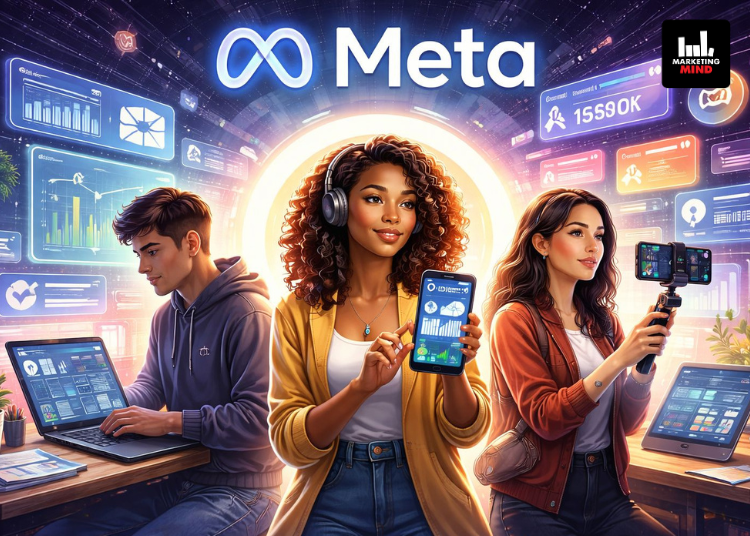
Meta’s premium push suggests that balance may be evolving. Through paid layers offering advanced analytics, AI-assisted creation tools, verification benefits and subscription-led community features, the company is no longer only monetising attention. It is monetising the infrastructure behind performance. Reach itself has not been formally restricted, yet the tools that allow creators to interpret data faster, refine segmentation and optimise output with greater precision are increasingly being packaged as paid enhancements.
That distinction could define the next chapter of the creator economy. Meta Premium does not openly sell visibility. It sells capability. In doing so, it accelerates professionalisation, encouraging creators to operate more like structured media businesses. At the same time, it raises an uncomfortable question for an ecosystem built on access. If optimisation becomes a paid advantage, does influence remain democratised, or does it gradually split into those who can invest in performance infrastructure and those who cannot?
Premium Tools, Hidden Advantages

Even if the algorithm treats all creators equally, access to premium features can create a subtle advantage. Megha Marwah, Vice President – Strategy at White River Media, explained that the benefit comes through capability rather than direct reach, “Paid subscription layers could influence creator performance, not necessarily through direct reach throttling, but through capability advantage. If premium tiers provide better audience insights, stronger engagement tracking, and AI-assisted creation tools, subscribed creators may simply be able to produce faster, optimise better, and respond more intelligently to what the algorithm rewards.”

Similarly, Hitarth Dadia, CEO of Nofiltr.Group, said that while reach isn’t bought, performance may still improve with premium access, “Even if reach isn’t technically tied to subscriptions, the features you get could indirectly impact performance. Better analytics equals smarter content equals better engagement. So creators who pay might just naturally perform better, not because the algorithm favours them, but because they have better tools to work with.”
As a result, Meta Premium is creating a professionalised layer where the ability to interpret and act on insights can separate creators subtly but meaningfully.
From Posting to Planning
For many creators, content has been reactive: post what worked last week and hope for engagement. Now, premium analytics are changing that dynamic.

Rajni Daswani, Chief People Officer at SoCheers, explained, “It is certainly an added layer of pressure for creators, pushing them towards more deliberate planning with greater reliance on algorithmic and platform experience changes. This enables them to design campaigns with layered storytelling, where content is tailored to distinct audience cohorts rather than deployed uniformly.”
Furthermore, anonymous story viewing allows creators to gauge audience interest without the pressure of public metrics. Daswani added, “When it comes to anonymous story views, while still at a nascent stage, the feature can support creators during the testing phase of content production, allowing them to gauge interest and behavioural signals without social visibility influencing outcomes.” Together, these tools are nudging creators toward more strategic and segmented content planning.

Anirudh Sridharan, Co-Founder of HashFame, said premium analytics encourage creators to operate like structured media properties, “Premium analytics will push creators to think less like individual pages and more like mini media properties. Today, many creators plan content based on what they performed last week. With deeper audience insights, you will see sharper segmentation. Same creator, different storytelling for different clusters.”
Moreover, he gave a practical example, “A skincare creator will tailor content differently for a 18 to 24 metro audience versus a 28 to 35 regional audience, and you will see it in language, hook, and product framing.”
Sridharan also highlighted silent audiences, “Anonymous story viewing is also interesting because it changes behaviour. Some users avoid engaging publicly but still consume a lot. That silent audience is often high intent. Premium tools that help creators understand that silent consumption will make creator campaigns feel less like ‘posting content’ and more like running a small funnel.” In short, influence is moving from broad broadcasting to precise audience management.
When AI Becomes Hygiene
AI-assisted content tools could accelerate production cycles. Daswani noted, “These tools will inevitably reset expectations. Ideation cycles will accelerate, executions will become sharper, and trending content will be increasingly at stake. Brands will begin to expect high-quality content to be turned around at much faster speeds.”
However, she cautioned that AI cannot replace perspective, “AI can help scale output, but it cannot replace cultural insight, context, or a creator’s personal point of view.”
Sridharan added, “If AI tools become paid, we will see a clear split. Creators who can afford it will produce faster, more consistent content, and that will raise the baseline of quality on the platform. But when everyone can generate good looking content, ‘good looking’ stops being the differentiator. The advantage will shift to ideas and point of view. AI will compress production time, but it will not compress taste.”

Furthermore, Himanshu Arora, Co-Founder of Social Panga and CEO – Creative at LS Digital, echoed, “As AI tools become mainstream, speed and polish will turn into hygiene factors. Brands will expect faster turnarounds, cleaner edits and sharper hooks by default. The real differentiation won’t come from who uses AI the most, but from who uses it judiciously. There’s a real risk of content becoming technically perfect but emotionally hollow.” Consequently, efficiency may improve, but originality remains scarce.
Professionalisation Over Exclusion
Subscription layers may also reshape budgets. Marwah said, “That creates a two-speed creator economy: casual creators operate as before, while serious creators feel pressured to subscribe to stay competitive. It’s less about buying reach outright and more about buying the infrastructure that helps you earn reach more predictably.”
Dadia added, “It’s less ‘pay to be seen’ and more ‘pay to optimise,’ which feels different.”
Furthermore, Daswani explained the implications for brands, “Yes, very likely. Budget allocations will become clearer, and campaigns will begin with greater predictability. Paid media will not be replaced. Its strength lies in the scale and control it provides.”
Sridharan added, “What I expect is a tighter blend. Brands will treat creators as the creative engine and paid media as the distribution engine.”
Arora concluded, “Influencer marketing will need to be evaluated less like a creative experiment and more like a structured media investment. Agencies will have to standardise benchmarks across markets focusing on audience quality, engagement depth, consistency and business impact.”
Community Over Broadcast
Subscription-led WhatsApp features encourage intimate connections. Daswani said, “It fundamentally shifts the dynamic, making communication more intimate. WhatsApp is inherently a private space, and misuse will be punished quickly.”
Sridharan added, “WhatsApp is already the most powerful trust channel in India. People treat it like family space. If they over-commercialise WhatsApp communities, people leave. This space only works when it still feels personal.”
Arora echoed, “WhatsApp subscriptions will push influencers from broadcast thinking to community building, shifting collaborations from visibility-driven to relationship-driven.” Together, these features highlight the growing importance of trust and intimacy.
Conclusion: Optimisation Without Losing Voice
Meta’s premium push is quietly redefining influence. Platforms remain free and feeds stay public, but creators who invest in tools now have a clear operational edge. Moreover, as AI, analytics, and subscription features become standard, the line between casual and professional creators is becoming sharper.
However, capability alone does not guarantee creativity. Speed and polish may become baseline expectations, but original ideas and authentic storytelling will continue to set standout creators apart.
Ultimately, the future of influence may not belong to those who pay the most, but to those who use new tools strategically, balancing optimisation with creativity and relationships with audiences. In a two-speed economy, it is not just access that matters, it is how creators choose to wield it.