







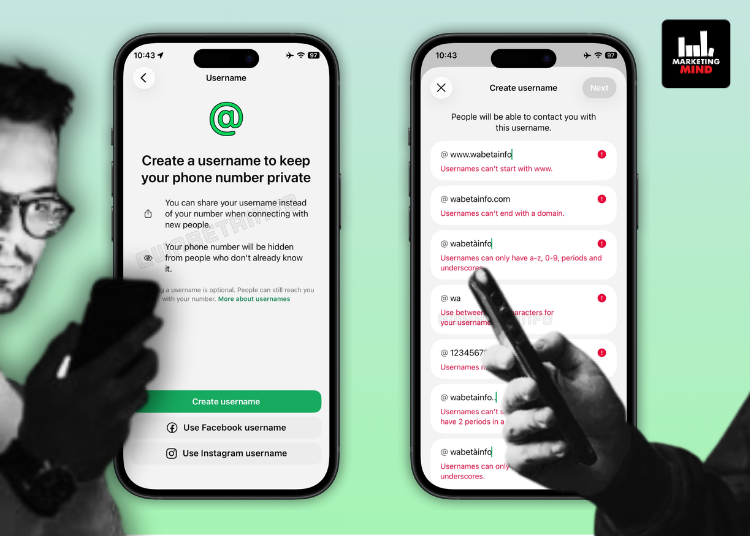
The Union government has issued a notice to WhatsApp over its upcoming username feature, raising concerns that the functionality could increase incidents of impersonation, spam, phishing, digital arrest scams, and online fraud. The government has asked the Meta-owned messaging platform to put the rollout on hold and submit a detailed explanation of the feature within three days.
As per media reports, the Ministry of Electronics and Information Technology (MeitY) has stated in its notice that the proposed feature could enable bad actors to solicit and message victims more easily. The ministry has also directed WhatsApp not to proceed with the rollout until detailed consultations have been held.
The username feature has been designed to allow users to communicate without sharing their phone numbers, similar to features already available on Telegram and Signal. Meta had announced earlier this week that the feature is intended to let users chat with new contacts without disclosing their personal phone numbers.
A WhatsApp spokesperson reportedly has said that the username feature is not yet live and is scheduled to roll out gradually later this year. The company has added that it has reserved usernames associated with public figures, government entities, celebrities, and verified Meta accounts to prevent impersonation. It has also said that lookalike versions of such usernames have been restricted.
The spokesperson has further stated that users will be able to choose whether to respond to unknown accounts and that the origin country of a sender will be displayed. Meta has also said that the feature includes built-in spam detection measures, including an optional username key that users can require others to know before initiating contact.
WhatsApp has more than 800 million users in India, accounting for over a quarter of its global user base of 3 billion. While the company has challenged parts of the IT Rules related to end-to-end encryption before the Delhi High Court, it has also complied with several government directives in recent years. The platform has also faced government scrutiny following service disruptions, including a 2022 outage for which the Ministry of Electronics and Information Technology sought an explanation from Meta.