




In a move that has caught the global tech world by surprise, OpenAI announced that from 4 November 2025, Indian users will receive one year of free access to ChatGPT Go, its new subscription tier that offers premium-style features such as faster responses, higher message limits, file uploads, image generation, and GPT-powered access.
The offer, available for a limited promotional period, removes the Rs 399-per-month paywall for Indian users, making India among the first markets globally where OpenAI is offering a full-featured tier at no cost.
While the company has not disclosed official user-growth targets, analysts expect India could potentially add millions of new premium-tier users within months, though OpenAI has not released formal projections. This could transform OpenAI’s engagement and data ecosystem almost overnight.
More than a pricing experiment, some experts interpret the move as part of OpenAI’s broader strategy that emphasises scale, inclusion, and data diversity over immediate revenue.
Why India Became OpenAI’s Test Lab
OpenAI’s choice of India is no coincidence. With over 800 million internet users and one of the fastest-growing digital economies in the world, India offers a rare combination of scale, linguistic diversity, and relentless digital curiosity.
For OpenAI, India represents both opportunity and necessity. Unlike the US or Europe, where AI debates revolve around monetisation and regulation, India provides something far more dynamic: massive engagement and social experimentation. Every student who drafts an essay, every small business that automates customer service, and every teacher who builds lesson plans through GPT-powered tools becomes part of a live study in how societies adopt generative AI.
The timing is also strategic. OpenAI’s India move coincides with rising competition from Google’s Gemini, Anthropic’s Claude, and Meta’s Llama-based assistants, all seeking to capture market share in the country. By making ChatGPT Go free, OpenAI bets that familiarity will breed loyalty. Once Indian users experience GPT-powered capabilities, they are less likely to migrate to rival platforms.
The Economic Logic Behind “Free”
On the surface, the move may look altruistic, but the economics run deep. India’s price sensitivity and purchasing-power parity make a $20 global subscription unrealistic at scale. Instead, OpenAI’s free-for-a-year model prioritises reach and relevance over revenue.
There is another layer: data. Every chat, prompt, and workflow generated by Indian users may contribute to OpenAI’s learning systems, potentially enhancing the model’s understanding of local dialects, cultural nuance, and multilingual reasoning. India’s diversity offers precisely the dataset large-language models lack, a non-Western linguistic base filled with informal code-switching and region-specific logic.
This approach echoes early internet-era strategies, where tech giants offered free access to seed future ecosystems. The difference today is that AI learns from user interaction, meaning free access is not just user acquisition, it is data acquisition.
Critics argue that this could turn Indian users into unwitting participants in a global data experiment. OpenAI maintains that user data is handled responsibly, but the tension between accessibility and autonomy lies at the heart of the AI revolution.
A New Chapter in India’s AI Story
The announcement arrives as India’s government and private sector race to define their AI futures. The IndiaAI Mission, approved earlier this year, supports the development of domestic compute infrastructure and indigenous foundational models. At the same time, home-grown startups such as Krutrim, Sarvam AI, and Neysa AI are advancing India-centric large-language-model development.
By offering GPT-powered access at no cost, OpenAI raises the competitive bar. It democratises access for millions but could overshadow local players who cannot match its sophistication or scale. Industry voices caution that without clear policy frameworks, there is a risk that India could become dependent on imported AI intelligence rather than developing domestic capability.
For millions of Indian students, teachers, freelancers, and creators, the free rollout could become a digital equaliser. In a country where many earn less than the previous Rs399 monthly subscription fee, this shift could unlock entirely new avenues of learning, productivity, and entrepreneurship.
The Social Experiment of AI Inclusion
OpenAI’s rollout doubles as a sociotechnical experiment, testing how advanced AI behaves in one of the world’s most linguistically and economically diverse environments.
Indian users have already shown a unique relationship with generative tools, using ChatGPT for exam prep, vernacular poetry, résumé writing, and micro-business automation. These patterns push the models to adapt to non-Western contexts, a real-world stress test for inclusivity.
The phenomenon mirrors how India leapfrogged technology adoption in the past, skipping landlines to go mobile and inventing behaviours like missed-call marketing or vernacular voice search. The same could happen with AI, leading to what some analysts describe as “AI jugaad”, indigenous, improvised uses of generative AI to address everyday challenges.
If this works, India could potentially serve as a blueprint for global AI inclusion, offering insights into how democratised access might accelerate innovation.
What’s in It for OpenAI
Beyond goodwill, OpenAI gains something more profound: cultural data and user diversity. AI models thrive on variance, and India provides it in abundance, with dozens of major languages, thousands of dialects, and layered cultural context.
This diversity could significantly sharpen the model’s linguistic and reasoning competence worldwide. Moreover, India’s young, mobile-first, and aspirational population serves as a massive focus group for future AI-powered education, productivity, and enterprise tools.
Strategically, the free-for-a-year plan also aligns with OpenAI’s ecosystem push. Once individuals and small teams get comfortable with ChatGPT Go, the transition to ChatGPT Team or Enterprise tiers becomes smoother. In short, free access today builds tomorrow’s paying customers.
Data, Trust, and the Policy Vacuum
With expansion comes complexity. India’s regulatory framework for AI remains fragmented. While the IndiaAI Mission outlines ethical guardrails, there is still no dedicated AI Act or binding standard for algorithmic transparency.
The rollout reignites questions of data ownership, content moderation, and accountability. Who owns the chat data created by millions? Can Indian startups leverage GPT outputs commercially? What happens when AI-generated content spreads misinformation or bias in sensitive areas like education or hiring?
Experts predict that India’s role as OpenAI’s largest open lab will inevitably push policymakers to act faster. The experiment is too large and too public to ignore.
The Global Context: Lessons and Competition
Globally, OpenAI’s India experiment may set a precedent for AI accessibility in emerging markets. Europe’s regulatory path leans toward caution, and the US continues to treat AI as a private innovation frontier. India, however, could pioneer a third path, open access with progressive regulation.
If the model proves successful, other countries in the Global South might explore similar approaches, potentially looking to India as a model for affordable AI access.
Meanwhile, rivals are taking notice. Anthropic is reportedly exploring regional pricing for Claude, Google may deepen Gemini’s Android integration, and Chinese players such as Baidu are pursuing API partnerships. The AI access race is officially on, and India is its proving ground.
Beyond strategy and policy, the real story lies in daily life. Rural teachers could create lesson plans in local languages, farmers might receive real-time crop advice through voice prompts, and small businesses may automate customer support without technical expertise.
These are not futuristic dreams but plausible outcomes of OpenAI’s one-year free rollout. Yet the transformation raises new responsibilities. Without strong AI literacy, users could over-trust or misinterpret outputs. OpenAI’s gamble assumes that greater access will foster smarter usage, but history suggests digital literacy rarely keeps pace with digital reach.
The AI Researcher Vision: What Lies Ahead
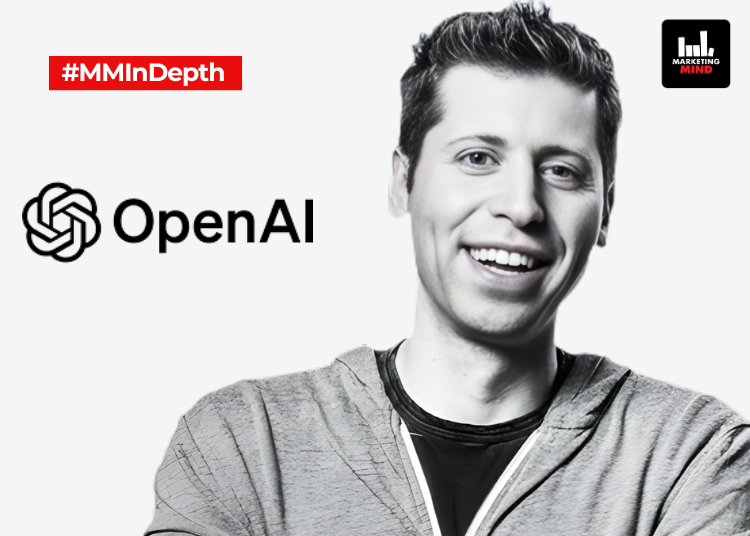
Sam Altman, CEO of OpenAI, has hinted at an ambitious vision for the future of AI: developing systems that could assist humans in research, reasoning, and experimentation. While he did not provide a specific timeline, Altman suggested that initiatives like the India rollout are not just about expanding access to ChatGPT Go. They are part of a broader effort to scale human-AI collaboration, training AI systems that can think, experiment, and innovate alongside people rather than simply for them.
If realised, India’s vast dataset, reflecting real-world prompts, cultural logic, and multilingual reasoning, could become part of the foundation that shapes these future researcher-grade models.
The Bigger Picture: AI for Billions, or AI by Billions
OpenAI’s decision to make ChatGPT Go free in India is both symbolic and strategic. It highlights a potential next frontier in AI democratisation, where broad participation itself becomes valuable.
Whether this story becomes one of empowerment or dependency will depend on how India and its citizens engage with the opportunity. If embraced critically and creatively, it could birth a generation of AI-literate innovators who not only use AI but help shape its future. If ignored or exploited, it risks deepening the power imbalance between global tech giants and local ecosystems.
Either way, 4 November 2025 marks more than a product update. It is the beginning of a global experiment in technological access, data ethics, and digital identity. The world’s largest democracy may now hold the blueprint for the world’s most inclusive AI laboratory.